 Care
Care
Acral Lick Dermatitis in Dogs
This disorder, also known as lick granuloma or acral pruritic dermatitis, is a skin condition that can be difficult to cure, which is why a good veterinary exam is important.
In this article, we'll learn how to identify it and, above all, how to treat it, since recovery doesn't just involve prescribed medication — we'll also need to take a series of measures at home.
What Causes Acral Dermatitis?
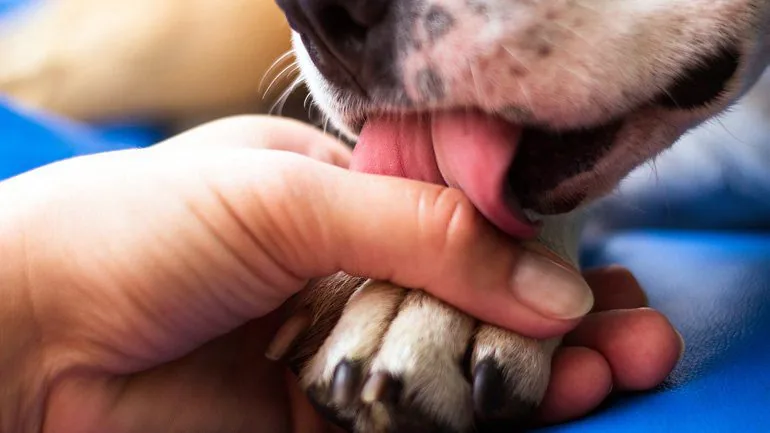
Although it used to be attributed to a purely psychological origin — boredom, anxiety, or lack of stimulation in the dog's life — the truth is there seems to be some underlying disorder causing itching, which is why the dog directs its licking to a specific area.
For example, a problem as common as canine atopy can cause damage that triggers pruritus in the dog (pruritus meaning itching). It will start scratching, nibbling, and licking the affected area, and this way, it perpetuates the lesion, which makes it keep licking, establishing a pathological cycle.
Some causes behind this type of dermatitis can include demodectic mange, infections caused by bacteria or fungi, a wound or trauma, adverse food reactions, hypothyroidism, foreign bodies, or joint diseases causing pain or discomfort.

How Is Acral Lick Dermatitis Identified?
With this condition, we'll observe redness of the skin, papules, pustules, and welts. They mainly appear on the limbs, the hock and carpal area, the back of the legs, and the lower part of the body. It ends up forming an open sore that doesn't heal because the dog keeps licking it insistently.
We may find one or more lesions, and it's not unusual for them to become infected. It's important to see the vet, since there are other skin problems that can present with similar lesions, and it's the vet who'll confirm or rule out the diagnosis.
Constant licking eventually causes hair loss. In addition, saliva keeps the ulcer always shiny and clean. If this behavior continues over time, the affected skin ends up thickening, hardening, darkening, and becoming numb to the touch, while still looking fresh because the licking continues.
Can Any Dog Get Acral Lick Dermatitis?
The answer to this question is yes, since any dog can develop this disorder. That said, it's more common in short-haired breeds such as the Pinscher, Great Dane, or Labrador Retriever.

Do Psychological Factors Matter in Acral Lick Dermatitis?
Although the tendency is to think there's always a triggering physical cause behind these granulomas, psychological factors can indeed play a role in the licking becoming a persistent habit. That's why treatment needs to go beyond medication alone.
The dog starts licking an area because some discomfort demands its attention, but in turning this licking into a habit, psychological events do matter more than physical ones.
Can Acral Lick Dermatitis Be Cured?
We should know this skin condition is one of the hardest to treat and resolve, perhaps due to the psychological component involved. That's why, besides prescribing treatment for the lesion and, if possible, its trigger, over what's often a lengthy period, intervening in the dog's life becomes necessary.
This includes examining its lifestyle and routines. For example, a dog that spends many hours alone may improve if we manage to increase the time it spends in company. For some dogs, introducing another animal into the home can be a positive stimulus, though it's a good idea to consult a professional first.
In cases where treatment and changes to the dog's environment don't produce the expected results, we can turn to calming pheromones in any of their formats, such as spray, collar, or in food. As a last resort, the vet can consider medication aimed at reducing the dog's stress.

What Is the Treatment for Acral Lick Dermatitis?
The most important thing for treating this skin condition is finding the cause behind the initial discomfort that triggered the licking. To try to find this cause, the vet will review the dog's medical history. We should give them the most thorough information possible.
Obviously, if the exam reveals the presence of one of the diseases mentioned as causes, the vet will prescribe the appropriate protocol. In addition, treatment for the ulcer may be prescribed, along with measures to prevent scratching, using topical or injectable anti-inflammatories. An Elizabethan collar may be needed.
In some cases, surgery or cryotherapy techniques can even be used, if possible. Acupuncture can also be used in treating this dermatitis. Keep in mind this isn't always successful, and it's recommended to pair it with a change in the dog's routine.
Bibliography
Rejas López, Juan (coord.) (2003): Patología médica veterinaria. Universidad de León, Universidade de Santiago de Compostela, Universidad de Zaragoza.
IMPORTANT: This article is for informational purposes only and does not constitute veterinary, nutritional or behavioural advice. Every dog is different, and only your trusted vet can advise you on its specific needs.