 Breeds
Differences Between the Alaskan Malamute and the Siberian Husky
At first glance, the differences between the Alaskan Malamute and the Siberian Husky aren't easy to spot. To many people, these breeds look almost identical, since they share many physical and personality traits.
Even so, these are two distinct canine varieties, so telling them apart only takes a bit of knowledge and attention to detail. Want to know what they are? Don't miss the info SoyUnPerro has put together for you!
Characteristics of the Alaskan Malamute
The Alaskan Malamute is a snow dog used for pulling sleds and doing other work in low-temperature environments. Males stand 63.5 centimeters at the withers and females 58.6 centimeters, which is why it's classified as a large breed.
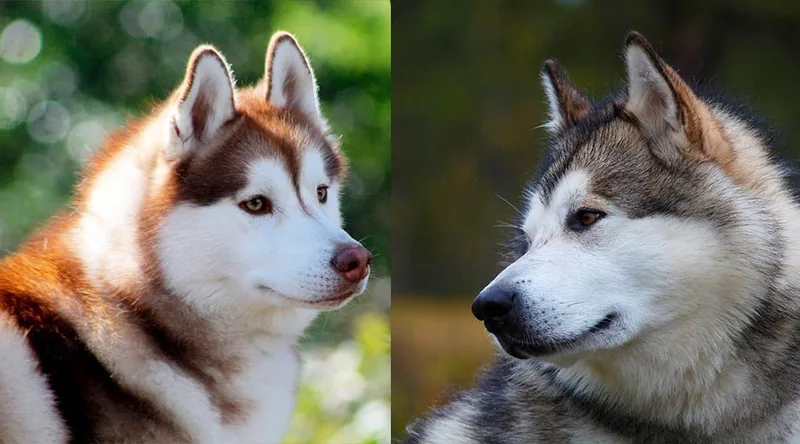
The Alaskan Malamute is a muscular dog. The breed has a strong chest and firm legs. Its head is wide, with a black or red nose, and black lips paired with a scissor bite. The eyes are almond-shaped and brown, while the ears are medium-length and triangular in shape.
The breed's coat is double, thick, and coarse; the coat grows more abundantly around the neck. The texture is woolly to the touch, and length varies across different parts of the body. As for coat color, it comes in multiple combinations: gray with white, black, or silver areas distributed symmetrically. Some Alaskan Malamutes are also completely white.
As with all dog breeds, personality depends on each individual dog and the socialization it's had. That said, the Alaskan Malamute tends to be very friendly, approaching people with confidence and always up for play. It's a good match for people who enjoy outdoor activities and hiking, since it needs a lot of exercise.
Characteristics of the Siberian Husky
Like the Alaskan Malamute, the Siberian Husky is a large sled dog. They also share an unmistakable trait: both look somewhat wolf-like. A male Siberian Husky typically stands between 53.5 and 60 centimeters at the withers, while a female reaches 50.5 to 56 centimeters.
The Husky's body is compact, strong, and muscular. The breed's head is medium-sized and well-proportioned. This dog has a gray, liver, or flesh-colored nose, depending on coat shade. The lips are black and hide a scissor bite. The eyes are almond-shaped and lively; the iris can be brown, blue, or heterochromatic (bi-colored). The ears, meanwhile, are triangular and thick.
The Siberian Husky's coat is double-layered and medium-length, coarse and woolly to the touch. Color combinations vary widely, from white to black, passing through gray, liver, various shades of silver, and more; these colors appear solid or in a symmetrical two-tone combination.
The Siberian Husky is an alert, energetic dog that isn't aggressive or distrustful toward other dogs or people. Its personality tends to be friendly and playful, though breeders like to see it carry itself with a certain dignity.
Differences Between the Alaskan Malamute and the Siberian Husky
Now that you know the traits of both, have you spotted any differences between the Alaskan Malamute and the Siberian Husky? Maybe not — it's really tough to tell them apart! To do it, look for the following details:
- Size: both the Alaskan Malamute and the Siberian Husky are large dogs; however, the Malamute is taller than its counterpart by several centimeters.
- Nose color: the nose is black or red in all Alaskan Malamutes, while in Huskies it varies depending on coat color.
- Neck coat: the Alaskan Malamute's coat is much fuller around the neck than the Siberian Husky's.
- Iris color: the iris is always brown in the Malamute — the FCI considers blue eyes a fault in this breed — while bluish tones and other colors are normal in the Siberian Husky.
- Stop shape: the naso-frontal stop is more pronounced in the Siberian Husky than in the Alaskan Malamute.
- Ear set: the Siberian Husky's ears are larger and set higher, while the Alaskan Malamute's are small in proportion to the head.
- Tail carriage: the Siberian Husky's tail hangs down when the dog is at rest, with the fur on it resembling a brush; the Alaskan Malamute's tail, meanwhile, curls over the back at rest, and its coat is fuller and messier than its counterpart's.
IMPORTANT: This article is for informational purposes only and does not constitute veterinary, nutritional or behavioural advice. Every dog is different, and only your trusted vet can advise you on its specific needs.