 Breeds
American English Coonhound
These dogs were bred to track raccoons in the dark with almost supernatural precision: their nose is so powerful they can follow a scent left hours earlier, even in the rain. The American English Coonhound isn't just a nighttime hunter — it's a working machine built for rough terrain and relentless chases.
Origins in American Night Hunting
The breed originated in North America starting in the 19th century, though its ancestors come from England, descending from the English Coonhound brought over by colonists. Over time, the dogs brought to the new continent were crossed with other breeds to produce what we now know as the American English Coonhound.
The goal was to produce a dog ideal for hunting raccoons at night. Hunters in the American Southeast wanted a dog with a powerful nose, a fierce drive to hunt, and enough stamina to cover rough terrain for hours. The result was a breed capable of tracking prey independently and following cold trails over long distances.
What Is Its Physical Build Like?
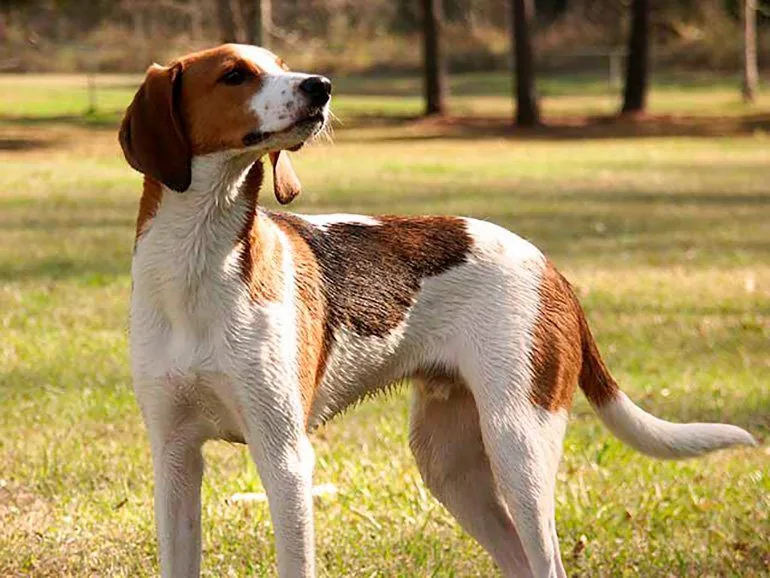
This is a medium-sized dog, with modest but strong muscling and precise movement. The head is proportionate to body size. The muzzle is elongated, with slightly drooping cheeks and lips, plus a large, black nose.
The eyes are rounded, with dark brown irises. The ears are long, thin, and dropped to the sides, a trait that boosts its scenting ability. The coat is medium length, double-layered, and coarse. It appears in several color combinations: red and white with patches, black and white, or tricolor.
- Height: between 58 and 66 cm in males and females
- Weight: between 20 and 30 kg in males and females
- Life expectancy: between 11 and 12 years
- Coat: short, coarse, in a variety of colors
Temperament at Home and Outdoors
Adopting one of these American dogs is only advisable if you practice sports you can share with it. Its active temperament calls for constant activity. Otherwise, it will develop anxiety and destructive behavior.
It's gentle while resting, but tends to bark a lot if not given outlets to release its energy. Some breeders consider it a poor choice for owners without prior dog-training experience. Training it for activities beyond hunting takes a patient personality.
Its instinctive independence, inherited from generations of solitary hunting, makes it prone to running off after interesting scents without warning.
Why Do They Chase Raccoons (and Other Prey)?
With its powerful nose, fierce drive to hunt, and great stamina, this dog was specifically created to track raccoons, deer, and bears. It was developed to track prey independently and follow cold trails over long distances, even in adverse conditions.
The coonhound's instinctive independence calls for patient, consistent training. This independence makes it prone to running off after interesting scents. It needs vigorous daily exercise; it was bred to cover a lot of ground with ease. It should stay on leash outdoors unless hunting in a controlled space.
Are These Hunters Aggressive?
The Coonhound is outgoing, friendly, and affectionate, loving human company as well as that of other dogs. Outdoors it's brave and driven by instinct, but at home it shows a gentle, sociable side. It's intelligent and obedient, easy to train when properly motivated. It has a strong pack instinct and loves playing with other dogs.
It's bred to work independently, which can make it seem stubborn. It's prone to baying, a reflection of its breeding and working instincts, but it's not naturally aggressive. Some individuals can be reserved with strangers, though most are receptive and friendly.
Care and Daily Exercise
Frequent exercise is the main form of care you need to provide. Daily trips to the park, search-and-find games, fetch, or hiding treats around the house are all good ways to stimulate its intelligence. From puppyhood, it's recommended to train it to channel its tendency to bark. That way you'll achieve harmonious life at home.
Socializing it with people and pets should also happen from an early age. Otherwise, this American dog could develop resource guarding, becoming possessive over its belongings and territory.
As for the coat, brushing 1 to 2 times a week is enough. Bathing is recommended every 4 weeks. Its nails need monthly trimming if they don't wear down naturally.
Diet for an Active Hunter
Given their high energy and solid build, Coonhounds eat a lot and need quality food. Their metabolism, sped up by constant work, calls for a diet balanced in protein and fat. The daily amount will depend on activity level: a dog that hunts regularly will need more calories than a sedentary one.
It's recommended to split food into two daily meals to prevent digestive problems. Talk to your vet about the best option based on your dog's age and activity level.
Common Diseases in the Breed
Although it generally enjoys strong health, this breed does have a tendency toward certain conditions. Hip dysplasia is one of the most common, especially in working dogs that put in intense physical effort. It can also suffer from ear infections due to its long, dropped ears, which trap moisture.
Other issues include dental enamel hypoplasia and congenital deafness in some individuals. Regular vet check-ups and a responsible breeder who runs genetic tests are essential for minimizing these risks.
ANNUAL VET CHECK-UPSGiven its predisposition to hip dysplasia and ear problems, schedule annual check-ups with hip X-rays starting at 18 months. Ear infections are prevented by thoroughly drying the ears after baths or water activities.
Is It Worth Having One?
This dog is ideal if you have experience with working breeds, enough space, and time for intense daily exercise. It's not an apartment dog, nor one for first-time owners. Its loyalty, intelligence, and work ethic make it an exceptional companion for hunters, athletes, or active families who can meet its energy needs.
If you're looking for a calm, low-maintenance dog, this isn't your candidate. But if you want a versatile, hardy animal with an unmatched working instinct, the American English Coonhound is a choice that won't disappoint.
IMPORTANT: This article is for informational purposes only and does not constitute veterinary, nutritional or behavioural advice. Every dog is different, and only your trusted vet can advise you on its specific needs.