 Nutrition
Is It True That Dogs Can Eat Bread?
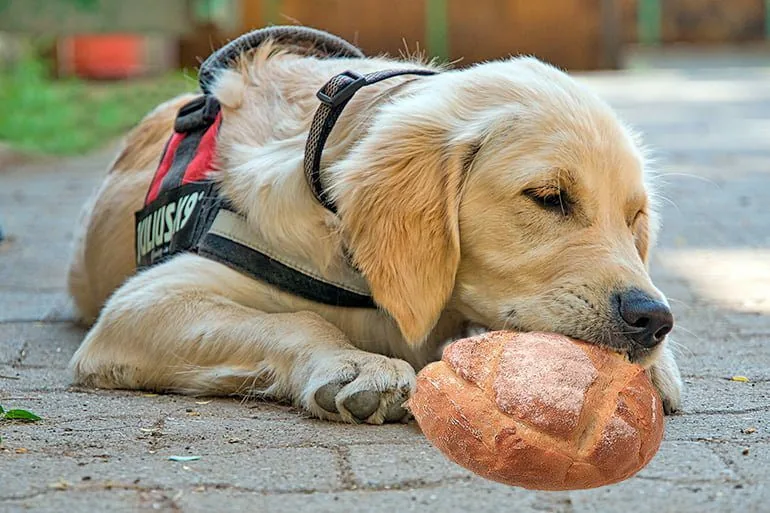
Bread has traditionally been offered to dogs. It was, and still is, very common to give them the crusty end of the loaf, mainly to relieve the discomfort we imagine puppies feel when they lose their milk teeth.
But given that dogs are carnivorous animals, is giving them bread really a good idea? Below we explain whether it makes sense to include this food in a balanced canine diet.
The Different Types of Bread
First of all, we have to bear in mind that there are many different types of bread. Its fundamental ingredient is a cereal, but that cereal can be refined or wholegrain and may or may not contain gluten (important for coeliac dogs). So bread can be made from wheat flour, maize, rye and so on. Besides the flour chosen, there are other fundamental ingredients.
These are water, fresh or baker's yeast, and salt. But some breads also include walnuts, raisins, seeds or even chocolate chips. For us to consider a bread healthy, it has to be made with natural ingredients, preferably wholegrain flours, and contain no sugar, preservatives or colourings.
In other words, the best bread will be the kind made in traditional bakeries. Only this kind of natural bread can be eaten by a dog. But there are other details to bear in mind: it's preferable that the bread we offer contains no salt, and it's absolutely off limits for it to contain chocolate or nuts that could be toxic to them.
The Benefits Bread Provides
Natural bread, which is the kind we'll be referring to, can be part of a balanced human diet. That's because eating cereals daily is recommended. In the case of dogs, they are carnivorous animals — even if in practice they have become omnivores.
This means their diet necessarily has to be based on animal protein. As a supplement, and in a smaller proportion, they can eat cereals, vegetables and fruit. Specifically, cereals will provide them, basically, with carbohydrates. But dogs don't digest these as well as humans do. They can't break them down very much.
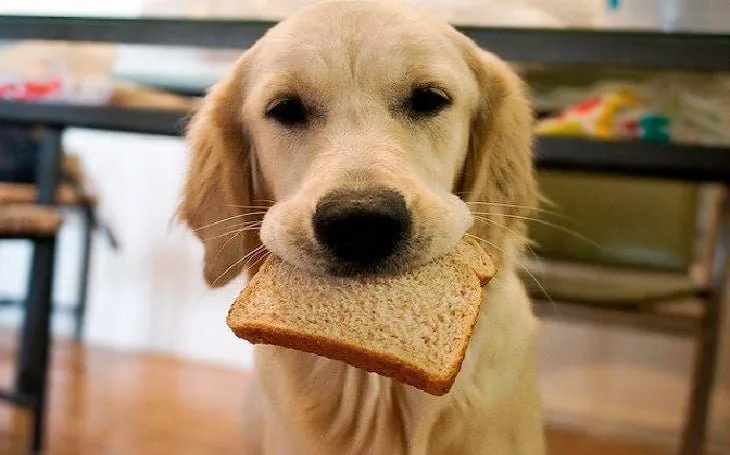
Hence bread is not, and should not be, a fundamental food in our dog's diet. So yes, we can give it a small piece of bread occasionally as a treat. That means at most once a week or, better, once a fortnight. The size of the piece should be scaled to the size of the dog.
When NOT to Give Bread to a Dog
Since bread provides carbohydrates, it isn't the best idea to give it as a treat to dogs with overweight or obesity problems. In those cases, we need to get into the habit of replacing it with less calorific foods such as carrots or apples.
Obesity isn't just a cosmetic problem. A dog carrying extra kilos is prone to certain illnesses such as diabetes. On top of that, some conditions can get worse, osteoarthritis among them.
Overweight dogs will show exercise and heat intolerance, and greater risks if they ever have to be given anaesthetic. Lastly, don't forget that dogs which, because of some condition, have been prescribed a cereal-free diet can't eat bread either. Not even occasionally.
Does Bread Upset Dogs?
It isn't a good idea to insist on giving bread, or to allow it to be eaten, to dogs that have shown some adverse effect after eating it before. It can upset some of them and trigger digestive problems such as loose stools, diarrhoea or abdominal discomfort.
It's also important that, if we decide to make bread at home, we never let the dog eat the raw dough. It could make it very unwell, because the action of the yeast makes the dough expand inside the digestive system. This causes abdominal bloating which, in a small percentage of cases, can get worse.
What then occurs is what's known as gastric torsion. It's a veterinary emergency in which the stomach twists on its own axis. The dog can die. In addition, the fermentation of the yeast is capable of causing poisoning. The symptoms are breathing problems, seizures or a drop in body temperature.
How to Give Bread to Dogs Properly
Traditionally, dogs were given the crusty end or a piece of stale bread. The idea was for them to gnaw on it, as though it were a bone. This was assumed to be good for them. But given how little nutritional value bread has for dogs, we can offer them far better alternatives for their teeth and their health.
So, there are toys on the market that can serve as something for the dog to chew. There are also dog-safe bones that do the same job and, on top of that, provide nutrients. On the other hand, if our aim is to clean its teeth, it's better to turn to brushes and pastes formulated specifically for them.
Bibliography Pet Poison Helpline: Petpoisonhelpline.com
IMPORTANT: This article is for informational purposes only and does not constitute veterinary, nutritional or behavioural advice. Every dog is different, and only your trusted vet can advise you on its specific needs.