 Nutrition
Can My Dog Eat Ham?
Feeding ham to a dog is a genuinely contentious subject: some people insist dogs can eat it without any trouble, while others are firmly against it. The truth is that both camps have a point, because if it is given badly or in the wrong amounts, it can do harm.
There are many kinds of ham and not all of them are harmful, though we should always use common sense and remember that anything in excess is bad. Let's look at how, when and what type of ham a dog can eat.
Can a Dog Eat Cured Ham?
As long as the dog is healthy, yes, they can have Serrano ham, but only in small amounts — very small amounts, in fact. Serrano ham is salt-cured so that it dries properly, and it absorbs a great deal of that salt in the process.
In other words, Serrano ham generally contains a lot of salt, far more than a dog should be having. If we give our dog a tiny piece of Serrano ham, nothing will happen to them. But they will enjoy it and ask for more, either by pestering us or with that fixed, penetrating stare and those innocent puppy eyes.
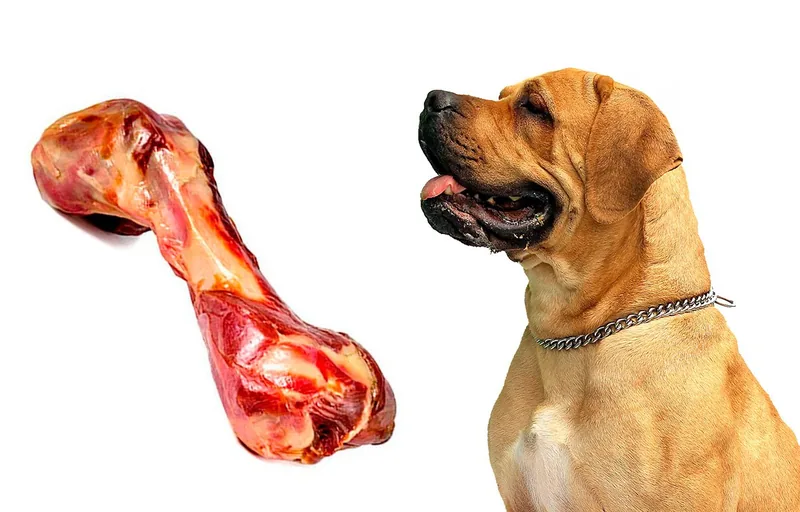
If we give our dog one of those ham bones with a little meat still clinging to it, nothing will happen either. But if they are a small or medium-sized dog, it is best not to let them finish the whole thing in one day. Far better to spread it out over several days so they can enjoy it for a few hours at a time.
Serrano ham is a 100% natural product that gives your dog the collagen their diet needs, helping to improve their health and wellbeing and, in doing so, to cushion the natural ageing process. Of course, we are not going to use it as their only source of collagen, but as a treat, a bone would be excellent. It also helps with cleaning their teeth and strengthening the jaw muscles.
Bear in mind that ham bones are a real delight for dogs, but they are only there to keep them busy gnawing at the small scraps of ham left on them. They are even sold vacuum-packed with a long use-by date so that we can hand them over as a treat whenever we like. Personally, we recommend storing them in the fridge even if they come packaged (they keep better that way). Always serve them raw, never cooked.
If your dog is small, remember not to overdo the pieces of ham. As a rough guide, you could say a dog of around 20kg to 30kg could pick that bone clean over a couple of days without the amount of ham doing them any harm.
With certain conditions, such as heart disease and kidney-related illnesses, ham is not recommended because of its high salt content. As a general rule it should not be overdone: since it contains so much salt, it should always be small pieces on very specific occasions. Not a little every day, because that really is harmful.
Can a Dog Eat Cooked Ham?
Cooked ham, sometimes called York ham, also contains salt, though less than Serrano ham. So the answer is yes, we can give our dog a little cooked ham now and then.
If we buy a low-salt cooked ham, so much the better. Don't give your dog a large amount if they are not used to it, because overdoing anything never sits well. A small amount each day is fine, or on the days you think appropriate, but without going overboard.
And speaking of amounts, you do need to watch out for abrupt changes in diet. The first time you offer cooked ham, give only a little to see how it agrees with them. Remember that every body is different, and factors such as age and breed can mean that at a given moment a sudden change in diet triggers diarrhoea and/or vomiting.
Many dog diets made entirely from natural products, known as the BARF diet, include cooked ham among their many recipes. Dogs find the taste of cooked ham very appealing, so we can use it as a reward, for example when we are teaching them a trick at home.
Can a Dog Eat Turkey Ham?
As with cooked pork ham, turkey ham contains very little salt. So in small amounts, yes, dogs can eat it. Even so, it is best not to overdo it if they have never had it before, since it could give them a touch of diarrhoea.
A couple of slices a day for a dog of around 15kg is more than enough, with no risk whatsoever of excessive salt intake or anything similar. It hardly needs saying that fresh products are always better, since cold cuts (cooked ham, turkey ham, turkey breast) always contain some additive that is less than ideal for the health of any living creature.
And remember that eating raw pork ham — that is, meat from the pig's leg — is not bad for a dog, since it has not been treated and contains no salt, colourings, preservatives or sulphites. Fresh meat is the foundation of natural feeding for dogs, which countless studies have shown to be the healthiest option for any kind of dog (though we do recommend cooking it lightly to eliminate any bacteria).
As a carnivore, your pet is anatomically and functionally equipped to digest any kind of meat, thanks to the structure and arrangement of their teeth as well as gastric juices that will guarantee digestibility and full absorption of the macronutrients. If the ham is turkey and raw, remember to remove the skin before giving it to your dog. Chicken and turkey skin contains a harmful amount of fat, which causes indigestion in most dogs.
IMPORTANT: This article is for informational purposes only and does not constitute veterinary, nutritional or behavioural advice. Every dog is different, and only your trusted vet can advise you on its specific needs.