 Nutrition
Can My Dog Eat Rice?
You will hear no end of learned explanations about how dogs descend from wolves and, as such, are carnivores that ought to eat nothing but meat — cutting out grains such as wheat, maize or rice altogether.
And yet, while the theory is perfectly sound, dogs have lived alongside humans for a great many centuries. Throughout that time they have fed mainly on human table scraps.
The dog's digestive system has therefore been evolving all the while, to the point where it can now digest and make use of a great many foods it could not have eaten in its earliest days. Among them, of course, is one of the best grains a dog can have: rice.
The Benefits of Rice for Dogs
Far from the notion that a dog should be fed meat alone, some grains — rice being the obvious example — can be very beneficial in their diet.
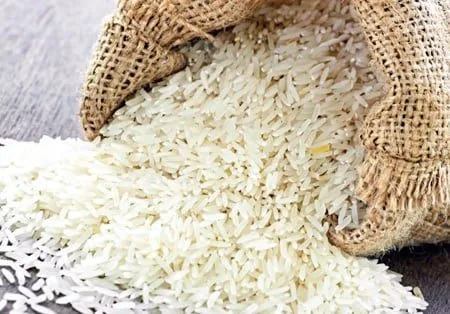
Rice is, by a wide margin, the best grain we can include in a dog's diet. It is an excellent source of easily assimilated carbohydrate that provides quick energy.
Obviously, the secret to using rice properly in a dog's nutrition lies in the amount and in balancing it against meat protein sources. We cannot build a dog's diet on rice alone, or use it as their main food source.
Dogs with digestive or absorption problems, such as inflammatory bowel disease (also known as canine IBD), tolerate low-fat diets far better, and rice can indeed become one of the main ingredients in their food, provided their protein needs are met with other digestible meat sources.
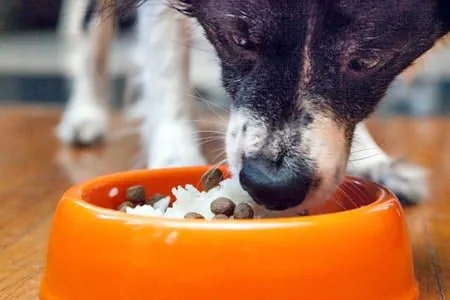
A bowl of boiled rice with boneless chicken and/or a raw egg is a highly nutritious meal for healthy and sick dogs alike. It is used in the BARF diet for dogs and in many natural diets.
So, contrary to what has lately been doing the rounds on forums and social media, rice is a great food for dogs. An excellent complement to their staple diet, which should be built on meat or fish.
We should not, however, confuse rice with other grains such as wheat or maize. Wheat and maize are practically useless to a dog, contributing almost no nutritional value and used simply as filler to cut costs in kibble.
Are Dog Foods Containing Rice Any Good?
Without a doubt, a kibble that lists rice among its ingredients is a high-quality kibble. Even so, we should be cautious and read the ingredient list, which by law has to be ordered from the largest quantity down to the smallest.
A kibble whose first ingredient is rice is not a good kibble, since that tells us most of the food is rice, and that is a serious mistake. A kibble whose third or fourth ingredient is rice, on the other hand, is a good kibble, as long as the first two or three ingredients are meat or fish.
There is currently an absurd fashion for grain-free dog food, based on the equally absurd theory that dogs should eat only meat because they descend from the wolf and so on and so forth. In this way, manufacturers are creating ranges of kibble free of beneficial grains such as rice.
What they do not tell us is that they use tonnes of legumes to replace the rice. Yes, you are feeding your dog lentils and beans because of the absurd fashion for leaving grains out of kibble — and beneficial grains such as rice, at that. Maize and wheat are the ones we should avoid entirely.
So stop and think for a moment about which is likely to be more nutritious for your dog: feeding them meat plus a high-quality, highly digestible grain such as rice, or feeding them meat plus a pile of legumes with little nutritional value for dogs. Give it some thought the next time you buy your dog's food.
Is Rice Better Than Potato or Legumes for Feeding a Dog?
Of course it is. Using potato in dog food (called "balanceado" in Mexico and "pienso" in Spain) is exactly like using legumes such as lentils, beans or chickpeas.
It is a marketing strategy to advertise grain-free kibble, implying that it is of higher quality than kibble that does contain grains. Which is utterly FALSE. Kibbles containing a sensible amount of rice are more nutritious and have a higher biological value than those built on potato or legumes.
Obviously we cannot include here the kibbles that use maize, wheat and the like: those grains really are harmful, not because they cause health problems (they do) but because they have no nutritional or biological value for the dog.
Wheat and maize are used simply to cut manufacturing costs in prepared dog food, because they are very cheap raw materials. That way the manufacturer can make more profit by reducing the amount of meat protein and using cheap grains such as wheat or maize.
A good dog food may include rice in a suitable amount. And it will always be better for it to include rice than, say, legumes or potato. Don't let yourself be swept along by fashions or marketing strategies.
IMPORTANT: This article is for informational purposes only and does not constitute veterinary, nutritional or behavioural advice. Every dog is different, and only your trusted vet can advise you on its specific needs.