 Care
Care
Canine Uveitis: Symptoms and Treatment
Our furry friends can suffer from various eye diseases and conditions throughout their lives. One of them is canine uveitis, which we'll cover in depth in this SoyUnPerro article.
First, we'll need to define what the uvea is and what causes this part of the eye to become inflamed.
After covering the symptoms of canine uveitis, we'll finish by explaining the treatment most recommended by specialists. Sound good? Let's get to it.
What Is the Canine Uvea?
To understand what uveitis is, we first need to know what the uvea is in dogs, also called the vascular tunic.
This is the middle layer of the eye, where structures important for vision are found (ciliary body, choroid, and iris). When any of these becomes inflamed, anterior or posterior uveitis occurs, or panuveitis (a condition affecting the whole uvea).
This can happen for many reasons. Want to know what they are? Let's take a look.
Causes of Uveitis in Dogs
The causes that can trigger uveitis in dogs can be internal or external. Some of the most common are:
- Traumatic uveitis due to a strong blow to the eye.
- From corneal ulcers. If deep, ulcers can cause acute uveitis.
- Induced uveitis, from lens rupture or cataracts.
- Due to clotting problems.
- Metabolic uveitis, caused by diseases such as diabetes.
- Neoplastic uveitis, caused by tumors.
- Uveitis caused by high blood pressure.
- Uveitis from bacterial or viral infection. Two of the most common are distemper and canine hepatitis.
- Uveitis can also be caused by parasites.
- Immune-mediated uveitis.
- Uveitis from algae and fungi, although these aren't very common.
As you can see, the range of causes of uveitis in dogs is very wide. In fact, some drugs can also cause it, and there are immune factors that make certain Nordic breeds more predisposed.
Either way, how can we tell our furry friend's health is compromised? The answer is: by watching for its symptoms so it can be treated as soon as possible.
We should also be careful not to confuse this disease with canine entropion, since it can show similar symptoms at first.
Main Symptoms of Uveitis in Dogs
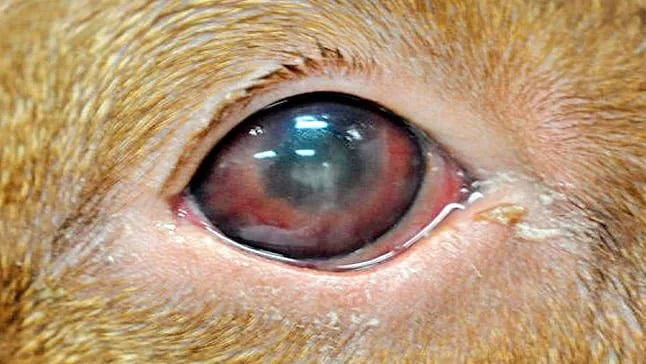
When a dog has uveitis, it will seem listless and without appetite. These symptoms are general and tell us something is wrong. The specific signs that can make us suspect inflammation in the middle layer of the eye are:
- Closes its eyelids from pain.
- Excessive tearing.
- Very red eyes.
- The pupil looks small or closed (miosis).
- Bothered by light (photophobia).
- The eye takes on a blue or gray tone.
- There's pus or blood inside the eye, depending on the stage of the uveitis.
All of this can affect the quality of its vision. In addition, uveitis in dogs can occur in one or both eyes. Either way, to avoid bigger complications, it's important to stay alert and, if we notice any of these signs, see a vet soon.
How Is Canine Uveitis Diagnosed?
While at the appointment, it's important to tell the professional all the relevant changes and symptoms you've noticed in the dog. This information will guide the vet and, along with additional tests, allow for a diagnosis.
Generally, these tests will consist of a full eye exam with a device called an ophthalmoscope. A specialist may also want to perform an ocular ultrasound, X-rays, and bloodwork to rule out other diseases.
Treatment for Canine Uveitis
Once uveitis is confirmed in your dog, the specialist will tell you the most suitable treatment. Depending on the type of uveitis and the stage it's at, the drug protocol will usually include:
- Pain management.
- Systemic anti-inflammatory treatment: steroids will be used, but if your furry friend can't take them due to another underlying condition, don't worry — uveitis also usually responds to non-steroidal anti-inflammatories.
- Local anti-inflammatory treatment.
- Antibiotic therapy: mainly used when there's a corneal ulcer present, either as eye drops or systemically.
Besides the drug therapy mentioned above, your vet will likely recommend, for the first few days of treatment, using an Elizabethan collar, to prevent self-injury.
If the uveitis is treated early on, it doesn't necessarily have to leave lasting effects. That's why it's important that, when we notice redness in our furry friend's eyes, swelling, cloudiness, or any other abnormality, we don't wait at home or handle it ourselves without consulting a professional, hoping it will pass on its own.
You should know that early detection is key to preventing complications such as: adhesions inside the eye, retinal detachment, blindness, chronic pain, cataracts, or even losing the eye. In these cases, time works against us, and it's a common mistake to confuse mild uveitis with harmless conjunctivitis. So now you know — watch for the symptoms and don't take the risk. As the saying goes: better safe than sorry.
IMPORTANT: This article is for informational purposes only and does not constitute veterinary, nutritional or behavioural advice. Every dog is different, and only your trusted vet can advise you on its specific needs.