 Care
Care
Dog Poop Color and Type
You've surely noticed that not all dog poop is the same, not just in size or consistency but also in color. Even our dog's stool can vary in color or texture, depending on various factors we're going to look at.
A dog's poop color can give us much more information than we think, from clues about its health and/or diet, to warning us about the presence of possible parasites and/or digestive problems.
Why Is Dog Poop Different Colors?
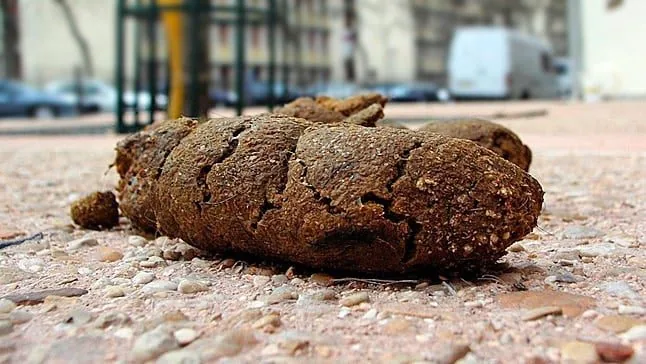
The main reason one poop is lighter or darker than another is the dog's diet. Dogs fed natural food such as the BARF Diet have fairly firm stools, not very shiny and a natural brown color.
However, dogs fed kibble have less firm, much bulkier stools, due to the huge amount of filler used in their formulas.

White or Whitish Poop
These are usually the stools of dogs fed natural food (BARF) that lose color within a few hours, turning white. They can also be due to too much calcium in the diet, too many bones, or eggshells.

Black or Dark Brown Poop
A high amount of meat in our dog's diet can cause its stools to be a very dark or black color. But clotted blood can also give that color to a dog's poop, which is why it's always advisable to check with the vet if our dog regularly has stools of this color.

Light Brown or Yellowish Poop
Too many dairy products such as cheese, whey, or yogurt can cause our dog's poop to be yellowish or light brown. Some uncommon foods in a dog's diet, or too much corn in the kibble formula, can also give it this color.

Greenish or Gray Poop
Some digestive problems such as pancreatitis can result in stools of an unusual color, greenish or grayish. Too many vegetables in the diet can also cause this color in a dog's poop.
Interpreting Poop Texture
Just as color can give us clues about a dog's diet or health, texture can also give us important information. This doesn't mean we need to go experimenting with our dog's poop, but when picking it up with a bag to throw it away, we'll know what texture it has. Or with a simple visual check, we can also tell.

Hard-Consistency Poop
Dogs fed a natural diet usually produce poop with a consistency that could be classified as normal. Their stools are soft but hold their shape and don't smell much.
Dogs fed kibble with high amounts of binding agents such as rice or beet pulp have hard-consistency stools. Although quite a bit bulkier and smellier.
Some people mistakenly believe that since their dog's poop is hard, they're feeding it good kibble, when in reality they're feeding it kibble with an excess of binding agents, not very natural for its diet.

Medium-Soft Consistency Poop
Curiously, when our dog's poop isn't hard as rocks, we worry, thinking something might be upsetting its stomach. We couldn't be more wrong.... dogs fed kibble that doesn't contain an excess of binding agents such as rice should have soft poop.

Watery/Diarrhea-Consistency Poop
When something's wrong in our dog's digestive system, it's usually expressed through watery stools, diarrhea-like and generally very smelly. There can be many causes, but this should never be interpreted as a normal or healthy bowel movement.
Loose or diarrhea-like stools can be caused by a poor diet, a health problem, a viral or parasitic issue. Stress can also cause this type of stool.

Very Shiny Poop, With Mucus and/or Worms
Very shiny poop tells us there's too much fat in the diet, which can damage the dog's pancreas over time. If it looks watery or mucous, it may indicate the presence of some intestinal bacteria causing gut flora shedding. But it could also indicate the presence of some intestinal parasites such as giardia.
If we notice the presence of any type of worm, we should go to the vet immediately with a stool sample. Each type of parasite requires specific treatment, so only after analyzing its stool can the best treatment be determined.
IMPORTANT: This article is for informational purposes only and does not constitute veterinary, nutritional or behavioural advice. Every dog is different, and only your trusted vet can advise you on its specific needs.