 Care
Care
Dwarfism in Dogs — What Are the Causes and What Can We Do?
Pituitary dwarfism is an uncommon condition, but one that still occurs in dogs today. It's been described in certain breeds with a higher predisposition than others.
It involves a deficiency in the production of a certain hormone, causing the dog not to reach its expected size, leaving it dwarfed. Let's take a detailed look at the causes and what we can do to address it.
What Is Canine Dwarfism?
As mentioned, pituitary dwarfism is an uncommon condition occurring as a result of a lack of growth hormone, or GH, during the pet's early developmental stage. This is caused by an abnormality in the pituitary gland.
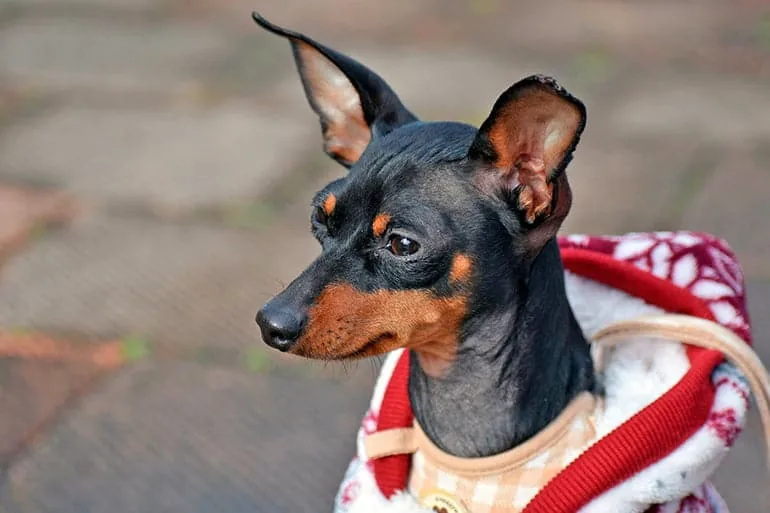
As a result of this, proper growth is disrupted due to lower production of factors essential to this process. According to studies, a higher predisposition has been described in the Miniature Pinscher, German Shepherd, and Weimaraner.
How to Know If a Dog Has Dwarfism? Symptoms
Clinical signs usually appear around three months of age, although since the dog is so young, this isn't easily noticeable by the owner. As the name suggests, the most notable sign or symptom will be a lack of normal growth. The individual dog will have the breed's standard (proportioned) shape but will look considerably smaller in size.
Other signs we may find in dogs will be:
- Skin problems. This is linked to dwarfism in the way the affected dog keeps puppy-like conditions due to a lack of development. In other words, there will be retention of puppy fur (soft, fine, silky appearance).
- Bilateral alopecia or bald patches (on both sides of the body).
- Weak, thin, often hyperpigmented (darker than normal) skin. Secondary bacterial infections can also appear on the skin.
- Possibility of developing hypothyroidism at some point in the animal's life.
- Delayed closure of bone growth plates. In puppies, while the bones are growing, X-rays can show growth plate lines (radiolucent or dark on the test) that should close as they grow. In dogs with dwarfism, this process is delayed over time.
- Possible reproductive disturbances such as atrophy of the reproductive organs and absence of heat in females.
- It will be common for permanent teeth to erupt late, with baby or deciduous teeth staying in place longer.
How to Diagnose Canine Dwarfism
Although observing the patient may make it seem obvious, the vet will need to take a history of the patient. As much information as the owner can provide needs to be gathered.
Next, as with any condition, a general physical exam of the patient needs to be done, where the vet can observe skin lesions, if any.
Next, the animal's reduced size for its age, based on breed and characteristics, will be noted, and some additional test can be run. Testing insulin-like growth factor 1 (IGF-1) is the best way to indirectly reflect growth hormone levels. In dogs with dwarfism, this factor is significantly reduced, being under 50 ng/ml.
Another way to reach a definitive diagnosis is by stimulating growth hormone release using xylazine or GnRH. In a healthy animal, growth hormone will increase after this is given; however, in dwarfism, this increase doesn't occur.
An X-ray of the animal's long bones can be done, where the growth plate lines can be observed still unclosed.
Is There Treatment for Dwarfism?
Treatment will be applied after the disease is properly diagnosed. Drugs will be given that try to induce growth hormone production. This can be done by giving progestogens such as medroxyprogesterone, at doses every three weeks and then every six.
Generally, the skin-related clinical signs described earlier improve, adult fur grows in, and weight increases.
Experimentally, subcutaneous implants of canine GH (growth hormone) have started to be used, but they're currently not available in most countries.
The long-term prognosis is usually guarded, since these patients' life expectancy tends to be reduced (around six years, though it depends on several factors). However, we advise that if in doubt, you take your pet to the vet.
IMPORTANT: This article is for informational purposes only and does not constitute veterinary, nutritional or behavioural advice. Every dog is different, and only your trusted vet can advise you on its specific needs.