 Training
How to Train a Dog
We get plenty of emails every day asking us how to properly train a dog, what steps to follow, and which are the most effective techniques for training to succeed. We're going to explain step by step how to properly train a dog, how to make training positive for our pet, and most importantly, how to get them to learn properly. There's possibly nothing as simple as training a dog — you just need to know how to do it right.
Before continuing, we'd like to make very clear what NOT to do during training, since if we make the mistake of training our pet badly, it'll cost us twice or three times as much to retrain them properly. Let's look at the mistakes we should never make:
- Never shout at, scold or hit your dog. Physical or psychological punishment isn't effective — this is more than proven, and it's cruel. They'd never do it to you.
- Never lose hope — patience is the mother of every skill, and training a dog takes time; you'll need plenty of patience.
- Don't use choke or pain-inducing collars — it's needless cruelty. There are a thousand effective ways to train a dog, and none of them involve punishment or torture.
- Never use different ways of addressing them — always call them by their name and then give the command.
You'll find this hugely interesting: How to become a dog trainer
Now that you know everything not to do, it's time to learn how to effectively train a dog. The first thing we need to do is let our dog know who the owner is, the leader or pack alpha, whichever way you prefer to put it. We strongly recommend reading the article: How to lead my dog. Getting our companion to understand you're the pack leader is essential both for training them and for proper day-to-day life together.
How to Properly Train a Dog So They Learn
We need to train our companion consistently, that is, carry out training work three or four times a week, steadily and persistently. We should start sessions after taking our dog on a long walk — it's essential they've burned off steam, run, played and relieved themselves before starting any training session, especially if they're an active breed such as the Doberman breed or Pitbull. A dog who hasn't burned off steam will never learn properly, since they simply won't focus.
To carry out training sessions, we need to choose a calm spot, where no other dog will distract us, and with no loud noise or constant foot traffic. We need a degree of privacy so our pet can learn as much as possible and stay focused.
We need to bring rewards to reward our dog when they do the exercises well — dog biscuits, pieces of sausage or bread can be perfect rewards. Cuddles and strokes are also good rewards to pair with food-based ones.
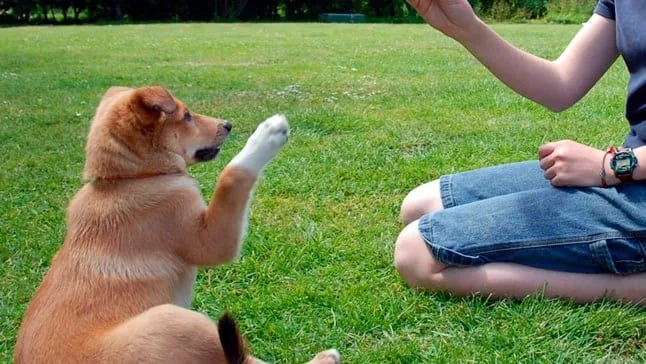
When our dog does an exercise well, we'll praise them enthusiastically — Good! Well done! That's it! Good boy Tobby! and so on… we'll give them a biscuit or piece of sausage as a reward and stroke them. They need to know we're happy because they did well — this is essential.
When our dog does the exercise badly, we'll simply go back to the starting position and start the exercise again. Once we reach the point where they make the mistake, we'll simply say, in a firm voice, "No!" There's no need to shout at or punish them, and we won't give them any reward either.
Training sessions shouldn't last more than half an hour — if we go over half an hour, we need to play for no less than fifteen minutes before starting the training session again. Never exceed an hour of daily training — we don't want and shouldn't stress them out.
In this article we're not going to teach you how to use your dog for personal protection — it's an unnecessary risk for inexperienced people to teach such dangerous exercises to dogs. If what you want is to teach your dog protection exercises, you need to see a professional trainer, without fail. There's no excuse not to — teaching protection exercises to your dog incorrectly will be a disaster.
During training sessions we need to work on a single command until it's properly learned — we can't teach them a thousand things, not even two things, in one session — we need to go step by step, day by day.
We need to always use the same command for each exercise — if one day we teach them to sit with the command "Sit", we can't change it the next day or the following week to "Siéntate" — we need to always keep the same commands.
Training sessions should happen in suitable weather, not too cold or hot.
How to Teach Our Dog to Sit Simply
Once we've followed all the guidelines mentioned above and are set up somewhere calm to start the training session, let's look at how to teach our dog to sit.
We won't position ourselves in front of our dog — with our left hand we'll hold them gently by the collar, purely so they don't wander off and stay by our side. With our right hand we'll press on their back, at hip height, so their back legs fold and they sit. While we press with our right hand and they sit, we'll say, in a firm voice, just once, the command we want for this exercise, for example "Sit" or "Sit down".
Once they sit, we'll let go and praise them, give them a reward (biscuit or piece of sausage) and stroke them a little. We need to repeat this exercise consistently until our dog sits just from hearing the command — when we say "Sit", they should do it on their own, with no need for us to press on their back with our right hand.
It's not simple work — we'll possibly need a few days before they do it effectively. It matters that on days with no training, we repeat this command at home, for example before giving them dinner or stroking them. This is a positive, indirect way of reminding them of what we did during the training session.
As the days go by, they'll do the exercise on their own — that's when it's time to carry out the next step: getting them to stay sitting until we give the command to get up.
We'll do the sitting exercise with the "Sit" command, and once the dog has sat, we'll gradually move away from them, without turning our back. If they get up to come towards us, we'll say "No!" and tell them to sit again.
We need to repeat this step until they stay sitting and we can move a couple of metres away from them without them getting up. We'll do this gradually — we'll ask them to sit and move half a metre away, ask them to come with the command "Come" or "Here" so they approach us, and reward, praise and stroke them. Once they learn to do this well, we'll repeat, moving a bit further away, about a metre. Once they do it well, we'll move a metre and a half away, and so on, until they learn to stay sitting even if we're five or ten metres away.
Properly carrying out this exercise can take us several weeks, especially with somewhat stubborn breeds such as Pitbulls — we need to be patient and persistent. Carry out the exercises calmly, and if our dog doesn't learn to do it well, it's not their fault — it's most likely that we're not giving instructions properly.
How to Teach Our Dog to Lie Down in a Few Steps
To teach our dog to lie down, we first need to have taught them to sit, since it's an essential step for carrying out this exercise.
We'll give our dog the sit command, and once they've sat, we'll grab a reward with our hand and place it near their mouth, without letting them take it. Without them getting up, we'll gradually move the reward away so they lean forward, while also lowering it, so they also lean downward. With our other hand, very, very gently, we'll give small taps to their front legs, so they stretch them forward and lie down.
While they're lying down, we'll give the lie-down command, just once: "Lie down" or "Down" will be enough. Once they've lain down, we'll give them the reward and praise them for having done their work well. Before repeating the exercise, we need to ask them to fully get up and start from the beginning, give the sit command, and repeat the process.
We'll repeat the exercise as many times and weeks as needed, until they lie down on their own with the corresponding "Lie down" command. Once they do it properly, we'll follow the same process we did with the sit command, gradually moving away without letting them get up until we tell them to.
Properly carrying out this exercise will also take us several weeks — we need to be patient and consistent. We should never pressure our dog or stress them out — we shouldn't force them to do what they don't want to do. If one day they decide they don't want to learn, it's best to continue training another day.
How to Teach Our Dog to Walk Beside Us
We'll need to leash our dog with a short lead, no more than a metre long. We'll start walking in the area set aside for training, being careful our dog never tries to get ahead of us. Whenever they try, we'll turn 180º so we take a new direction — this will disorient them a bit, making them pay attention to us.
We'll go for walks at a medium-strong pace, making unexpected 90º or 180º turns. If our dog tries to get ahead of us, we'll change direction so they need to adjust and loosen the lead to follow us. You can find every recommended technique in our post How to teach your dog to walk.
This kind of training is possibly one of the trickiest — plenty of dogs struggle to learn to walk properly, but once they manage it, it's a genuine pleasure to walk with them. If we see our dog is too excitable or we can't control the walk, we should use the tricks set out in the article recommended above.
There are also special "anti-pull" harnesses, which will make this training task easier if our dog is excessively excitable.
How to Teach Our Dog to Come When Called
This technique is one of the simplest — it involves tricking our beloved pets with rewards, and it's genuinely simple. When our dog is a bit far from us, we'll pull out a reward and hold it in our hand so they see it, while calling them and giving them the command to come.
It's not enough to call them by name — we need to give them the command to come; for example, if they're called "Tobby", we need to show them the reward and say, loudly enough for them to hear, "Tobby, come!" or "Tobby, here!" As soon as they see the reward, they'll come running; once they're by our side, we'll give them the reward and praise them enthusiastically. If our dog sees us and doesn't come, it's because they don't like the reward you're giving them much… try a small piece of sausage — they tend to love it.
We need to practise this technique over several weeks — after this time, we'll give rewards only intermittently, so that when we call them, sometimes there's a reward and sometimes there isn't. Even so, we should always, always praise them when they come to us following the command. Over time we can gradually withdraw rewards entirely from this exercise, but we should always praise them.
How to Train a Puppy
Puppies don't need training, since they simply think about playing and having fun. It's only from five or six months old that we can start training them, gradually and very gently, playfully. We should never force or stress them out. The ideal age to start training a dog is from a year old, gently and gradually.
Puppies just need to play and run, interact and socialise with other dogs, and little more… let them be happy — there'll be time to learn later. Even so, when you see them doing something wrong, such as biting people (obviously while playing), you can say "No!" to them so they gradually start learning.
Training a puppy is like trying to teach a baby algebra — it makes no sense. If you have any doubts left, or want to share practical information, you can leave a comment or send us an email.
Remember, be happy with your little one and don't rush to see them grow up — everything comes at its own time :)
IMPORTANT: This article is for informational purposes only and does not constitute veterinary, nutritional or behavioural advice. Every dog is different, and only your trusted vet can advise you on its specific needs.