 Nutrition
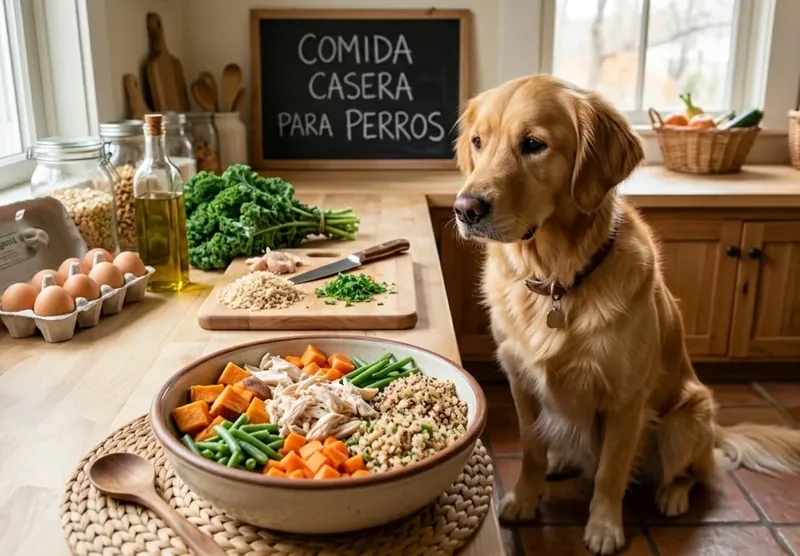
Home-Made Food for Dogs
Making your dog's food yourself can be one of the best gifts you give them… or one of the biggest nutritional risks if it's not done right. The good news: with the right information, home-made recipes are perfectly safe and nutritious. This guide explains when, how and with what ingredients to get it right, backed by scientific evidence and with no beating around the bush.
Is Home-Made Food Advisable for a Dog? What the Science Says
The direct answer is: yes, but with conditions. Home-made food can be an excellent option for your dog, as long as it is well formulated and matched to their life stage. The problem is not the idea itself, but how it is carried out most of the time.
The most cited study on the subject, carried out at the UC Davis School of Veterinary Medicine (Stockman et al., JAVMA 2013), analysed hundreds of home-made recipes published online, and the results were revealing:
86% had minerals in inadequate amounts 55% provided insufficient protein 62% contained incorrect or poorly balanced vitaminsThis does not mean home-made food is bad. It means most recipes circulating online are incomplete. The difference between an excellent home-made diet and a deficient one is not in the ingredients, but in the nutritional balance. If you want to understand this approach from its foundations, our complete guide to natural feeding for dogs expands on every principle of a fresh, balanced diet.
When Home-Made Food IS Advisable
- Healthy adult dogs with no specific medical conditions, with a recipe supervised or validated by a vet nutritionist.
- Dogs with food allergies or intolerances where full control over ingredients is therapeutically necessary.
- As a partial supplement (adding fresh ingredients to a quality kibble) with no need to formulate a complete diet.
When Veterinary Supervision Is Mandatory
- Growing puppies: their calcium, phosphorus and vitamin D needs are very precise. A study published in Veterinary Record Case Reports (2020) documented vertebral fractures from severe osteopenia in a puppy fed an unsupervised home-made diet.
- Pregnant or nursing bitches: energy and micronutrient demands change drastically week by week.
- Dogs with chronic illness (kidney, liver, diabetes, cancer): diet is part of the treatment and should be formulated with a vet who specialises in nutrition.
If you want to start with home-made food, the sensible approach is to check with a vet nutritionist (there are online ones in Spain) to validate or formulate your recipes. A consultation usually costs between €60 and 120 and can save you serious problems in the long run.
📚 Scientific Evidence Stockman et al. (JAVMA / UC Davis, 2013) · Veterinary Record Case Reports, vertebral fracture from unsupervised home-made diet (BVA Journals, 2020) · WSAVA Nutritional Assessment Guidelines (2021 and 2026)How Many Times a Day Should a Dog Eat Home-Made Food?
Feeding frequency matters more in a home-made diet than with kibble, because fresh food has higher water content, lower calorie density and digests faster. Splitting the rations properly prevents hypoglycaemia in puppies, gastric distension and poor digestion.
Puppy 0 to 6 months 4 times a day Small, frequent portions to keep blood sugar stable and support calcium absorption. Puppy 6 to 12 months 3 times a day Growth is still active. Keep 3 meals until bone development is complete. Adult 1 to 7 years 2 times a day Morning and evening. Space meals at least 8 hours apart to support full digestion. Senior 7+ years (large breeds) / 10+ (small breeds) 2–3 times a day Smaller, more frequent portions. Eases digestion in animals with reduced gastric motility. ⚠️ Important NoteHome-made food should not be left out for more than 30 minutes at room temperature. If your dog does not eat it, remove it and keep it in the fridge for a maximum of 2 days. Unlike kibble, fresh food is more prone to bacterial growth.
📚 Scientific Evidence WSAVA Nutritional Assessment Guidelines — feeding frequency by lifestage (2026)Three Balanced Home-Made Recipes, Easy to Prepare
The three recipes below are formulated for a 10 kg adult dog as a reference. Adjust the amounts in proportion to your dog's weight (general guide: between 2% and 3% of body weight a day in fresh food weight). If you want to go a step further with a diet based on raw, unprocessed ingredients, the BARF diet offers complete weekly menus with exact proportions for each food group.
📐 How to Adjust the AmountsFor a 20 kg dog, multiply by 2. For a 5 kg dog, divide by 2. Puppies need between 4% and 6% of their body weight. Watch your dog's weight and body condition and adjust with your vet.
🍗Recipe 1 — Chicken With Rice and Vegetables
The classic recipe · highly digestible · ideal for sensitive dogs
⏱ 20 min 🐕 For 10 kg ❄️ Keeps 2 daysIngredients
- Cooked chicken breast (skinless, boneless)150 g
- Cooked white rice50 g
- Cooked carrot30 g
- Cooked green beans20 g
- Salmon oil5 ml
Step-by-Step Method
- Boil the chicken in unsalted water until fully cooked. Remove the skin and bones and shred into small pieces.
- Boil the white rice in unsalted water. Drain well to remove excess starch.
- Steam the carrot and green beans until soft but not mushy.
- Mix all the ingredients once cooled to warm. Add the salmon oil cold, with no heating, to preserve the omega-3.
- Serve at room temperature or slightly warm (not hot). Keep the rest in an airtight container in the fridge.
Recipe 2 — Salmon With Sweet Potato and Spinach
Rich in omega-3 · ideal for skin, coat and joints
⏱ 25 min 🐕 For 10 kg ❄️ Keeps 2 daysIngredients
- Steamed salmon (no bones)120 g
- Cooked sweet potato (no skin)60 g
- Blanched spinach (well drained)20 g
- Hard-boiled egg (¼ only)¼ unit
Step-by-Step Method
- Steam the salmon for 10-12 minutes. Check no bones remain and shred it.
- Boil the sweet potato until tender. Lightly mash with a fork (not a fine purée).
- Blanch the spinach for 2 minutes in boiling water, drain very well and chop into small pieces.
- Mix all the ingredients while warm. Add ¼ of the hard-boiled egg cut into small pieces.
Salmon and oily fish are the most bioavailable source of the omega-3 fatty acids EPA and DHA in a dog's diet. Multiple studies (Bauer, JAVMA 2007; Magalhães et al., PMC 2021) confirm their benefits for inflammation, coat quality and joint mobility. It is recommended 2-3 times a week.
🥩Recipe 3 — Beef With Egg and Carrot
High in protein · ideal for active dogs or those recovering
⏱ 20 min 🐕 For 10 kg ❄️ Keeps 2 daysIngredients
- Cooked lean beef (topside or silverside)140 g
- Whole hard-boiled egg1 unit
- Grated raw carrot40 g
- Grated raw courgette20 g
Step-by-Step Method
- Boil the beef in unsalted water with no seasoning. Cut into cubes or shred it depending on the dog's size.
- Boil the egg (10 minutes), peel it and cut into quarters.
- Grate the fresh carrot and courgette and mix it all with the meat and egg. The raw vegetables will provide extra enzymes and fibre.
How to Prepare Home-Made Dry Food for Dogs?
Home-made dehydrated snacks are an excellent alternative to ultra-processed commercial treats. You only need an oven or dehydrator, fresh ingredients and drying time. No salt, no spices, no preservatives.
Oven Method (the Simplest Way)
- Cut the meat into thin slices 3-4 mm thick. At this thickness, heat penetrates evenly and eliminates pathogens without burning the outside. The most used cuts: chicken breast, chicken liver, beef heart, turkey muscle.
- Preheat the oven to 70°C with the fan setting on. This temperature is enough to eliminate Salmonella and Listeria without destroying the nutrients. Without a fan, moisture builds up and dehydration is not effective.
- Place the slices on a rack (not a flat tray) to allow air to circulate on both sides. Leave space between each piece.
- Dehydrate for 4 to 6 hours. The exact time depends on thickness and fat content. Liver takes less time (3-4 h); chicken muscle, more (5-6 h). The right result: flexible but dry to the touch, with no moisture inside when bent.
- Cool completely before storing. Never put warm snacks into a sealed jar: the built-up steam creates mould.
If you have a dehydrator, use 68°C for 5-8 hours. The result is more uniform than with the oven and uses less energy. Mesh trays allow better air circulation.
Ideal Ingredients for Dehydrating
Ingredient Temperature Approx. Time Result Chicken breast 70°C 5-6 hours Firm, flexible snack Chicken liver 70°C 3-4 hours Very appealing · use in moderation (vitamin A) Sliced sweet potato 70°C 6-8 hours Crunchy and slightly sweet Sliced carrot 70°C 6-7 hours Crunchy, low in caloriesStoring Dehydrated Snacks
Keep the snacks in an airtight glass jar in a dry place away from direct light. Maximum shelf life: 3 weeks at room temperature. If you live in a humid climate, refrigerate and eat them within 2 weeks. You can freeze them for up to 3 months with no noticeable loss of quality.
📚 Scientific Evidence USDA Food Safety and Inspection Service — food safety in dehydrated meat products (temperature guidelines) (2026)Home-Made Foods Dogs Should NEVER Eat
When you prepare home-made food, controlling dangerous ingredients is your direct responsibility. Unlike commercial kibble, there is no outside safety net. The classification below, based on veterinary scientific literature, helps you identify what is genuinely dangerous and how urgently to act.
🔴 High Danger ChocolateContains theobromine, which dogs metabolise very slowly. From 20 mg/kg, clinical symptoms already appear (vomiting, tremors, arrhythmias). Dark chocolate is the most dangerous; white the least. A single piece of dark chocolate can be fatal for a small dog.
🔴 High Danger Xylitol (sweetener)Found in chewing gum, sugar-free sweets, "light" peanut butter and some yoghurts. In dogs it causes severe hypoglycaemia within 30 minutes and liver necrosis at doses of 0.5 g/kg. A retrospective study of 192 cases (PubMed, 2015) confirmed its high mortality rate without urgent treatment.
🔴 High Danger Grapes and RaisinsCause acute kidney failure with no known minimum dose — even small amounts can be fatal. The toxic mechanism is still not fully determined. A study of 43 dogs (J Vet Intern Med, 2005) documented acute kidney failure in 100% of cases.
🔴 High Danger Onion and Garlic (Allium Family)n-propyl disulfide damages red blood cells, causing haemolytic anaemia. Dangerous in any form: raw, cooked, powdered or dehydrated. Garlic is 3 to 5 times more potent than onion. The onion powder in many home-made stocks is especially risky.
🔴 High Danger MacadamiaCauses a syndrome of muscle weakness, tremors, hypothermia and vomiting from 0.7 g/kg. Although rarely fatal in healthy adults, symptoms are severe and always call for urgent veterinary attention.
🔴 High Danger Alcohol and CaffeineAlcohol (including fermenting bread dough with yeast) can cause central nervous system depression and coma. Caffeine from coffee, black tea and energy drinks causes a racing heart, tremors and seizures.
🟠 Medium Danger AvocadoContains persin, which is highly toxic to birds and ruminants but of moderate risk in dogs. The flesh in small amounts rarely causes serious problems, but the stone (obstruction risk) and large amounts can cause vomiting, diarrhoea and, in severe cases, cardiomyopathy.
🟠 Medium Danger Excess SaltHypernatraemia from excess salt intake causes vomiting, diarrhoea, tremors and seizures. In home-made recipes, never add salt. Avoid commercial stocks, cured meats, crisps or any salty human snack.
🟠 Medium Danger Excess DairyMost adult dogs have a lactase deficiency and do not digest lactose well. A little hard, low-lactose cheese or plain yoghurt with no additives can be well tolerated, but whole milk and large amounts cause diarrhoea and digestive upset.
🔵 Caution Bread, Pasta and Refined FlourNot toxic, but they have no nutritional value for dogs either. Their high glycaemic index encourages weight gain and can crowd out essential nutrients. Raw bread dough with yeast is indeed dangerous (see alcohol).
🚨 What to Do if Your Dog Eats Something ToxicCall your vet or the nearest emergency vet centre immediately. Do not wait for symptoms to appear: with xylitol and grapes, internal damage starts before the dog even seems unwell.
Do not induce vomiting without veterinary guidance. With some toxins (such as acidic or caustic products) vomiting makes the damage worse. Your vet will tell you if it is needed and how to do it safely.
Keep the nearest emergency vet's phone number to hand.
📚 Scientific Evidence Merck Veterinary Manual — Chocolate Toxicosis (2026) · Merck Veterinary Manual — Xylitol Toxicosis (2026) · J Vet Intern Med — Acute renal failure, grapes/raisins, 43 dogs (PubMed, 2005) · PMC/NIH — Allium hemolytic anemia (2010) · Household Food Items Toxic to Dogs and Cats (Cortinovis & Caloni, PMC 2016) · ASPCA Animal Poison Control (2026)IMPORTANT: This article is for informational purposes only and does not constitute veterinary, nutritional or behavioural advice. Every dog is different, and only your trusted vet can advise you on its specific needs.