 Nutrition
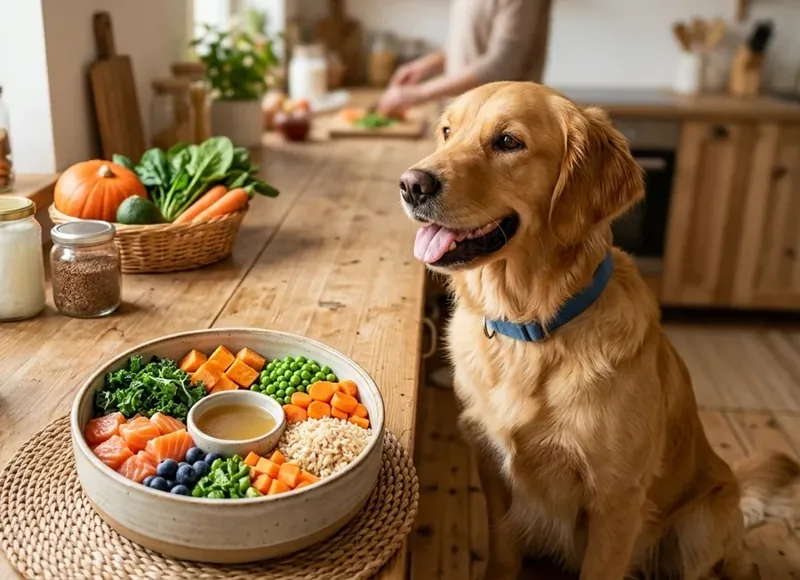
Natural Food for Dogs
If you're looking into what your dog can eat beyond kibble, you're in the right place. This guide brings together everything you need to know about natural feeding for dogs: which models exist, which foods are safe, which are forbidden, and how to apply a home-made or BARF diet safely and in a balanced way. All the information is backed by studies from PubMed, WSAVA, JAVMA and leading veterinary universities.
What Is Natural Food for Dogs, and How Does It Differ From Kibble?
Canine feeding is organised into three main models: kibble (an ultra-processed, dehydrated food), a cooked home-made diet and a raw BARF diet. Each has its own characteristics, advantages and drawbacks. Knowing them is the first step to making an informed decision.
What Is the BARF Diet and How Does It Work?
BARF stands for Biologically Appropriate Raw Food, a concept popularised by Australian vet Dr. Ian Billinghurst in 1993. The premise is simple: feed the dog the same raw ingredients their ancestors would have eaten — muscle meat, meaty bone, organs and, to a lesser extent, vegetables. It does not simply mean giving them raw meat; it calls for specific proportions and a variety of protein sources. If you want to go deeper into this model, check our complete guide to the BARF diet with weekly menus.
Cooked Home-Made Diet vs Raw BARF
Aspect Cooked home-made diet Raw BARF Preparation temperature Cooked (>70°C) Raw (no heat) Nutrient retention Partial loss from heat Maximum retention Bacterial risk Low Moderate (requires strict hygiene) Cost Medium Medium-high Learning curve Moderate HighIs Home-Made Food Better Than Kibble?
It depends on the dog, their age, health status and how properly the diet is formulated. A home-made diet well formulated by a vet nutritionist can be superior to standard kibble in digestibility and the absence of ultra-processed ingredients. Even so, most home-made recipes circulating online show significant nutritional imbalances, according to studies from WSAVA and UC Davis.
📚 Scientific Evidence — Section 1
· WSAVA Global Nutrition Committee (2021). Nutritional Assessment Guidelines. wsava.org
· Lyu et al. (2025). Current Evidence on Raw Meat Diets in Pets. Animals Journal. PMC/NIH
· Davies et al. (2019). Raw diets for dogs and cats: a review. J Small Anim Pract. PMC/NIH
· Freeman et al. (2013). Risks and benefits of raw meat-based diets. JAVMA, Tufts University.
What Are the 3 Best Natural Foods for Dogs?
The three best natural foods for dogs are: quality animal protein (meat or fish), safe vegetables, and a meaty bone or calcium source. Let's look at each in detail below.
Food Number 1 Recommended by Vets: Animal Protein
High-quality animal protein — chicken, turkey, beef, lamb, salmon — forms the basis of any balanced natural canine diet. Dogs are omnivores with a metabolic profile heavily skewed towards animal protein and fat. WSAVA guidelines point out that animal-derived protein provides every essential amino acid a dog's body cannot synthesise on its own.
Protein: Meat, Fish and Egg
- Muscle meat (chicken, turkey, lamb, rabbit, beef): the main protein source in any natural diet. Rich in essential amino acids, creatine and zinc. Chicken and turkey are the most digestible, affordable options to start with. Lamb and rabbit are ideal for dogs with sensitivities to chicken. Give raw or cooked, always with no salt or spices.
- Oily fish (salmon, sardine, mackerel): an exceptional source of omega-3 EPA and DHA. Studies show that supplementation improves joint inflammation, coat quality and cognitive function. Give steamed or tinned in water with no salt. Maximum 2-3 times a week.
- Whole egg: extremely high-bioavailability protein with an almost perfect amino acid profile. The yolk contains choline, vitamin D and healthy fatty acids. Ideal for puppies, pregnant bitches and dogs recovering from illness. Too much raw egg white can interfere with biotin absorption; cooked egg is the safest choice.
The Healthiest Thing a Dog Can Eat
The healthiest combination for a healthy adult dog is: lean muscle meat as the main base, oily fish two or three times a week, egg three or four times a week, and safe vegetables (carrot, courgette, blanched spinach) as a complement not exceeding 15-20% of the total. The key is variety: rotating between different protein sources prevents micronutrient shortfalls and reduces the risk of intolerances.
📚 Scientific Evidence — Section 2
· Bauer (2007). Responses of dogs to dietary omega-3 fatty acids. JAVMA. PubMed
· Magalhaes et al. (2021). Therapeutic Effect of EPA/DHA — Systematic Review. In Vivo Journal. PMC/NIH
· Moreau et al. (2013). EPA/DHA in canine osteoarthritis — RCT of 78 dogs. The Veterinary Journal.
· PMC (2024). Effects of Omega-3 on Quality of Life and Pain Scores in Dogs. Animals Journal.
What Natural Foods Can I Give My Dog? Fruit, Vegetables and More
This section answers one of the most common questions: what can I share with my dog from the fridge? The answer varies a great deal by food — memorising the absolute no-gos can save their life. For a quick alphabetical reference, check the complete list with a traffic-light food table.
Safe Fruit and Vegetables for Dogs
Food How to give it % of the diet Carrot Raw or cooked, in pieces or grated 5–10% Courgette Raw or steamed, in cubes 5–10% Broccoli Steamed, small amounts <5% Apple No pips or core, raw in pieces Occasional snack Watermelon No skin or pips, raw Occasional snack Blueberries Raw, whole Max. 10–12/day Pear No pips, raw in pieces Occasional snack Melon No skin or seeds, raw Occasional snack Spinach Blanched, small amount <5% Green beans Cooked, no salt 5% Cucumber Raw, sliced Low-calorie snack Sweet potato Always cooked, never raw 5–8%Vegetables Dogs CANNOT Eat
⚠️ Absolute no-gos — proven toxic mechanism
Onion and garlic (and the whole Allium family): n-propyl disulfide destroys red blood cells, causing haemolytic anaemia. The effect is cumulative. Includes onion powder, garlic powder, leek and chives.
Grapes and raisins: cause acute kidney failure even in small amounts. The exact mechanism is still being researched, but the risk is documented in dozens of clinical cases.
Avocado: persin (a toxin present in the flesh, skin and stone) causes heart problems. In dogs the risk is moderate but real, especially with the skin and stone.
Cherry: the stone contains cyanide. The flesh is not toxic in small amounts, but the risk of swallowing the stone is high.
What Human Food Can Be Given to a Dog?
Traffic Light Foods 🟢 YES Cooked chicken with no bone or skin, unsalted white rice, carrot, steamed salmon with no bones, cooked egg 🟡 IN MODERATION Low-salt fresh cheese, plain yoghurt with no sugar or sweeteners, banana, tinned tuna (occasional) 🔴 NEVER Chocolate, onion, garlic, grapes, raisins, xylitol, macadamia nuts, alcohol, coffee, black or green teaWhat Natural Tea Can I Give My Dog?
Allowed in moderation: chamomile (digestive, calming properties, give lukewarm with no sugar), ginger in small amounts (anti-nausea, useful for travel).
Forbidden: black tea and green tea (contain caffeine, toxic to dogs), mint in large amounts (can irritate the digestive tract).
📚 Scientific Evidence — Section 3
· PMC (2010). Allium toxicosis: hemolytic anemia mechanism. Journal of Veterinary Science.
· PMC (2025). Garlic toxicity on canine erythrocytes — in vitro.
· PubMed (2005). Acute renal failure in dogs after grape/raisin ingestion — 43 dogs. J Vet Intern Med.
· PMC (2020). Grape/raisin toxicosis: AKI and neurological signs — 15 dogs.
· Merck Veterinary Manual (2024). Avocado (Persea spp) Toxicosis in Animals. merckvetmanual.com
The 10 Best Home-Made Foods for Dogs
- Boneless cooked chicken: the main protein source of any home-made diet. Low in fat, highly digestible and well tolerated. Give with no skin and no cooked bones (cooked bones are dangerous; raw meaty ones are indeed suitable in a BARF context).
- Salmon and oily fish: rich in omega-3 EPA and DHA, benefits the skin, coat and joints. Give steamed or tinned in water with no salt. Maximum 2-3 times a week.
- Whole egg: high-bioavailability protein with an almost perfect amino acid profile. Give cooked. Excellent for growing puppies and dogs recovering from illness.
- Carrot: a low-calorie snack, rich in beta-carotene and fibre. Helps clean teeth when chewed raw. Ideal as a training reward.
- Courgette: low glycaemic index and high water content. Ideal for overweight dogs. Give raw in cubes or lightly steamed.
- White rice: an easily digested carbohydrate, very useful for gastrointestinal recovery. Should not be the permanent base of the diet.
- Chicken or beef liver: an organ dense in vitamin A, iron, zinc and B vitamins. Do not exceed 5% of the total diet — built-up excess vitamin A can cause toxicity.
- Sweet potato: a complex carbohydrate with vitamin C, potassium and fibre. Always give cooked. Very useful for active dogs who need sustained energy.
- Blueberries: natural antioxidants that boost the immune system. Maximum 10-12 a day for medium-sized dogs.
- Home-made bone broth (no salt): rich in collagen, gelatine and minerals. Prepare with raw bones, water and a splash of apple cider vinegar. Simmer for 12-24 hours. Never add onion, garlic or salt.
· Merck Veterinary Manual (2024). Vitamin A toxicity in dogs.
· WSAVA (2021). Raw Meat-Based Diets: risks of nutritional imbalance.
· Bauer (2007). Responses of dogs to dietary omega-3 fatty acids. JAVMA.
What Can a Dog Be Given as Home-Made Food? Everything You Need to Know
A home-made diet opens up plenty of possibilities, from simple dishes to rotating weekly menus. If you want detailed suggestions tailored to different life stages, our article on complete home-made dog food recipes has everything you need to get started.
How Many Times a Day Should a Dog Eat Home-Made Food?
Frequency matters more with home-made food than kibble, because fresh food perishes faster. Home-made food should not be left out for more than 30 minutes at room temperature.
Life stage Daily frequency Puppy 0–6 months 4 times a day Puppy 6–12 months 3 times a day Adult 2 times a day (morning and night) Senior 2–3 times a day, smaller portionsWhat Home-Made Food Should Dogs NOT Eat?
Food Toxic mechanism Consequence Chocolate Theobromine Vomiting, seizures, death Grapes and raisins Unknown Acute kidney failure Onion / Garlic N-propyl disulfide Haemolytic anaemia Xylitol Hypoglycaemia + liver necrosis Coma, death (0.5 g/kg) Macadamia Unknown neurotoxin Temporary paralysis, hyperthermia Alcohol Ethanol CNS depression, coma Coffee / Tea Caffeine Arrhythmia, seizures Excess salt Hypernatraemia Cerebral oedema Raw yeast Fermentation + ethanol Gastric dilation Avocado (skin/stone) Persin Heart problemsIs Home-Made Food Advisable for a Dog?
Yes, if done properly and with veterinary nutritional supervision. The Stockman et al. study (UC Davis, 2013) analysed home-made diet recipes published online and found that 86% had inadequate minerals, 55% insufficient protein and 62% incorrect vitamins. This does not mean home-made food is bad — it means it needs expert formulation.
Home-made food is especially suitable for healthy adult dogs with committed owners, dogs with food allergies to conventional kibble, and dogs with chronic digestive problems. In all these cases, supervision from a vet nutritionist is not optional.
When is it not advisable without specialist supervision? In puppies in active growth, pregnant or nursing bitches, senior dogs with multiple conditions, and dogs with kidney disease, liver disease or diabetes.
🩺 Puppies, Pregnant Dogs and Dogs With Chronic ConditionsSupervision from a vet trained in nutrition matters especially here. Kidney disease, diabetes or food allergies need individually formulated diets, not generic recipes from the internet.
Which Is Better for a Dog: Kibble or Natural Food?
Criterion Premium kibble Well-formulated home-made diet BARF Nutritional balance High (AAFCO/FEDIAF) High with vet supervision Variable Digestibility Medium-high High High–very high Ultra-processed Yes No No Bacterial risk Low Low Moderate Monthly cost €20–60 Variable Medium-high Preparation None Medium High 📚 Scientific Evidence — Section 5
· Stockman et al. (2013). Evaluation of recipes of home-prepared maintenance diets for dogs. JAVMA / UC Davis.
· PMC (2014). Owner perception of homemade diets. WALTHAM Symposium.
· Wiley (2020). Severe nutritional deficiencies and osteopenia — puppy fed homemade raw diet. Veterinary Record Case Reports.
How Do You Make a Natural Diet for Dogs? The Rules You Need to Follow
Applying a natural diet with real guarantees means knowing a few basic rules on proportions and safety. If you'd rather go straight to practical week-by-week menus and examples, you'll find it all in the complete guide to the BARF diet with weekly menus.
The 80/10/10 Rule: What It Is and How to Apply It
The 80/10/10 rule is the fundamental ratio of the BARF method:
- 80% muscle meat: chicken, turkey, beef, lamb, rabbit. The protein and energy base.
- 10% meaty bone: chicken wings, carcasses, turkey neck. A source of calcium and phosphorus.
- 10% organs: 5% liver + 5% other organs (kidney, heart, spleen).
Example for a 10 kg dog (~200 g/day):
Component Proportion Grams/day Muscle meat 80% 160 g Meaty bone 10% 20 g Liver 5% 10 g Other organs 5% 10 gBlended vegetables (10-15% of the total) can be added to this as a complement, especially in sedentary adult dogs.
The 90/10 Rule for Dogs: Snacks and Complements
90% of daily intake should be the balanced main meal. The remaining 10% can be treats or snacks (carrot, chicken pieces, blueberries). If used heavily in training, reduce the main food proportionally.
The 3-3-3 Rule (An Important Clarification)
ℹ️ Were You Looking for the Feeding 3-3-3 Rule?The original 3-3-3 rule refers to the adoption process, not feeding: 3 days to decompress, 3 weeks to learn the household routine, and 3 months to feel fully at home.
How to Prepare Home-Made Dry Food for Dogs?
- Cut the meat (chicken, liver) into slices 3-4 mm thick.
- Bake at 70°C with the fan on for 4-6 hours until fully dry. Alternative: dehydrator at 68°C for 5-8 hours.
- No salt, spices or oil. Store in an airtight jar in a dry place. Maximum shelf life: 3 weeks. Also works well: dehydrated sweet potato, carrot and courgette.
· PMC (2025). Current Evidence on Raw Meat Diets — BARF nutritional composition review. Animals Journal.
· Freeman et al. (2013). Risks and benefits of raw meat-based diets. JAVMA, Tufts University.
· RFVS (2021). Position Statement on Raw Meat Diets. Raw Feeding Veterinary Society.
How Do Dogs Say "I Love You"? Signs of Bonding and Wellbeing
Owners who care about their dog's diet tend to share one characteristic: a very close bond with their animal. And that bond has a language of its own that is worth learning to read.
- Soft, sustained eye contact: when your dog looks at you with relaxed, half-closed eyes, it releases oxytocin — the same bonding hormone activated between mothers and children.
- Leaning or rubbing against you: seeking body pressure is a sign of trust and affection, not problematic dependence.
- "Keeping watch" from across the room: a dog resting calmly but keeping an eye on you is showing secure attachment.
- Bringing you objects: bringing a toy when you get home is their way of sharing what they value.
- Yawning when you yawn: contagious yawning between human and dog is one of the most well-documented markers of cross-species empathy.
- Staying still while you hug them: dogs who tolerate and seek out hugs from their main person show a very high level of trust.
A well-fed dog, with their needs covered and in a predictable environment, has more emotional resources to express that bond. Nutrition is not just physical health — it is also the foundation of emotional wellbeing.
Scientific References
📖 Primary Sources Used in This Article
· WSAVA Global Nutrition Committee (2021). Nutritional Assessment Guidelines.
· Lyu et al. (2025). Current Evidence on Raw Meat Diets in Pets. Animals / Sichuan Agricultural University. PMC/NIH
· Davies et al. (2019). Raw diets for dogs and cats: a review. J Small Anim Pract. PMC/NIH
· Freeman et al. (2013). Risks and benefits of raw meat-based diets. JAVMA, Tufts University
· Bauer (2007). Responses of dogs to dietary omega-3 fatty acids. JAVMA
· Magalhaes et al. (2021). Therapeutic Effect of EPA/DHA — Systematic Review. In Vivo Journal
· Moreau et al. (2013). EPA/DHA in canine osteoarthritis — RCT of 78 dogs. The Veterinary Journal
· PMC (2024). Effects of Omega-3 on Quality of Life and Pain Scores in Dogs. Animals Journal
· PMC (2010). Allium toxicosis: hemolytic anemia mechanism. Journal of Veterinary Science
· PMC (2025). Garlic toxicity on canine erythrocytes — in vitro
· PubMed (2005). Acute renal failure in dogs after grape/raisin ingestion — 43 dogs. J Vet Intern Med
· PMC (2020). Grape/raisin toxicosis: AKI and neurological signs — 15 dogs. J Vet Intern Med
· Merck Veterinary Manual (2024). Avocado Toxicosis in Animals
· Merck Veterinary Manual (2024). Vitamin A toxicity in dogs
· Stockman et al. (2013). Evaluation of recipes of home-prepared maintenance diets for dogs. JAVMA / UC Davis
· PMC (2014). Owner perception of homemade diets. WALTHAM Symposium
· Wiley (2020). Severe nutritional deficiencies and osteopenia — puppy fed homemade raw diet. Veterinary Record
· PMC (2025). BARF nutritional composition review. Animals Journal
· RFVS (2021). Position Statement on Raw Meat Diets. Raw Feeding Veterinary Society
IMPORTANT: This article is for informational purposes only and does not constitute veterinary, nutritional or behavioural advice. Every dog is different, and only your trusted vet can advise you on its specific needs.