 Care
Care
How to Clean a Dog's Ears
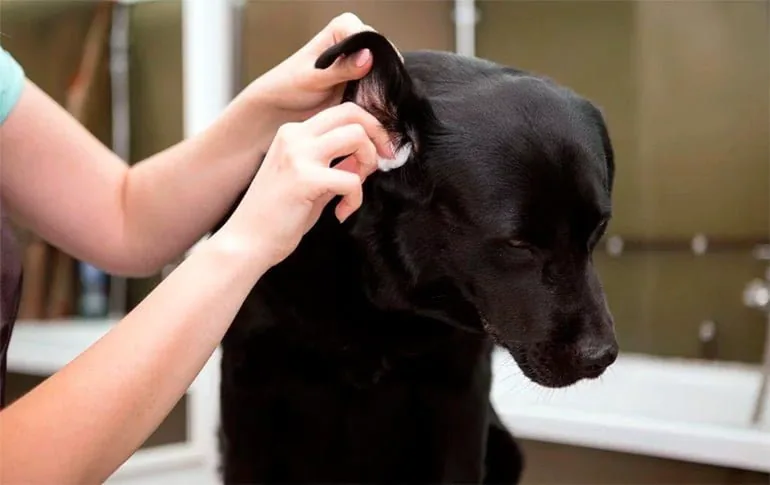
One of the most sensitive parts of our dog, and one most prone to getting dirty, is its ears, so we need to pay them special attention to avoid possible ear infections.
We're sure you know several ways to clean a dog's ears, but... which is the correct way, and which is completely inadvisable? We need to avoid damaging our dog's inner ear, so it's worth spending the next minute reading this article.
When Should I Clean My Dog's Ears?
Although ear hygiene generally isn't given much importance, it's one of our dog's most sensitive spots, besides being very prone to infections. We should check and clean our dog's ears at least once a week.
Frequency also depends on your dog's ear shape, its size, how dirty the place it walks, plays, or lives in is, etc. Some dogs may need their ears cleaned twice a week or more, while others may just need a cleaning every fifteen or thirty days.
Ears naturally produce wax — it's a protective mechanism for any mammal's ear, humans included. It's completely normal for a dog to have wax in its ears. However, an excess of it and a bad smell, for example, won't be normal.
Malassezia yeast is a microorganism that gives part of the brownish color to the wax, and it's normal in a dog's outer ear. Likewise, as we mentioned before, it won't be common, it will be pathological and predispose the dog to otitis, an overgrowth of malassezia with a strong smell and a large amount of brown wax.
Generally speaking, weekly cleaning is usually enough. Don't forget we should also dry the inside of its ears (the same way we would clean them) every time we bathe it.
How to Clean My Dog's Ears — Explained Step by Step
The first thing we need to do is clean our hands and find a well-lit spot to properly examine the inside of our dog's ears or outer ear canal. This initial check will tell us how much dirt we're going to find and in which part of the ear it is.
Once this inspection is done, we'll apply a stream of cleaner (from the vet) free of antibiotics and antifungals into the back of the ear. Next, we'll "close" the ear from the outside as if we wanted to seal it and gently massage the base of the ear (the area where the ear meets the head). This will mix the liquid and encourage the dog to shake afterward, expelling as much of the discharge as possible.
Once the ear is empty or almost empty of liquid, it's time to clean manually with gauze. We'll wrap some gauze around our finger and gently insert it into the dog's ear. We need to be very gentle, since any sudden movement could hurt it.
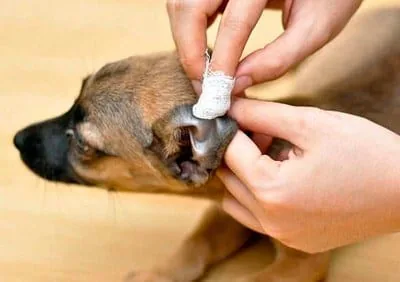
Logically, if our dog has a small ear we'll use our pinky finger for this task, while if it has large ears (or is a large breed) we may be able to use another finger without needing to force it. Once we've gently inserted the finger with the gauze into its ear, we'll make small, gentle circular movements, to pull out as much wax as possible with the gauze.
We'll pull the finger with the gauze out and examine it — if the gauze has come out dirty, we'll grab a clean gauze and repeat the cleaning on that ear, as many times as necessary until the gauze comes out clean.
Once we pull the finger with the gauze out and it's clean, we'll grab a new gauze and do the same task on the other ear. We should never use the same gauze on both ears, since if one of them is starting to develop a small infection, we'll likely spread it to the other. We should always use a clean gauze for each ear.
Gauze is quite inexpensive and can be bought in boxes of various sizes at any pharmacy. If you don't have gauze, you can use clean toilet paper that isn't rough.
Useful Tips for Cleaning Your Dog's Ears
- Don't use homemade preparations, only clean gauze and vet ear cleaners.
- Don't force it — do it gently and carefully.
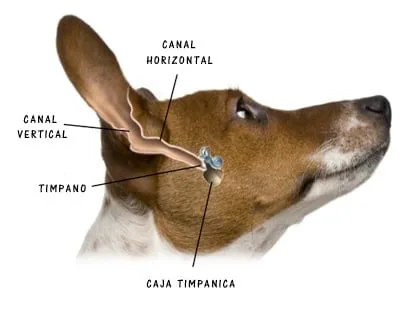
- Never use cotton swabs. If the dog moves, or we misjudge with our hand, we could cause irreparable damage to the eardrum.
- We also shouldn't use cotton or anything that sheds fibers.
- Check and clean its ears at least once a week to prevent otitis or complications.
How to Maintain Healthy Ears
If when cleaning our dog's ears we notice excessive dirt coming out much more often than usual, our dog may have a fungal infection, bacterial infection, or both.
Another symptom of otitis in our dog's ears is an unpleasant (bad) smell inside its outer ear. If, bringing our nose close, we notice a strong and/or unpleasant smell, there's likely an infection. Excessive scratching, head shaking, or head tilting can also be signs of a possible infection.
There are many different types of infections and combinations, so the medication doesn't have to always be the same. On the other hand, there's no home remedy that works to treat this type of infection — we need to see a vet. So if we notice any of these symptoms, we should see a vet to assess the type of infection and provide us with the right treatment.
IMPORTANT: This article is for informational purposes only and does not constitute veterinary, nutritional or behavioural advice. Every dog is different, and only your trusted vet can advise you on its specific needs.