 Care
Care
What Is Malassezia in Dogs?
Malassezia is a yeast present in all dogs, but only in some does it cause problems — mainly in those already dealing with something that disrupts their skin's natural balance.
Below, we'll explain the consequences an overgrowth of Malassezia has for a dog, along with the symptoms and all the details that will help us successfully treat this skin condition.
What Is Malassezia?
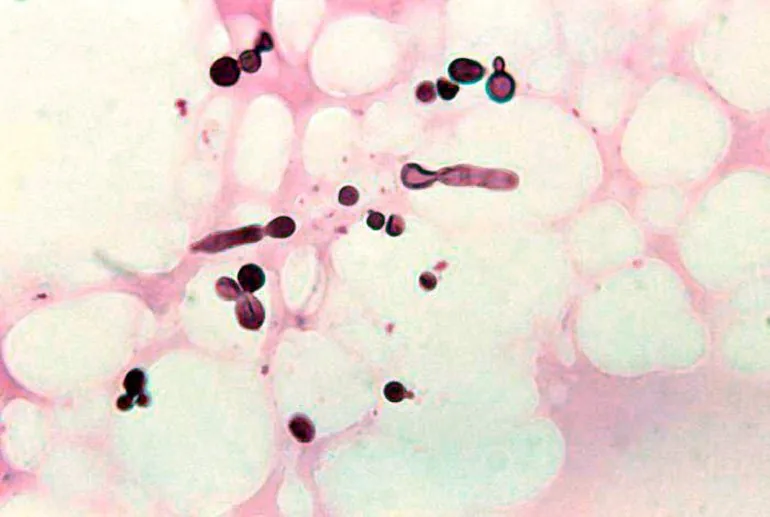
The Malassezia found in dogs is mainly the species Malassezia pachydermatis. It's a yeast, which is a type of fungus, visible under a microscope, with an appearance similar to a peanut. It's lipophilic, meaning it has an affinity for lipids. An overgrowth of Malassezia can cause dermatitis in our dogs.
How Does a Malassezia Infestation Happen in Dogs?
Malassezia is an organism normally found on the skin and mucous membranes of dogs and other animals. When some factor disrupts the natural balance of healthy skin, the Malassezia population spikes, gets out of control, and becomes pathological.
Allergies and disorders affecting the outermost layer of the skin are the conditions typically seen in a dog that also shows Malassezia overgrowth. This is encouraged by a more humid, warmer, oilier environment and reduced immune defenses. It's more common during warm seasons.
Hormonal diseases with immunosuppressive effects on the body, as well as prolonged treatment with corticosteroids or antibiotics, or disorders that increase sebaceous gland secretion, are other factors linked to an increase in the Malassezia population.
Symptoms of Malassezia in Dogs
A pathological Malassezia infestation is more common in the body's skin folds, where conditions favor its proliferation. The symptoms most often associated with an increased Malassezia population are the following:
- Inflammation.
- Itching of varying intensity.
- Different skin lesions.
- Hair loss.
- Erythema, which is skin redness.
- Flaking, mainly oily, though some cases are dry.
- Thickening of the skin.
- Hyperpigmentation, meaning the skin appears darker.
- Scabs.
- Rancid smell.
- In some cases, folliculitis occurs at the same time.
- Skin problems start on the abdomen and spread to the armpits, groin, and neck.
Otitis Caused by Malassezia
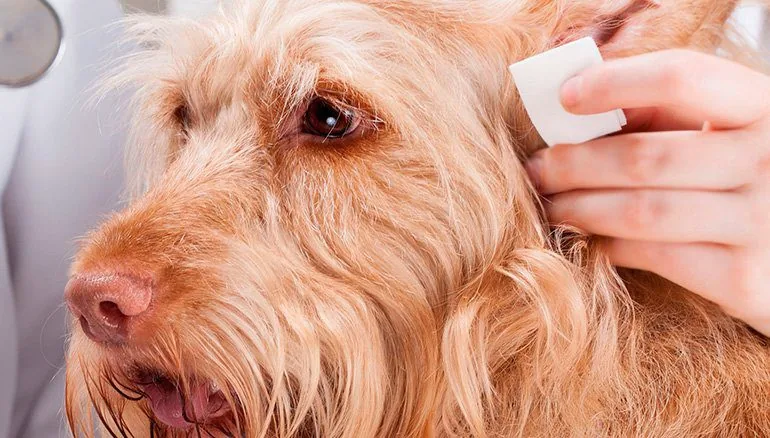
This yeast, also naturally found in the ear canal, can sometimes overgrow and cause otitis. This is characterized by dark brown, waxy discharge and redness of the outer ear. It's easily accompanied by a bacterial infection.
Pododermatitis Caused by Malassezia
When Malassezia overgrowth affects a dog's feet, it causes redness between the toes. If the nails are involved, they'll show a brownish discoloration at the base.
Which Dogs Does Malassezia Affect?
Any dog can be affected if some circumstance throws off its skin balance. It's more common in adults and in breeds predisposed to skin problems such as allergies. For example, the Westie.
Breeds known for having plenty of skin folds, like the Shar-Pei, also carry a higher risk of Malassezia overgrowth. Other breeds commonly affected include the Poodle, Basset Hound, Shih Tzu, Pekingese, Cocker Spaniel, Labrador, and German Shepherd.
How Is Malassezia Diagnosed?
Malassezia is normally present on the skin of all dogs, without causing any disease. To observe this yeast, the vet takes a skin sample and examines the cells under a microscope. Since Malassezia will always be present, it can only be interpreted as responsible for the dog's condition when its numbers are excessive.
Treatment for Malassezia in Dogs
To treat Malassezia, the vet, depending on the picture the dog presents, can choose from different options. Oral antifungals may be prescribed, along with baths using degreasing shampoos with antifungal active ingredients, or ointments, especially when the lesions are very localized.
When Malassezia has proliferated in the ears, the vet needs to examine the ear canal to check for the presence of other pathogens, such as bacteria. In these cases, this professional will tell us how to clean the ears and prescribe the most suitable medication.
Since Malassezia spreads due to an imbalance in our dog, it's essential to find what underlying cause is weakening the animal. Of course, treatment should also target that underlying cause.
Is Malassezia Contagious?
All dogs have Malassezia on their skin, so there's no need to worry about catching it — instead, we should focus on caring for our dogs so they don't develop any immune imbalance that could favor this yeast's overgrowth. Under normal conditions, Malassezia pachydermatis isn't a problem for humans.
Bibliography Website of veterinary dermatologist Juan Rejas: http://dermatologiaveterinaria.unileon.es/
IMPORTANT: This article is for informational purposes only and does not constitute veterinary, nutritional or behavioural advice. Every dog is different, and only your trusted vet can advise you on its specific needs.