 Breeds
Types of Pit Bull
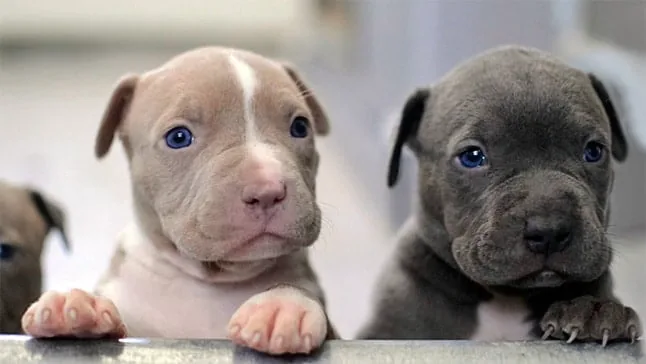
Although we commonly refer to "Pit Bull" dogs whenever we see a dog with Bulldog-Terrier genetics — the genetics that gave rise to this breed — the truth is there's only one authentic, genuine, original type of Pit Bull: the American Pit Bull Terrier.
That said, there are some variations within the APBT (American Pit Bull Terrier) breed itself, like the Red Nose or Blue Nose. And many other breeds, though not original Pit Bulls, could be said to share the same genetics. Let's look at them in detail, with their characteristics and differences.
What Are All the Types of Pit Bull?
To be exact, there's only one original type of Pit Bull, the American Pit Bull Terrier. That said, other breeds descending from the same bull-type Bulldog-Terrier genetics are also colloquially considered "types of Pit Bull." So we could say there are 5 types of Pit Bull dogs:
- American Pit Bull Terrier
- American Staffordshire Terrier
- Staffordshire Bull Terrier
- American Bully
- Bull Terrier
Let's look in detail at all the breeding lines of the authentic Pit Bull and the characteristics of the different Pit Bull types that exist today. Not all of them have the same look or temperament, so it's important to get to know them well before adopting the one best suited to you and your surroundings.
American Pit Bull Terrier (APBT)
Many people think they have an authentic Pit Bull when that's not actually the case, since to be a purebred Pit Bull, it must meet every breed standard without exception. Let's look at the American Pit Bull Terrier's characteristics:
- An American Pit Bull Terrier should be medium-sized with a solid build, well-defined muscles, and an athletic body. Longer than tall, especially in females, which are somewhat longer than males.
- A purebred American Pit Bull Terrier's head should be medium in length, with a wide, flat skull between the ears, and a muzzle that's also wide and deep, shorter than the skull's length.
- Its eyes should be set low-to-medium on the skull, round, and well-separated. A purebred APBT can have any eye color except blue, which isn't valid under the breed standard according to the United Kennel Club.
- Naturally erect or cropped ears (keeping in mind that in countries like Spain, cropping a dog's ears is completely prohibited). Its tail should be a natural extension of the topline, tapering toward the tip.
- A purebred American Pit Bull Terrier's coat should be smooth, medium-short, close-fitting, and somewhat stiff to the touch. Any color or color combination is accepted, except merle (a coat with diluted-pigment patches) and albino white (albino dogs).
- The accepted weight under the American Pit Bull Terrier standard is between 15kg and 27kg for males, while females should weigh between 13kg and 22kg.
- The size of an authentic American Pit Bull Terrier is a height at the withers (the height at the withers is the measurement from the ground to the highest point of the shoulder blades) of 45cm to 53cm in males and 43cm to 50cm in females.
- Its hindquarters should be strong and muscular, moderately wide. They should be balanced with the front legs.
 American Pit Bull Terrier
What Is the American Pit Bull Terrier's Temperament Like?
Quite contrary to what many people think about this stigmatized breed, the American Pit Bull Terrier is actually a dog with a sweet, family-oriented, playful, obedient temperament. It's a breed that's careful with young children, and it's also very protective, though it's not considered a good guard dog breed.
That said, it's true it's also a naturally territorial breed, so it needs training and, above all, very intense socialization from puppyhood. This can sometimes be tricky, since in many countries it's considered a PPP (Potentially Dangerous Dog) and must always be leashed and muzzled in public places, which makes socialization much harder.
The APBT isn't a breed for people who've never had a dog — extensive experience with dogs is recommended before getting an American Pit Bull Terrier. On top of that, it's a very energetic breed, needing a lot of daily exercise — it's not a dog you can just walk three times a day and be done with it. So its owner needs to have the time and energy to meet all its needs, both physical and behavioral.
American Pit Bull Terrier Breeding Lines
There are many variants of the authentic American Pit Bull, which have some characteristics different from the original Pit Bull, but are essentially the same breed. That is, these are APBT breeding lines that haven't followed the breed standard, but share the same genetics. So they're also considered types of Pit Bull Terrier.
Pit Bull Red Nose
First, we can find an important variant officially recognized by the ADBA, the Red Nose Pit Bull Terrier, which is known for having a brown nose, along with a brown coat. Although its origins aren't entirely clear, one theory holds it's a cross between an Irish Pit Bull and an American one.
 Red Nose Pit Bull
Pit Bull Blue Nose
On the other hand, we have another very similar Pit Bull type, the Blue Nose Pit Bull. Well-known for having a gray nose, along with a gray-toned coat. It's not accepted as a purebred since it's a Pit Bull variation, but with different characteristics.
 Blue Nose Pit Bull
Pit Bull Chamuco
Bred in Mexico, it's known as the Mexican Pit Bull, though it's actually much smaller in size, while being stronger and more muscular than the original American Pit Bull Terrier.
During breeding, the strongest individuals were always selected, giving rise to the Chamuco we know today. Among the wide range of Pit Bull types, this one is small but very powerful.
It's an extremely strong breed — not even a large person could hold it back if it decides to pull on the leash to attack another dog or animal.
So obviously, this isn't really a recommended breed, since it's hard to control. Today it's used as a guard or companion dog, though always in the hands of expert trainers.
 Pit Bull Chamuco
Pit Bull Spike
This Pit Bull type is quite curious due to its coat colors, very similar to the Dalmatian's, with which it's suspected to share genes. Medium-sized, it barely exceeds twenty kilos in weight, and its muscle build has little to do with a Pit Bull's, though that doesn't mean it's not a strong dog.
Among the Pit Bull types that originated in the USA, the Spike is used as a family companion dog thanks to its friendly, playful temperament. It's possibly the most sociable variant among all the breeds sharing Pit Bull genetics.
 Pit Bull Spike
Pit Bull Colby
This is actually a somewhat thinner, smaller Pit Bull line than the American Pit Bull Terrier, but it's stronger and fiercer since this breed was created exclusively to win dogfights.
Fortunately, this kind of fighting is banned today, and the Colby has become a family companion dog. That said, it's not overly affectionate, so it needs training and handling by professionals.
The Colby Pit Bull physically resembles the Pit Bull quite closely, with a somewhat wider muzzle, but keeping very similar lines.
 Pit Bull Colby
Pit Bull Tex Mex
A working line similar to the ones above, not officially recognized as a breed but accepted among the different Pit Bull type varieties. Native to the state of Texas, it shares many similarities with the Red Nose.
Its head is somewhat large compared to its body, which, though thin, is athletic and strong. The Tex Mex is a guard dog that needs a lot of socialization from puppyhood to prevent it from developing aggression.
Its coat color can vary a lot — white, brown, black, and even patched. Since it's not a standardized breed, all kinds of variations are accepted.
 Pit Bull Tex Mex
Pit Bull Stuffawler
Another breeding line selected for strong individuals meant for fighting, though today, fortunately, these cruel practices are no longer allowed.
It's known for being a "smiling" dog — when panting, its lips involuntarily take on the characteristic smile shape you can see in photos.
Its temperament is very strong and can be quite aggressive if not properly trained, so this breed isn't recommended for people without experience or the physical strength to restrain it in an emergency.
 Pit Bull Stuffawler
Pit Bull Johnson
Larger than the Pit Bull, with features closer to a big Bulldog, the Johnson is one of the calmer, more docile types among dogs sharing Pit Bull genetics.
Its temperament is calm, observant, and watchful. It doesn't show aggression unless provoked, making it more recommended as a family dog than many other APBT derivatives.
Solid white or white with patches, its weight ranges between thirty-five and forty kilos as an adult. Medium-to-large in size, it's a dog that needs long walks but not intense exercise.
 Pit Bull Johnson
Pit Bull Cobra
Another breed obtained with Pit Bull genetics, though this time we're looking at one bred more for looks than for fighting. The Cobra is a medium-sized dog that can reach thirty-five kilos in weight, up to forty centimeters tall at the withers.
Its main physical trait is its color, predominantly white. Light-eyed individuals are more sought after than dark-eyed ones, though the former are more prone to blindness from cataracts. With an active, somewhat dominant temperament, it needs daily exercise to feel fulfilled and avoid developing bad habits from stress.
 Pit Bull Cobra
Pit Bull Villaliberty
This isn't even a breed cross, but rather a breeding selection developed in Spain starting from the original American Pit Bull Terrier. Unlike the APBT, the Villaliberty line is less impulsive — meaning not as territorial. That said, as with any other breed or Pit Bull derivative, proper training is mandatory.
 Pit Bull Villaliberty
Pit Bull Pynat
Somewhat thinner-looking than the Pit Bull, but with strong muscles, the Pynat has been used for years in hunting work. It has an obedient but impulsive temperament, and can often be rough and stubborn. That said, with good training and socialization, it can be a great family companion.
Its weight is around thirty kilos as an adult, barely reaching forty-five centimeters at the withers. Its coat color is usually brindle brown, though many variations are accepted. It's one of the rarest Pit Bull types on the planet.
 Pit Bull Pynat
Monster Blue
This comes from crossing the American Pit Bull Terrier with the Neapolitan Mastiff, resulting in a dog larger than the Pit Bull, stronger, more muscular, and also more aggressive if not properly trained. So this isn't really a breeding line of the authentic American Pit Bull Terrier, but a breed cross with Pit Bull genetics.
Blue or grayish in color with light eyes, it can reach sixty kilos in weight, with an undefined height since each breeder sets their own standard for this breed's line.
Its physical look closely resembles the American Bully's, though unlike the Bully, the Monster Blue only accepts two coat color types under official standards (gray/blue).
Puppies of this breed are also strong and impulsive, so their training must start from a very young age. As a recommendation, it's necessary to feed them high-quality protein so their muscles develop properly.
 Monster Blue
American Staffordshire Terrier
Colloquially known as the "American Stanford" due to a mispronunciation, and often confused with the Staffordshire Bull Terrier, which is a different breed. Among the different Pit Bull types, this is an improved version of the well-known American Pit Bull Terrier, descending directly from it, but during breeding, larger, stronger individuals were selected.
So on every level, the Amstaff (American Staffordshire Terrier) is a dog superior to the standard Pit Bull. It can reach forty kilos in weight and even fifty centimeters at the withers, figures that confirm its larger size.
Its temperament is active, dominant, and self-assured. It's not as impulsive as the American Pit Bull Terrier, but we shouldn't provoke it either... it's quite the guard dog. It needs daily exercise, discipline, and a healthy diet to stay happy. Having a job to do makes it feel fulfilled, so it's not a good idea to leave it bored. According to the American Kennel Club.
 American Staffordshire Terrier
Staffordshire Bull Terrier
Affectionately known as the "Staffy," the Staffordshire Bull Terrier has little to do with the Amstaff mentioned above. The Staffordshire Bull Terrier's temperament is very cheerful and playful, even goofy. Among all the Pit Bull types, this is a very active individual that loves exercising, ideal for fans of exercise, hiking, or mountain sports.
Unlike the rest of the Pit Bull dog types, it's not as dominant and therefore not as prone to showing aggression, as noted by the AKC (American Kennel Club). That said, it's a strong, intelligent dog that, if it feels threatened, won't hesitate to show its full strength. Its physical size is somewhat smaller, reaching twenty kilos in weight and forty centimeters tall at the withers. Though its muscular build will quickly show you it's a small but mighty dog.
 Staffordshire Bull Terrier
American Bully
This Pit Bull type comes from crossing the American Pit Bull Terrier and the Staffordshire Terrier — a strong, muscular dog, physically similar to the Monster Blue. Colloquially known as the "Bullypit," the American Bully can reach fifty kilos in weight and stand up to forty-five centimeters tall at the withers.
The American Bully's temperament is dominant and territorial, so from puppyhood it needs intense, disciplined training. Since it's a physically very strong dog, we shouldn't make the mistake of training it for aggressive purposes. According to information from the United Kennel Club.
At home, its behavior is fairly calm, though out on the street it's quite the whirlwind, loving to walk, run, and enjoy time outdoors, hiking in the mountains like most Pit Bull types do.
 American Bully
Bull Terrier
The Bull Terrier is also classified as one of the breeds descended from Pit Bull genetics, though its size and physical look are somewhat different, since other breeds were also used in its breeding.
Colloquially known as the "cone-face dog" or "shark dog" due to its elongated muzzle, this is a medium-sized dog that barely exceeds thirty kilos in weight, according to the American Kennel Club standard.
As a companion dog, the Bull Terrier is extraordinary, very attached to its family and a bit stubborn. But with other dogs and/or animals it can be dangerous, since its territorial instincts make it a very impulsive dog.
Although it's not classified as a potentially dangerous dog in Spain, its strong physical build means it's not a recommended breed for people without experience training dogs.
 Bull Terrier
Which Type of Pit Bull Is Best for Me?
We should keep a few important facts in mind before adopting a Pit Bull or a breed with Pit Bull genetics, since these dogs' traits are quite particular. First of all, this isn't a suitable breed for young people — many teenagers just want a Pit Bull to feel safe or to show off among friends to see whose is toughest.
To have a Pit Bull or a related breed, being mentally mature and having a lot of experience caring for and training dogs is absolutely necessary. Pit Bulls are very energetic, dominant, territorial dogs.
This doesn't mean they're dangerous, but they can become potentially dangerous if they don't receive proper training. Many of the Pit Bull types we've mentioned require a PPP license to adopt.
Also:
- These aren't couch-potato dogs — they need plenty of daily exercise.
- We should never train them using violence, or encourage them to be violent.
- We need to train and socialize them thoroughly, ideally by seeing a professional dog trainer.
- We should be careful if we already have another dog or animal at home.
- We need to follow a series of mandatory rules, like using a muzzle for PPP-classified breeds, taking out insurance, etc.
- The cost of upkeep is high.
- Even though many of them are nicknamed "nanny dogs," we should never leave them alone with young children.
- Socializing them from puppyhood is essential, though by law many of them can't be off-leash even in designated dog areas, let alone without a muzzle. This makes socialization much harder.
IMPORTANT: This article is for informational purposes only and does not constitute veterinary, nutritional or behavioural advice. Every dog is different, and only your trusted vet can advise you on its specific needs.