 Training
Ideas for Entertaining a Dog Home Alone
Dogs usually adapt wonderfully to their owners' routines. Even so, it's also true they can show behavioural problems when left alone at home for many hours in a row.
Serious cases need to be handled by a professional, but for the rest, we can bear some advice in mind to keep them entertained both during time alone and time shared with us. Let's look at how to entertain a dog at home.
The Toys Your Dog Loves Most
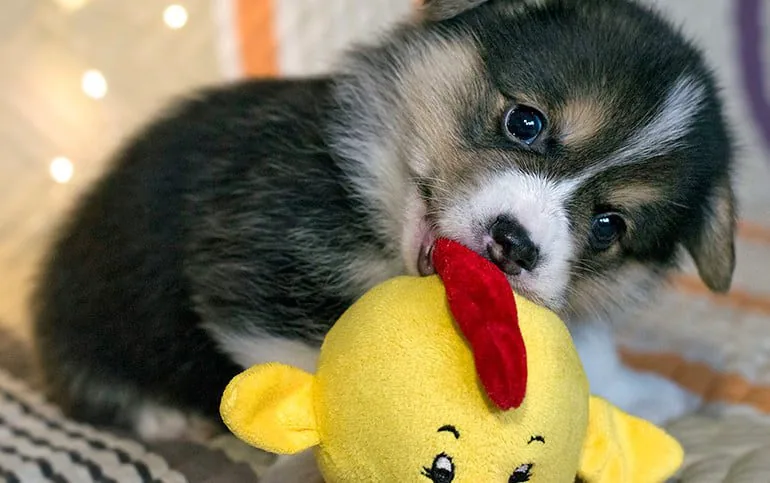
Of course, dogs recognise their toys perfectly, but they enjoy rediscovering them. For this, it's ideal to have a good stock, so we can rotate the toys. This involves leaving them a few when they're going to be left alone and taking them away when we get home, to swap them for others once we go out again.
This way, they'll have something new every day. We just need to watch what interests them to choose the toys they'll enjoy most. These can be bought or home-made, and work both for the dog to entertain themselves alone and to share leisure time with us. For example, bouncy balls are very useful.
They work for us to throw and have them bring back, but also for the dog to play with them while alone, since they can get away from them and bounce, activating their chasing instinct. Even so, it matters that we check the toys and throw them away as soon as they show signs of wear that could compromise the dog's safety.
Toys That Stimulate Their Mind
Toys that go beyond the typical balls, chew toys or ropes deserve a special mention. Interactive or intelligence toys are based on the dog needing to manipulate them to activate them and, this way, get an edible reward. There's a huge range of these toys on sale.
We can choose them based on our dog's tastes and characteristics. We also have the option of making them ourselves. For example, a plastic bottle with different holes can mimic the famous Kong. This would be one of the simplest models. Even so, toys have become more elaborate over time.
Now there are ones consisting of different surfaces with spaces to hide rewards, and lids or hatches the dog lifts or moves, guided by their sense of smell and using their mouth or paws to access them. This type of toy is also recommended for dogs with cognitive dysfunction syndrome.
Treats for Dogs
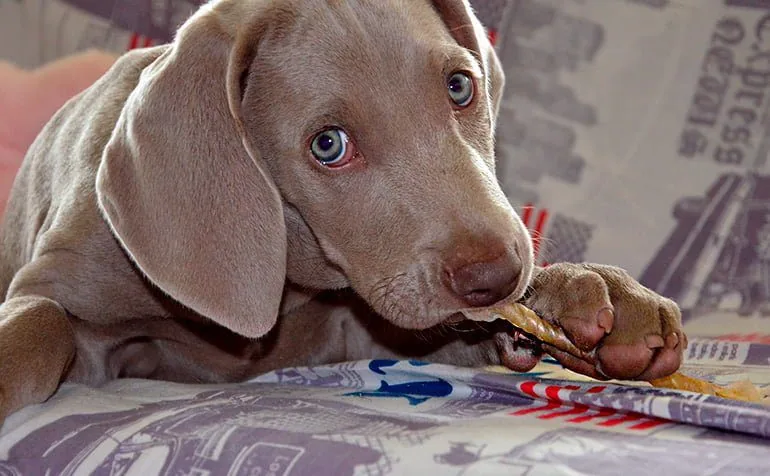
Dogs can keep themselves entertained for a good while if we leave them with something to eat. For example, a bone suitable for dogs or, if the weather allows, some frozen food cubes.
It's worth making these with some broth or freezing food such as wet food. Some dogs are happy with a simple ice cube, which also cools and hydrates them. Either way, the cubes provide time for distraction.
Massage Session for Dogs
You've surely seen your dog love rubbing against their bed, grass or, less pleasantly, any kind of filth. They drop to the ground, rub their head and neck, flip belly-up and rub their back from side to side.
Some dogs enjoy doing this with mats or a very common hygiene item, such as rubber gloves. Besides enjoying the massage we can give them with these, we have the option of leaving them out during our absence so they can use them themselves to relax.
Activate Their Important Sense of Smell
Smell is a basic sense for dogs. If we pay attention, when a dog is stressed or feels very afraid, they don't sniff around. Boosting the use of their sense of smell, both while they're with us and during time alone at home, is a way of helping their relaxation, as well as their mental stimulation.
To encourage the use of this sense, we can teach the dog to search for objects. Both food rewards and their favourite toys work, or generally, any item that can be hidden and found, such as some socks. We just need to show them the chosen object and let them sniff it.
We'll encourage the search, always starting by making it very easy and praising them enthusiastically as soon as they find it. As their interest grows, you can make the search harder. When they're left alone, you have the option of leaving hidden rewards, creating a trail for them to entertain themselves following.
Teach Them to Pick Up Their Toys
A variant of the search exercise is putting away toys. This involves teaching the dog to leave all their toys in the same spot. This could be their bed or room, a specific spot in the house, or a basket or box they can access to place them in. The first step is for them to find their toys by sniffing.
Once they achieve this, to make the exercise harder, we'll now get them to group them together. It's taught by calling them when they have the toy in their mouth and asking them to drop it in the assigned spot. As soon as they learn it, it's a game they can even do while alone.
Sounds for Dogs
For some dogs, it's positive for us to leave some background noise, such as music, radio or TV. These sounds, familiar to them, can help keep them calm. Even so, we need to check this is the case for our dog before leaving them alone with the ambient sound.
This is because, for some dogs, the noise is an unfamiliar stimulus. Not knowing who's making it or where it's coming from can cause them stress. The same happens with windows or doors that let them see outside. Some dogs can entertain themselves in our absence watching the surroundings from home.
Even so, for plenty of others, quite the opposite happens, becoming a source of nervousness that can even trigger episodes of barking on spotting strangers, other dogs or vehicles. Again, it matters to know our dog well to decide the best conditions for the times they need to stay alone.
Make Your Own Canine Obstacle Course
If your home allows for it, you can build your dog their own obstacle course. How complicated it is depends on your imagination, but broadly speaking, it can include heights to jump, tunnels to go through, or some bar-type surface they can walk along.
Cones to weave between are another simple option. Teach your dog to get over each obstacle individually, and gradually increase the difficulty until they manage to complete the whole course. Afterwards they'll be able to do it alone if they want.
Dogs Who Dig
If you have some outdoor space, even a small one, you can set aside an area for your dog where they can practise one of many dogs' favourite activities: digging holes. They just need some soil.
Even so, when the dog stays outdoors, besides properly securing the perimeter to prevent escapes, you always need to provide them with a sheltered, shaded space and fresh water. By the way, if your dog loves water, a basin of water becomes an excellent pastime.
Bibliography Schlegl-Kofler, Katharina. Escuela de perros. Madrid. Tikal.
IMPORTANT: This article is for informational purposes only and does not constitute veterinary, nutritional or behavioural advice. Every dog is different, and only your trusted vet can advise you on its specific needs.