 Care
Care
Is It Dangerous to Walk an Unvaccinated Puppy? Watch Out!
It's not unusual to come across puppies barely a few weeks old out for a walk on the street. Although vets warn about the dangers of exposing these little ones without vaccines, this recommendation doesn't always sink in.
Without the protection of vaccines, dogs are exposed to infectious diseases. Many of them are so serious that few puppies manage to survive them. During this delicate stage, we need to balance socialization with protection.
Adopting a Puppy
First, it's worth repeating that puppies aren't toys. This means the key thing is respecting their needs. And the main one is staying with their mother and littermates for at least eight weeks.
This matters because during that time the puppy needs to drink its mother's milk, even though it may start trying solid food around three weeks. Its mother's milk, especially the initial colostrum, gives these little ones, whose immune system is still immature, antibodies and defenses against disease.
In addition, this is a very delicate stage psychologically. Socializing the puppy at this stage should happen with its family present. This helps prevent behavioral problems later on.
The Importance of Vaccines
Vaccines contain a small amount of a pathogen, which is usually inactivated. By giving a vaccine, we're introducing a disease to the dog. This way, its immune system detects the condition it's been vaccinated against — which, due to how it's been processed, can't trigger the disease — and creates antibodies against it.
So, if the dog naturally comes into contact with that condition later, it will already have defenses ready to fight it. Otherwise, since these diseases are so serious, the puppy could die before its body has a chance to react. Generally, the first vaccines are given around eight weeks of age.
But a single dose isn't enough. That's why vaccines are repeated. The vet, based on the puppy's characteristics and living conditions, will advise us on the most suitable vaccination schedule. A puppy's vaccines are usually finished around twelve weeks. Without all the doses, we can't take it outside.
Diseases a Puppy Can Catch Outside
Many highly contagious conditions are caused by viruses that can survive in the environment for months. Sick dogs usually shed viruses in their secretions. Other dogs can become infected by coming into contact with them. They don't even need to lick or ingest anything.
Just sniffing, for example, urine — a very common behavior in dogs — can be enough to spread it. These diseases carry high mortality, which skyrockets in an unvaccinated puppy. These little ones have neither protection nor an immune system mature enough to effectively fight off the virus.
It's worth remembering that, for viral diseases, there's no treatment beyond supportive care. There's no drug that can be given to cure the dog. This is what makes this type of disease especially dangerous. We're talking about, for example, parvovirus or distemper.

Parasites a Puppy Can Catch Outside
On the other hand, intestinal parasites are also highly resistant in the environment. Puppies, just as they need more than one vaccine, also need to be dewormed more often during their first months of life.
Although intestinal parasites usually don't cause any problems in healthy adult dogs, in puppies they can be dangerous enough to cause the puppy's death. In them, parasites can cause severe anemia, as well as diarrhea and vomiting, malnutrition, or growth problems.
The risk is higher when the puppy is stressed from a change of home, comes from a place with poor hygiene conditions, was weaned abruptly, etc. One example is nematodes. Of course, outside, a puppy can also pick up ticks, fleas, or even lice.

Socializing vs. Protecting
Just as important as protecting our puppy's health by not letting it outside too soon is giving it proper socialization. This means introducing it to other dogs, other animals, people, and different environments and situations.
But how do we do that if we can't take the puppy outside for weeks because it's dangerous? Below, we offer some practical ideas for balancing socialization and safety while the vaccination schedule isn't complete:
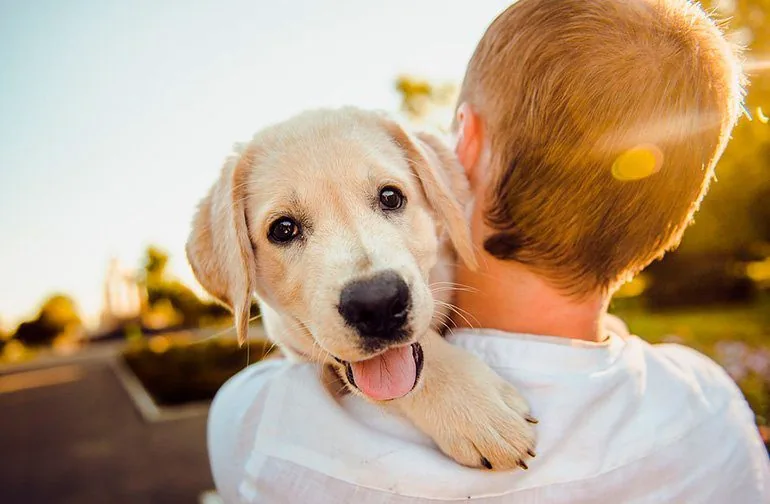
- We can carry the puppy in our arms on walks, as long as the weather is mild, and not let it come into contact with unknown dogs.
- Another option is bringing the puppy to visit a friend's home with a healthy, fully vaccinated and dewormed dog.
- We can also host canine visits from dogs that meet the above requirements.
- The puppy can go outside if we have a yard, terrace, patio, or property that other dogs can't access.
- It's a good idea to start getting it used to car rides, always starting with very short trips.
- Finally, some vet clinics organize puppy activities where they can interact with each other safely, since the vet will supervise which dogs are fit to take part. These often also include basic training classes to help us start teaching our puppy.
Bibliography Carlson and Giffin. 2002. Manual práctico de veterinaria canina. Madrid. Editorial el Drac.
IMPORTANT: This article is for informational purposes only and does not constitute veterinary, nutritional or behavioural advice. Every dog is different, and only your trusted vet can advise you on its specific needs.