 Breeds
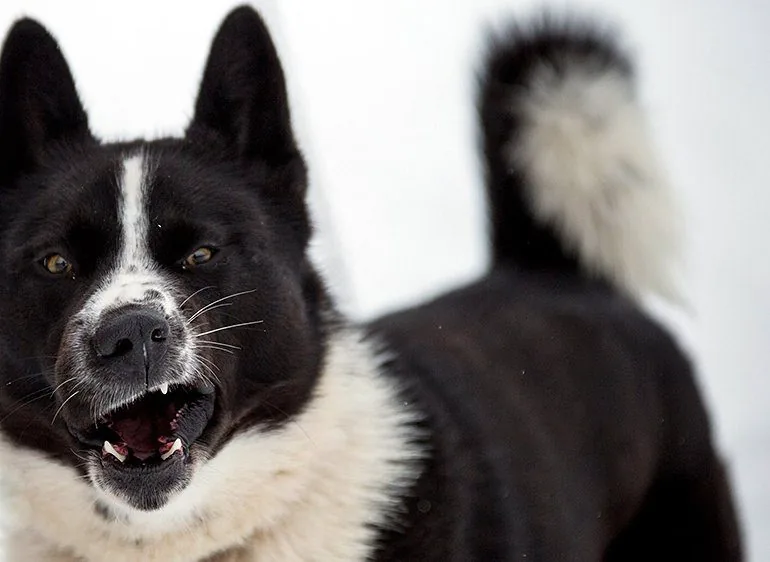
Karelian Bear Dog (Karjalankarhukoira)
The Karjalankarhukoira, or Karelian Bear Dog, is a Finnish breed bred for big-game hunting in the Nordic forests. Its independent temperament, physical stamina, and hunting instinct make it a demanding companion that needs an experienced owner, a carefully calibrated feeding plan, and high-intensity daily exercise.
Training and Socialization for the Karelian Bear Dog
The Karelian Bear Dog doesn't seek its handler's approval: it acts on its own initiative, a trait selected over centuries for working without commands in the forest. That's why positive reinforcement is the only effective approach; coercive methods trigger shutdown or reactivity in this breed.
Sessions should be short, 10 to 15 minutes, with high-value treats and play as rewards. Monotony bores it quickly. Alternating scent exercises with basic obedience keeps its attention without overwhelming it.
Impulse control is the top priority from puppyhood. Commands like "stay" or "leave it" teach the dog to hold back from chasing visual or auditory stimuli, essential for safely living alongside other animals or in urban settings.
Socialization should begin before twelve weeks of age. Exposing it to unfamiliar people, city noise, vehicles, and different animal species in controlled settings prevents its territorial instinct from turning into aggression toward strangers or household pets.
This isn't a breed for first-time owners. It needs someone who sets firm, non-violent boundaries and who can read the dog's calming signals or stress cues to adjust the pace of training.
Recommended Diet for the Karelian Bear Dog
Its metabolism is built for sustained effort, so its diet needs to reflect its actual activity level. An adult on maintenance (without hunting days) eats between 400 and 500 g daily of high-quality dry kibble, split into two meals. During hunting periods or intense exercise, that amount can increase by 20-30% depending on body condition.
Growing puppies need three or four daily meals with formulas specific to large active breeds, with a higher, well-balanced ratio of calcium and phosphorus to prevent bone problems during development.
Kibble should contain a minimum of 30% animal protein and between 15 and 20% fat. Those percentages support muscle mass and energy without causing digestive strain. A BARF diet requires precise calculation of macro- and micronutrients to avoid imbalances; SoyUnPerro doesn't recommend it without veterinary supervision, since feeding bones carries a real risk of choking and intestinal perforation.
To protect the musculoskeletal system, which faces stress from the abrupt movements of big-game hunting, regular omega-3 fatty acid supplementation (salmon oil or kibble with oily fish) is worthwhile, along with, for active adults, glucosamine and chondroitin supplements prescribed by a vet based on the individual dog's actual wear and tear.
The most reliable way to adjust portions is a weekly body condition check: the ribs should be felt with light pressure without being visible, and the dog should show a defined waist when viewed from above. If the ribs show through too much, increase the portion; if the waist disappears, reduce it.
Exercise and Physical Activity Needs
The Karelian Bear Dog needs a minimum of two hours of intense physical activity daily, not leisurely walks. Hiking on uneven terrain is the most complete option: it works its muscles, stimulates its sense of smell, and recreates the conditions of the work it was bred for.
Running on soft surfaces (dirt, grass) becomes viable from a year old, once the musculoskeletal system has fully developed. Before that, it's best to avoid repeated impact on asphalt to protect developing joints.
Symbolic hunting games — tracking hidden treats, scent-based searching, tug-and-bite work — mimic the hunting sequence and burn off cognitive energy. A mentally tired dog settles down better than one that's only had physical exercise.
Agility and canicross combine obedience with physical effort, which helps maintain the bond with the handler while working on self-control. Both can be practiced from twelve months onward with gradual progression.
Living in an apartment is possible if those two hours of outdoor activity are guaranteed. Without that minimum, the dog redirects its energy into digging, destroying furniture, or persistent barking. Living with small animals unsupervised isn't recommended unless socialization has been systematically worked on since puppyhood.
IMPORTANT: This article is for informational purposes only and does not constitute veterinary, nutritional or behavioural advice. Every dog is different, and only your trusted vet can advise you on its specific needs.