 Training
Learn to Talk to Your Dog — A Practical Guide
Communication between humans and dogs isn't always accurate, and yet we spend the day talking to our dog as if they understood absolutely everything.
Talking to our dog isn't harmful, though we should focus on teaching them words they can recognise. What we know as "working commands", which will help our dog know what we expect of them.
Canine Language
When we say "talk to your dog", it doesn't mean sitting down for hours to chat about your problems; what we actually mean is building a communication system with them based on training, obedience and positive reinforcement.
Commands are essential during training; even so, you need to pair the words with gestures. Dogs can recognise around 200 words, but body language is a key element for them to understand what you're saying.
For this reason, talking to your dog means linking each command to a specific gesture — you should use both whenever you want your dog to do something. What's more, it helps to know what some of their gestures mean:
- Destroying or breaking things when you're not home: reflects stress and boredom.
- Lifting a leg: a typical hunting posture; your dog does it when they pick up an interesting scent.
- Stretching their front legs and lowering their head: inviting you to play.
- Lowering their ears and tail: they're scared.
- Growling and baring their teeth: they're bothered, and could attack at any moment.
- Nudging you with their muzzle: trying to get your attention.
These are some of the signs that will help you understand them, but how do I talk to my dog? Follow this advice.
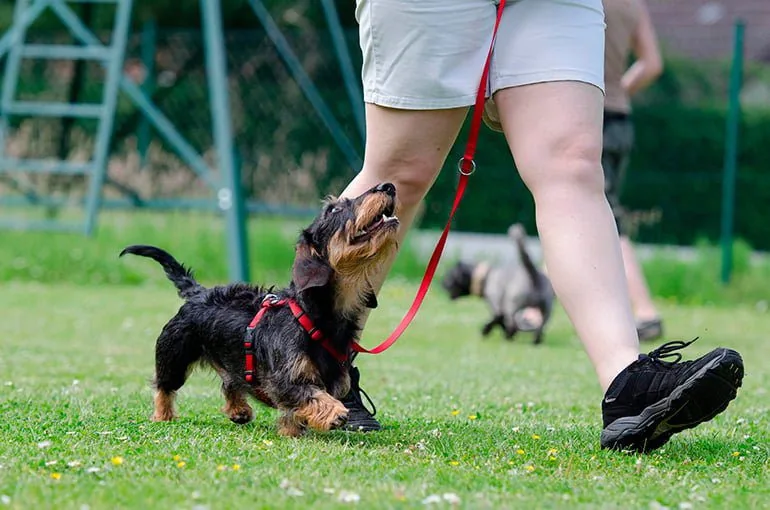
Grab Their Attention
Before giving a command, make sure your dog is watching you — there's no point talking to them if they're busy with a toy. To do this, it's enough to get them used to looking at you when you say their name out loud, but without shouting.
Training
It's impossible to talk to your dog if they're untrained. Teaching them their name and to come when called are the first steps, but afterwards you need them to learn other actions, such as sit, stay, here, calm, lie down and good.
You can teach these commands yourself, or attend canine training classes together. Remember you need to pair commands with a gesture to reinforce them; also choose words that are clearly distinct from each other, and say them clearly, to avoid confusing the dog.
Be Consistent
It's funny, but we often expect our dogs to guess what we want. Imagine this scenario: you taught your dog to come at the word "Here", but when you want to call them you use phrases like "Come here right now" or "I told you to come".
Does that sound familiar? How can I talk to my dog if I'm not consistent with the words I use? That's why we stress: always use the same word and gesture; otherwise, adding longer phrases will only confuse your dog and frustrate you, leading you to shout and bring stress into simple situations.
Offer Rewards
Positive reinforcement is the best way to communicate with your dog. Using edible rewards, but also strokes and words of praise, are essential for your dog to understand they've done the command correctly.

Reinforce the Learning
Offering rewards and using the right commands isn't enough on its own — you need to rely on repetition for the learning to be processed by your dog. Talk to them daily, repeat the commands taught the day before, and reward them; only then will communication be optimal.
Be Patient
Your relationship with your dog should be based on love and understanding, especially understanding that you belong to different species and both need to adapt for a harmonious life together.
How to Talk to a Deaf Dog?
Reinforcing a command with a gesture is highly effective, but what about dogs who are deaf? In these cases, you need to drop verbal commands and focus solely on gestures, making sure they're very clear and specific for each command.
To get their attention, it's advisable to tap the ground a few times, since they'll pick up the vibrations; you can get them used to coming to you this way both at home and outside it, though it's not advisable to let them off the lead unless you're in an enclosed, safe park.
We also suggest attending canine training sessions to communicate more effectively with your deaf dog.
IMPORTANT: This article is for informational purposes only and does not constitute veterinary, nutritional or behavioural advice. Every dog is different, and only your trusted vet can advise you on its specific needs.