 Care
Care
How to Make Natural Spot-On Treatments for Dogs
Keeping our dog properly protected from fleas, ticks, and various mosquitoes capable of transmitting serious diseases shouldn't be a financial burden for anyone. Spot-on treatments for dogs are the most widely used anti-parasite option, but they're generally made with harsh chemicals and pesticides.
However, there are natural spot-on treatments for dogs made only from natural ingredients — repellent ingredients that nature itself uses against insects. Here at SoyUnPerro.com, we'll explain how to make these fantastic natural spot-on treatments yourself at home, how to use them, and save a lot of money doing so.
Ingredients needed to make natural spot-on treatments
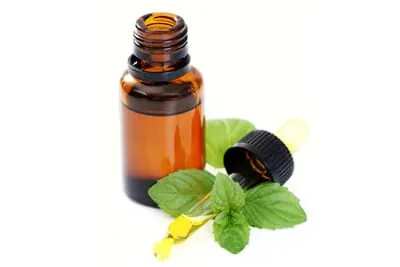
We'll only use 100% natural ingredients, ideally sourced from organic farming, to avoid any trace of chemicals or pesticides. These ingredients are very easy to find at any herbal shop or through online marketplaces like eBay.
We can buy them in bottles of different sizes, and depending on how many dogs we have and their size, it'll be worth buying more or less. Personally, I buy the fifty-milliliter bottles, but further along in the recipe, you'll be able to work out the right amount for you.
These are the ingredients needed to make 100% natural homemade spot-on treatments for dogs:
- Neem oil (also known as margosa oil), 50ml.
- Citronella oil, 50ml.
- Eucalyptus oil, 50ml.
- Peppermint oil, 50ml.
- Saline solution (sold at pharmacies in single-dose vials, ideal for these spot-on treatments).
Bottles usually come in 10ml, 20ml, 50ml, or 100ml sizes — you can buy whichever size suits your needs. Whatever the size, the price is very cheap compared to the same amount spent on chemical- and pesticide-based spot-on treatments.
All these ingredients are 100% natural and act as repellents against various insects and parasites. Mixing them together offers very strong protection.
Recipe for 100% natural spot-on treatments for dogs
Once we have all the ingredients at home, we just need to buy a small syringe from the pharmacy. Ideally one that only measures up to two milliliters, so it'll be much easier to measure out exact amounts of each ingredient.
All the ingredients should be at a temperature between fifteen and twenty-five degrees (Celsius); if any of the oils aren't fully liquid, hold them close to your body to warm them up a bit (that will loosen them).
The recipe for making 2 milliliters of spot-on treatment
- 5% neem oil (5% of two milliliters).
- 10% citronella oil (10% of two milliliters).
- 10% peppermint oil (10% of two milliliters).
- 10% eucalyptus oil (10% of two milliliters).
- 65% saline solution (65% of two milliliters).
Using the two-milliliter syringe, we'll draw the exact amount of each ingredient, mixing them all inside the syringe itself. We'll always use the syringe without a needle, so there's no need to buy one (needle-free syringes are sold).
So we'll draw two parts of one milliliter of citronella, two parts of one milliliter of peppermint, two parts of one milliliter of eucalyptus, and one part of one milliliter of neem. We'll fill the rest with saline solution and shake it to mix well.
Two-milliliter syringes come marked in milliliters, which are in turn divided into ten parts (units/fractions of a milliliter). It's quite simple to measure exact amounts directly, but if it feels complicated, you can add them to a small cup, for example, and mix them there.
If we want a milder concentration, we simply lower the percentage of each ingredient a bit and increase the saline solution. Oils should never be used directly on the dog's skin — they should always be diluted in saline solution. Now that the spot-on treatment is ready, all that's left is applying it correctly.
How and when to use the spot-on treatments?
The recommended application for these natural spot-on treatments is once a month, though this can be adjusted based on your needs. It should preferably be applied one or two days after bathing the dog, so their skin can build up a bit of natural oil before applying it.
We can use these natural spot-on treatments on dogs from three months of age onward, and it's a good idea to first do a small test application and watch the area for a day. Since it only contains natural products, it shouldn't cause any allergic problems, but some dogs can be allergic to one of these natural ingredients and show irritation in the applied area — if this happens, we'll bathe our dog with a mild soap to remove the application.
The dose varies based on the dog's age and size, broken down as follows:
- Puppies over three months old and small dogs under ten kilos: 1 milliliter a month.
- Dogs from ten to twenty-five kilos: 2 milliliters a month.
- Dogs from twenty-seven to forty kilos: 3-4 milliliters a month.
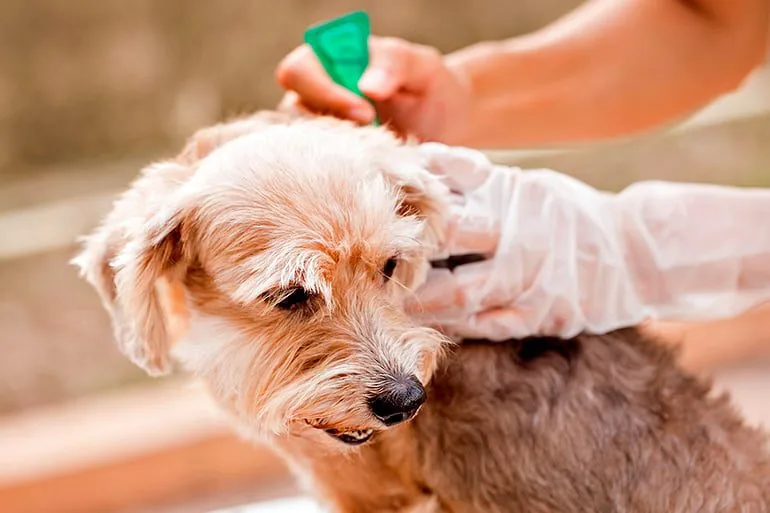
When applying just one milliliter, it's applied only to the neck area (as with conventional spot-on treatments). We'll carefully part their fur and apply it using the syringe (always without a needle). There's no need to massage it in — we'll simply let it spread.
When applying two milliliters or more, the application is split between the neck area and the hip (a few centimeters back from where the tail starts). This is known as a cross-shaped application, putting a bit on the neck and shoulder blades and the rest on the lower back.
Since this is a homemade product, we should use common sense — if our dog swims a lot in rivers or lakes, we should apply it more often. If our dog lives in a rural area with livestock and a higher risk of parasites (higher than if they lived in a city, for example), we should slightly increase the amount applied and how often, and so on. We can also use other very effective, affordable home remedies against fleas and ticks.
How to make natural anti-parasite collars
Since we already have all the necessary ingredients on hand, we can also make fantastic anti-parasite collars for our dogs at home, made with 100% natural products.
We'll need a bandana to tie around our dog's neck — tie it gently and loosely enough that it doesn't squeeze them (we don't want to choke them). That bandana will become their new parasite-repellent collar.
Before putting the bandana on our dog's neck, we'll add a drop of each of the ingredients mentioned above, except the saline solution (just the oils). These will spread across the bandana, acting as a repellent against insects, fleas, and ticks.
We should wash the bandana and reapply the oils every two weeks, so the effect doesn't fade. Simple, right? Besides being simple, it's effective and very affordable, making it accessible to everyone.
IMPORTANT: This article is for informational purposes only and does not constitute veterinary, nutritional or behavioural advice. Every dog is different, and only your trusted vet can advise you on its specific needs.