 Breeds
Origin of the Doberman Breed - History and Breeder
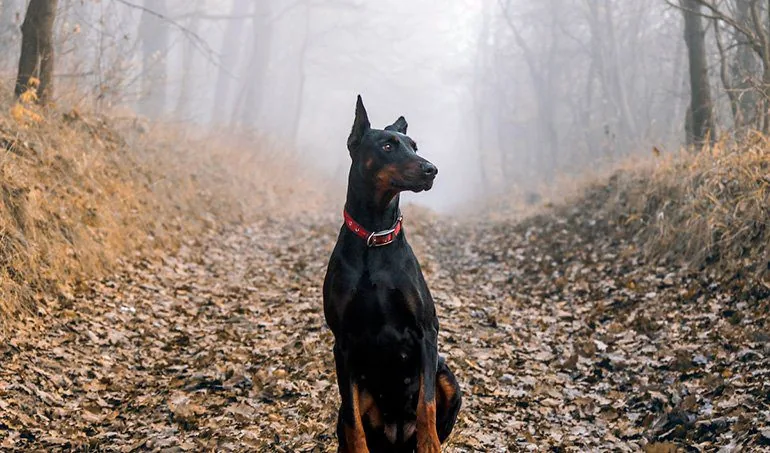
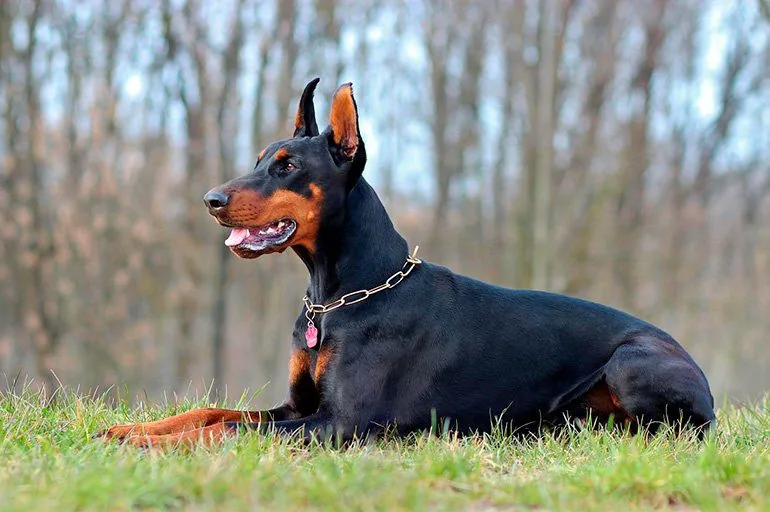
If there's one dog that's sleek, imposing, and strikingly beautiful, it's the Doberman. However, various theories and false myths have existed alongside this breed since its beginnings, both regarding its history and its temperament.
The most widely accepted theory among Doberman clubs places the breed's origin in 19th-century Germany. But how did it come about? If you want to know more about the origin of the Doberman breed, you're in luck — we'll explain it all!
History of the Doberman Breed
The Doberman's history dates back to the late 19th century, when the German Karl Friedrich Louis Dobermann — a tax collector, night watchman, and dog catcher — decided to create a medium-sized protective dog to defend him in his line of work.
Karl Friedrich Louis was after a dog that was energetic, agile, alert, fearless, and aggressive. To achieve this, the German crossed many different dog breeds to arrive at what we know today as the Doberman, though with certain differences that have evolved over the years.
Although theories about the breed's origin have been varied and controversial from the start, since K.F.L. Dobermann kept no records of his breeding program, most agree that a wide variety of breeds were crossed to create it, including:
- Rottweiler
- Pinscher
- Beauceron
- Manchester Terrier
- Weimaraner
- English Greyhound
- Stoppelhopser (now extinct)
- Appenzeller Sennenhund
- Great Dane
From its beginnings, this breed had two key roles: keeping vermin under control, and defending and protecting people as a guard dog. Thanks to these two roles, and its courage and strength, the breed was highly valued from the start.
After Karl Friedrich Louis's death in 1894, English dog breeders began experimenting with Doberman crosses with other breeds, such as terriers and sighthounds, aiming to produce a dog with a sturdy, elegant body and a more aggressive temperament.
Among these contributors, Goswin Tishler, Gustav Krumbholz, and Otto Göller stand out. Göller made important changes to the breed to refine its appearance and temperament, always building on the foundation of a sturdy dog with a powerful temperament.
The Evolution of the Name "Doberman"
The breed was originally known as the Thuringian Pinscher, named after the German region of Thuringia where it was born, or also as Polizeilicher Soldatenhund, meaning "police soldier dog."
Later, the breed came to be known as the Dobermann's Dog, honoring its creator, and then, in 1900, the breed was given the name Dobermann Pinscher, where the term "pinscher" translates roughly as "terrier."
In some countries, like the United States, the breed is still known as the Doberman Pinscher. In Spain and other countries, its name has continued to evolve up to the present day, when it's commonly known simply as the Doberman.
Who Was Karl Friedrich Louis Dobermann?
The story of the Doberman's creator is as mysterious as that of the breed bearing his name. Even so, we know that Louis Dobermann was born in Apolda, Thuringia (Germany), in 1834. Despite his modest education, he's recognized worldwide today as the creator of the Doberman breed.
Throughout his working life, Louis Dobermann held various jobs: tax collector, night watchman, town crier, dog catcher, butcher, and manager of his local animal shelter. Thanks to these roles, his skills as a dog breeder were highly valued by the society of his time.
Mr. Dobermann eventually passed away in 1894, just five years before the breed was officially recognized in Germany. After his death, the Dobermann Club of Germany was also founded by his collaborators.
- Dobermann Verein e.V. (page in German — you can translate it with Chrome)
The Doberman in Spain
Although the breed had already set foot in Spain by 1913, it wasn't until 1960 that it really rose to prominence. Around that time, various poorly managed crosses started taking place, which didn't do the breed's reputation any favors. Even so, the Dobermann Club of Spain was founded in 1975.
Today, besides being a pet, this dog stands out as a police dog, guard dog, and rescue assistance dog. In fact, given its traits, the breed served as the official dog of the U.S. Marine Corps, and during World War II it also worked as a messenger.
Despite its reputation for being dangerous — since it was created with that purpose in mind — and its classification as a potentially aggressive breed in the country, the truth is that with proper training and socialization from puppyhood, these dogs are loyal and affectionate.
IMPORTANT: This article is for informational purposes only and does not constitute veterinary, nutritional or behavioural advice. Every dog is different, and only your trusted vet can advise you on its specific needs.