 Care
Care
Pulmonary Edema in Dogs - Symptoms and Recommended Treatment
Pulmonary edema is an emergency in veterinary medicine — it isn't a disease in itself, but rather a manifestation of an underlying condition. We could define it as an abnormal increase in the volume of extravascular fluid present in the lung tissue. As the fluid builds up, it acts as a barrier that disrupts the normal movement of oxygen through the lungs, making it harder for our dogs to breathe.
Below, we'll learn to identify the symptoms this edema causes, since early diagnosis can greatly help our dog recover. We'll also talk about the treatments used in these cases.
What is pulmonary edema?
Pulmonary edema, as mentioned, is the name for fluid buildup in the lungs due to various causes; this fluid can be found in the interstitial space, the alveolar space, or affecting both. It's not a disease in itself but a symptom. Depending on the amount of fluid and the rest of the clinical picture, it can be more or less severe, and this determines how much breathing difficulty it causes.
So, pulmonary edema can range from mild signs that barely affect the dog's life to severe symptoms, with respiratory compromise serious enough to be life-threatening if urgent clinical care isn't given. Edema can also be classified by how it presents, either acute or chronic.
Types of pulmonary edema
Since not every case of pulmonary edema is the same, we can tell them apart as follows, based on their origin:
- Pulmonary edema from increased hydrostatic pressure: mainly linked to heart disease, due to increased pressure in the left atrium from left-sided heart failure — in this case, we could call it cardiogenic edema. An increase in hydrostatic pressure can also happen iatrogenically, from too much fluid given during fluid therapy, though this is less common.
In both cases, when the pressure in the blood capillaries is so high, fluid leaking through the vessel walls — intact in this case — can end up exceeding the lymphatic system's ability to clear the fluid, resulting in edema.
- Pulmonary edema from increased vascular permeability: due to damage to the lung's microvascular barrier and/or the vascular lining of the alveoli. This allows both fluid and protein to leak through. The most common causes are:
- Inflammatory in origin: sepsis, pancreatitis, immune-mediated diseases, significant trauma, systemic vasculitis, etc.
- Infectious pneumonia — bacterial, viral, fungal, or protozoal.
- Lung damage from inhaling toxic substances, smoke, volatile hydrocarbons, rodenticide poisoning, etc.
- Others: blood transfusions, oxygen toxicity, lung contusion, thromboembolism, anaphylaxis, neurogenic edema, etc.
- Edema from decreased oncotic pressure: due to overhydration (too dilute proteins) or hypoalbuminemia (protein deficiency) from chronic bleeding, kidney or liver disease, or digestive-tract disorders.
Symptoms of pulmonary edema in dogs
Generally, in a dog with pulmonary edema we can identify symptoms such as the following, which will appear with varying severity depending on the case:
- Dry or wet, productive coughing.
- Dyspnea (difficulty breathing).
- Tachypnea (increased breathing rate).
- Frothy expectoration, typical of cardiogenic edema.
- Restlessness and anxiety — the dog resists lying down, since that makes breathing harder.
- Orthopneic posture — the animal stays standing, with front legs spread apart, elbows abducted, neck stretched out, and breathing with an open mouth, all in an attempt to breathe more easily.
- Cyanosis, a bluish coloring of the mucous membranes from lack of oxygen.
- Suffocation in the most severe cases.
How is pulmonary edema diagnosed?
Besides the noticeable symptoms that help guide the diagnosis, the vet can use tests such as listening to the heart and lungs, where crackles, wet rales, wheezing, and so on can be detected. In fact, a thorough, careful listening exam could even help pinpoint the abnormality and point the diagnosis toward one cause or another. So, if the abnormality is in the front-lower area of the chest, the cause could be aspiration pneumonia, while if it's cardiac in origin, the abnormalities would be found around the area above the base of the heart.
To pinpoint these abnormalities even further, chest X-rays, ultrasounds, and bloodwork can be done. All of these procedures give very valuable information about the state of the lungs and the dog overall.
Based on this information, further tests might be requested, such as an electrocardiogram, a urine test, or blood pressure measurement. Remember that the diagnosis, and consequently the treatment, depends on the information available — hence why these tests matter.
Treatment for pulmonary edema
Here it's worth distinguishing between acute and chronic presentations of edema. In the first case, in animals arriving at the clinic with respiratory distress, this is a veterinary emergency. The lungs won't be able to function normally, causing breathing difficulty to the point that, if the dog isn't stabilized, respiratory arrest and death could follow.
Chronic pulmonary edema, on the other hand, usually goes along with heart disease. In these cases, symptoms are usually mild, such as occasional coughing, giving some room to work out and prescribe the most suitable treatment. These dogs can live with the edema, but will need ongoing veterinary follow-up.
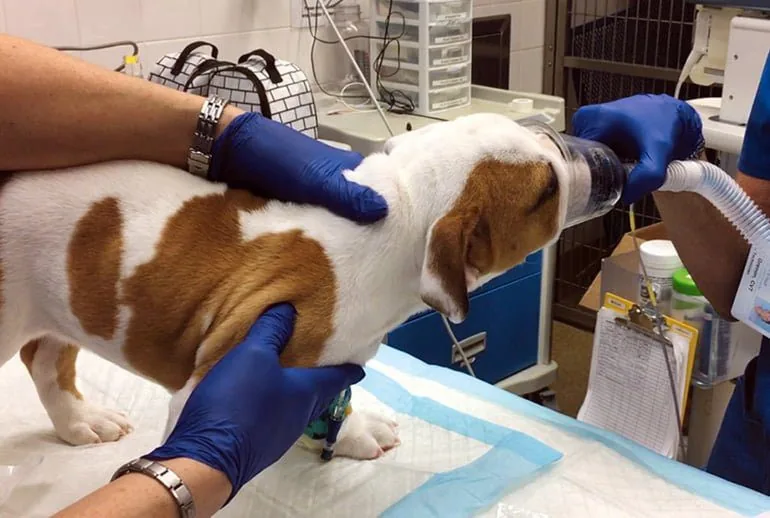
So, severe edema is managed with hospitalization to give oxygen therapy, fluid monitoring and restriction, and IV diuretics and vasodilators. At-home treatment, in milder cases, also usually includes diuretics. That said, in both situations the vet needs to find and treat the underlying cause.
Giving diuretics
Diuretics are essential medications for treating pulmonary edema. Their role is to reduce the excess fluid that's preventing the lungs from working normally. We'll often need to give these at home, so we should keep the following in mind:
- We should strictly follow our vet's recommendations on dosage and administration schedule.
- It's normal for the dog to feel the need to urinate shortly after taking the diuretic. We'll need to give them the chance to do so (significantly increasing the number of walks).
- It's essential to monitor hydration in a dog on this medication. We'll offer plenty of water and/or wet food, such as the BARF diet.
Pulmonary edema, then, is a clinical condition that significantly affects our furry companions' lives. That's why early detection and quickly getting a proper diagnostic and treatment plan underway are so important — along with correctly identifying the underlying cause of the edema in order to start the most appropriate treatment. We can achieve all of this with the help of our regular vet.
IMPORTANT: This article is for informational purposes only and does not constitute veterinary, nutritional or behavioural advice. Every dog is different, and only your trusted vet can advise you on its specific needs.