 Breeds
Skye Terrier
The Skye Terrier isn't your average companion dog: it's a Scottish hunter with centuries of independent instinct baked into every decision it makes. Its loyalty is absolute, but its obedience will never be automatic. Understanding that duality — unwavering affection paired with its own judgment — is the key to living with one of the most singular, elegant terrier breeds in the dog world.
Physical Traits of the Skye Terrier
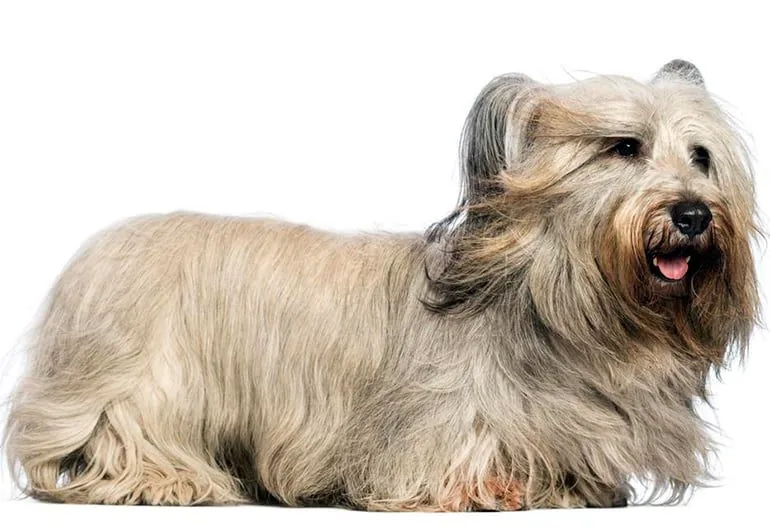
The Skye Terrier's silhouette is unmistakable: a long, muscular body, nearly twice as long as it is tall, carried on short, sturdy legs. According to the official American Kennel Club (AKC) standard, height at the withers falls between 23 and 25 cm in both males and females, while weight ranges from 16 to 18 kg, though some individuals may fall slightly under or over depending on bone structure and body condition.
Its coat is one of the breed's great treasures: a long, straight, hard outer coat that cascades down from a center part running along the back all the way to the ground, combined with a soft, woolly undercoat that insulates against cold and damp. Accepted colors include black, dark or light gray, fawn, and cream, always with preferably darker ears and muzzle. The ears can be erect or dropped, and the medium-sized, dark brown eyes give it an intelligent, serene expression. Life expectancy runs around 12 to 14 years, a notable lifespan for a dog of its size.
A Living Piece of Highlands History
The Skye Terrier was born on the rugged Isle of Skye, in northwestern Scotland, where for centuries it served as the silent ally of farmers and hunters. It was bred to work alone, chasing otters, badgers, and foxes deep into their dens, guided by nothing but its own instinct. That autonomy forged a brave, tenacious dog capable of making life-or-death decisions in complete solitude underground.
The breed rose to fame in the 19th century thanks to the devotion of a dog named Greyfriars Bobby, who, according to legend, guarded his owner's grave in Edinburgh for fourteen years. Queen Victoria boosted its popularity by acquiring several dogs of the breed, turning the Skye Terrier into a status symbol in British aristocratic drawing rooms. Although it's a rare breed today, its genetic legacy and temperament remain intact, like a living fossil of the Highlands.
Temperament: Loyalty With Attitude
The Skye Terrier loves its family with an intensity that borders on exclusivity, but it's not a dog that obeys out of habit or to please. Its heritage as a solitary hunter gave it an independent judgment that weighs every command before carrying it out. If the reward doesn't seem valuable enough, it will simply ignore you with disarming elegance. That's why positive reinforcement needs to rely on high-value rewards — chicken, cheese, or freeze-dried liver — that can compete with its own internal motivation.
It's reserved around strangers, never effusive, and early, consistent socialization is the single biggest factor shaping its adult temperament. Exposing the puppy to different people, environments, and dogs in short, pressure-free sessions reduces the risk of it developing wariness or reactivity. Training sessions shouldn't run longer than ten minutes, and should always end while the dog is still motivated; monotonous repetition triggers its "selective deafness," while scent and tracking games channel its intelligence without triggering resistance.
At home it's calm and clean, but living with children under six requires constant supervision. The Skye Terrier won't flee if it feels cornered: it stands its ground and may growl or give a quick warning nip. Sudden movements, shouting, or disturbing it while it eats or sleeps are classic triggers. With children seven and up, capable of respecting its space, it becomes a solid, patient, deeply devoted companion.
Quirks That Make It Unique
Few breeds can claim to have inspired a funeral monument. The statue of Greyfriars Bobby in Edinburgh is probably the only public tribute in the world dedicated to the loyalty of a specific, named dog. That story captures the essence of the Skye Terrier: a bond so exclusive that, once broken, it rarely rebuilds with someone else.
From a genetic standpoint, the Skye Terrier hides a notable medical quirk. The breed has a hereditary predisposition to copper-associated liver disease, a condition that shares mechanisms with the human disease and has been studied as an animal model. In fact, a scientific study from the College of Veterinary Medicine identified liver changes in this and other breeds that help researchers better understand copper metabolism disorders in humans, underscoring the Skye Terrier's value beyond the dog world.
Another quirk is its coat: the center part dividing the coat from the back of the neck to the tail is an exclusive breed trait and must be perfectly straight in show dogs. Unlike other short-legged terriers, the Skye wasn't bred to work in packs but to hunt solo, and that independence shows up as a personality far less pack-oriented than its distant cousins'.
Health and Essential Care
The Skye Terrier's coat demands meticulous upkeep. Brush it at least three times a week with a long-pin brush and a metal comb to prevent tangles and remove dead undercoat, paying special attention to friction-prone areas like the armpits, groin, and behind the ears. A monthly bath with a gentle shampoo and a conditioner formulated for long hair preserves its silky texture without drying out the skin.
On the health front, besides the copper-storage liver disease mentioned above, the breed can develop dental problems from crowding in a relatively narrow jaw, so quality dry kibble and regular veterinary cleanings are essential allies. Cases of patellar luxation have also been documented, and in older dogs, hypothyroidism and Cushing's disease, which require early diagnosis and treatment.
Exercise should be daily but adapted to its build: two or three moderate-intensity walks, avoiding repetitive jumping and excessive stairs that strain its long spine. Mental stimulation through scent games, tracking, or interactive toys matters just as much as physical exercise; a bored Skye Terrier channels its intelligence into destructive behavior or persistent barking. With proper care, this little Scottish aristocrat rewards you with more than a decade of quiet, elegant, fiercely loyal companionship.
IMPORTANT: This article is for informational purposes only and does not constitute veterinary, nutritional or behavioural advice. Every dog is different, and only your trusted vet can advise you on its specific needs.