 Breeds
Standard Poodle
The Standard Poodle combines unmistakable elegance with near-human intelligence and an athleticism that surprises anyone who only knows it as a show-ring dog. Before you're won over by its aristocratic bearing, it's worth knowing this dog demands daily exercise, mental challenges, and rigorous coat care. If you're ready to offer all that, you'll gain a loyal, versatile companion deeply bonded to its family.
Build and Proportions of the Standard Poodle
The Standard Poodle is the largest variety within the breed. Under the official American Kennel Club (AKC) standard, the minimum height for an adult dog is 38 cm (15 inches), though most dogs fall between 45 and 60 cm at the withers. Males usually weigh 20 to 30 kg, while females, somewhat lighter, fall in a range of 18 to 25 kg.
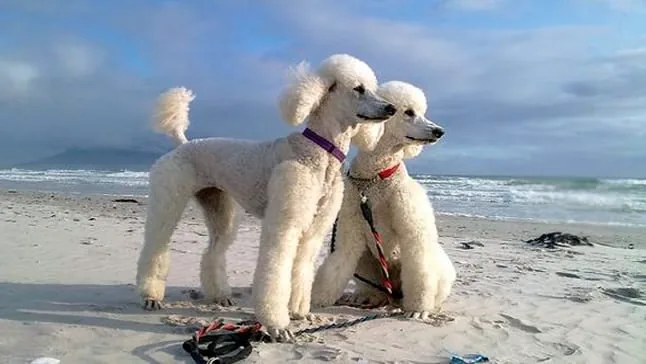
Its body is well-proportioned and athletic: the length from the breastbone to the point of the croup is roughly equal to the height at the withers, giving it a square, balanced silhouette. The chest is deep, the ribs well sprung, and the topline straight, with a slightly sloping croup. The head is fine and elongated, with dark, almond-shaped eyes showing a lively expression, and dropped ears covered in curly hair.
The coat is curly, dense, and wool-like in texture, with no undercoat. Accepted colors are solid: black, white, gray, silver, brown, café au lait, apricot, cream, and red. Patches or parti-color patterns aren't accepted. The life expectancy of a well-cared-for Standard Poodle runs between 12 and 15 years, a notable lifespan for a dog of its size.
Origin and History of the Standard Poodle
Although its modern image evokes Parisian salons, the Standard Poodle has a much more rustic origin. It was born as a water retriever in central Europe, likely in Germany, where the name "Pudel" (from pudeln, meaning "to splash") described its skill at plunging into water and retrieving waterfowl. The large, or standard, variety is the original variety, from which the miniature and toy sizes were later derived.
Over time, the breed was refined in France, where it received the name "Caniche" — derived from canard (duck) — and became the national dog. Its intelligence and learning ability took it into circuses and, later, into show rings, where the beauty lines we know today became established. Despite its current sophistication, the Standard Poodle has never lost its working instinct or physical stamina.
Temperament: Intelligence and Sensitivity
The Standard Poodle is a deeply family-oriented dog that enjoys active time with its household and shows patience with both children and adults. Its emotional sensitivity is very high: it picks up on people's moods and needs consistent rules, since sudden changes throw it off balance. With strangers it tends to be reserved, which makes it an excellent watchdog, though never aggressive when well socialized.
There are two breeding lines with different temperaments. Dogs from working lines retain a high drive and tireless energy; they're ideal for dog sports, advanced obedience, or hunting, and tend to be more vocal. Dogs from show lines have a calmer, more balanced temperament, selected for their bearing and beauty, and handle periods of inactivity better. Choosing between the two depends on your family's actual pace of life.
Either way, early socialization is non-negotiable. Besides the daily walk, this dog needs constant mental challenges: scent games, interactive puzzles, and learning new tricks are just as important as physical exercise for keeping its mind stable and happy.
Unique Traits of the Standard Poodle
The Standard Poodle has some notably distinctive traits. Its curly coat barely sheds, which makes it a popular choice for people with allergies, though it demands high-maintenance grooming. It also ranks second in Stanley Coren's canine intelligence ranking, beaten only by the Border Collie, which explains how quickly it picks up commands and tricks.
The distinctive "lion clip" isn't just an aesthetic choice: it originally protected the vital organs and joints from the cold while the dog swam in icy water, leaving the rest of the body free to move easily. Although it's associated with elegance today, the Standard Poodle remains a versatile hunter; in some regions it's even been used as a truffle finder thanks to its keen nose and intelligence. Finally, it's the breed's original variety, from which the miniature and toy versions were derived much later.
Care and Health of the Standard Poodle
The Standard Poodle is generally a healthy breed, but like any large dog it has a predisposition to certain conditions. The most notable include hip dysplasia, progressive retinal atrophy, and bloat, a life-threatening emergency that calls for splitting meals into smaller portions and avoiding intense exercise right after eating. Conditions like sebaceous adenitis, hypothyroidism, or epilepsy can also appear, which makes regular vet check-ups essential.
The curly coat needs brushing every one or two days to prevent tangles and keep the skin properly aired. A visit to a professional dog groomer every 4 to 6 weeks is necessary for a proper trim. Dropped ears trap moisture easily, so weekly ear cleaning helps prevent infections. As for exercise, it needs a minimum of an hour daily of physical activity combined with mental stimulation; without it, it can develop destructive behavior or anxiety. High-quality food, adjusted to its age and activity level, rounds out the foundation of its wellbeing.
IMPORTANT: This article is for informational purposes only and does not constitute veterinary, nutritional or behavioural advice. Every dog is different, and only your trusted vet can advise you on its specific needs.