 Nutrition
The Benefits of Honey for Dogs and How to Use It
Depending on where the bees gather it, honey will vary in colour and offer different properties that are good for the human body. It is not exclusive to humans, though: the benefits of honey are considerable in dogs too.
That said, not every dog can have honey, and those that do should have it in the right amount so that it does not disagree with them or have negative effects on their health.
Let's look at how to give a dog honey, what its beneficial properties are and what precautions we need to take. Also its various uses, since mistakenly, not everyone uses it as a food or supplement.
Honey as a Food
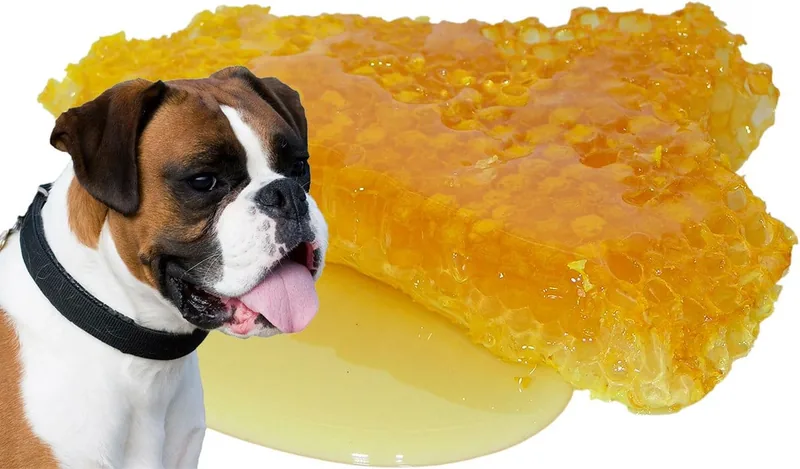
Honey is a product gathered from the hives of bees of various species. These bees have been selected to produce far more than they need for their own upkeep, so harvesting it does not affect their survival in the slightest.
It is a product of which Spain is a very large producer, and consuming it supports beekeeping and allows a great many flowers to be pollinated year after year. Its characteristics vary depending on the flower pollinated, the time of year and the species of bee involved. It is generally liquid, very thick, very sweet in flavour and ranges in colour from pale yellow to dark orange.
The Main Benefits of Honey for Dogs
Nutritionally, honey is a saturated solution of simple carbohydrates, which give it its sweet taste. Its analytical composition is:
- 76.8% carbohydrate: All of this is sugar, mainly fructose, very sweet in flavour.
- 0.5% protein.
- 17% water: This amount gives it that characteristic texture.
- Minerals: Calcium, potassium and sodium stand out, among others.
- Other components such as vitamin C and B group vitamins.
It has a moderately high calorie count, at around 315 kcal/100 g. Being a product rich in simple carbohydrates, it quickly supplies an extra level of energy to whoever eats it. What is more, thanks to its texture it is more appealing than white sugar.
Honey stimulates the body's immune system, making it more efficient against allergies and illness. It also contains a good quantity of glucose oxidase enzymes and natural antioxidants such as flavonoids.
In summary:
- An extra supply of energy, immediately
- Stimulation of the dog's immune system
- Beneficial enzymes such as glucose oxidase
- It provides antioxidants for the body, such as flavonoids
- Rich in vitamin C and B group vitamins, as well as minerals
Possible Downsides of Honey in Dogs
Not every dog is the same, so not all of them tolerate the same foods in the same beneficial way. The same goes for honey: not every dog tolerates it and in some it is quite harmful.
Just as it can help improve some allergies, having traces of bee pollen in it means it can trigger allergic reactions in dogs with non-specific environmental allergies. These can also come on very acutely.
In animals with diabetes it is not recommended, since it remains a very high amount of simple carbohydrate. That said, in a dog treated with insulin who has a hypoglycaemic crisis, honey can be tremendously useful in reversing it. This case is somewhat extreme and should not happen under normal conditions.
In overweight dogs it will not be advisable either, since it is a very energy-dense food, which encourages more fat to be laid down and worsens the problem. In dogs with infectious diarrhoea it can also prove counterproductive, since once dissolved by saliva and intestinal secretions it becomes a very accessible energy source for the bacteria causing the illness, bringing on abnormal fermentation (which is also why it is not recommended for puppies).
Nor should the benefits attributed to this product in people, such as relieving a sore throat (given with milk or lemon), be extrapolated. Given on its own it will do no harm in this case, but giving it the way it is used in humans, heat-treated and mixed with other products, means the syrupy texture is lost and with it its potential properties.
So avoid giving honey to dogs that:
- Have any kind of allergy
- Dogs that get no exercise or are overweight
- Dogs with diabetes or digestive problems
- Dogs with respiratory problems
How Much Honey Should I Give My Dog?
We have to start from the fact that honey is not a dog food but a nutritional supplement for dogs with a high energy expenditure, or a small treat to give our dog now and then. Only for adult dogs — we should not give honey to a puppy.
One hundred grams of honey (around fourteen teaspoons) contains some seventy-seven grams of carbohydrate, which works out at roughly three hundred and fifteen calories. Those figures may look low to you, but they are really high for a dog (roughly a fifth of what a 30-kilo dog would eat in a day).
That is why a healthy dog of around thirty kilos with normal physical activity should have no more than a couple of teaspoons a week. If they weigh fifteen kilos, half that; if they weigh seven kilos, a quarter, and so on.
A healthy dog of around thirty kilos with high physical activity, such as working, search and rescue dogs and so on, should have no more than two teaspoons a couple of times a week.
Obviously, as a supplement to their food, since we should carry on feeding them their usual diet (kibble, BARF and so on). Whatever food they are on, it should never be mixed with honey, since it will be far more fermentable by microorganisms and will prove dangerous.
Using Honey to Heal Wounds on Our Dog
We should not be swayed by the false information circulating online about using honey to heal wounds on dogs. Honey has a low pH and a natural antibacterial effect — that much is true — but it does not mean it works for healing wounds. That property is based on honey's low water activity. It stops bacteria growing, which is why, properly packaged, it never goes off.
It has indeed been used to treat wounds in very particular circumstances. These days there is little sense in it, because the usual disinfectants such as povidone-iodine (Betadine) and chlorhexidine are very cheap and effective.
Dogs love honey because it is sweet, so if you apply honey to a wound they will not stop licking it and will even make the wound worse. What is more, many wounds require veterinary attention, and if we try to sort them out at home by applying honey, they can become infected and cause the dog far more harm.
IMPORTANT: This article is for informational purposes only and does not constitute veterinary, nutritional or behavioural advice. Every dog is different, and only your trusted vet can advise you on its specific needs.