 Breeds
Types of Retriever Dogs
Not one, not two, not three. There are actually up to six types of Retriever, each with its own characteristics and needs. In this guide, we'll explain the qualities of each one, their behavior, health issues, and the main differences between a Labrador and a Golden Retriever. Get ready to learn everything about them!
Breed History
In English, "Retriever" means to "retrieve" or "recover," referring to this breed's origins. Initially, Braques, Spaniels, or Setters — dogs skilled at recovering game — were given this name.
The English, looking for "the perfect hunting dog," decided to make various crosses until they got a dog with a better nose, more courage, and a natural affinity for water. This is how the different types of Retriever we know today came about.
The "father" of the Golden Retriever, one of the best-known variants, was Lord Tweedmouth. He decided to cross a yellow Wavy Coated Retriever with a Tweed Water Spaniel, giving rise to the Golden.
Wavy Coated Retrievers, now extinct, descended from crosses between the St. John's dog and the Setter. In 1913, two years after the first club dedicated to Goldens was founded, they were recognized as their own breed. This caused their popularity to grow exponentially.
A bit earlier, in 1903, the British Kennel Club also accepted the Labrador Retriever as a breed, a dog that also descends from the Canadian St. John's Water Dog.
The ancestors of today's Labrador were named Ned and Buccleuch Avon. Both impressed British nobility with their ability to retrieve objects and animals from the water.
Now you probably understand why these dogs are such fans of rivers, the sea, and pools. It's in their genes! Over time, Retrievers have become one of the most humane breeds around — many Goldens or Labradors are true heroes trained to save lives.

Different Types of Retriever Dogs
We've already said there are six types of Retriever in total, with the Labrador and Golden being the two best-known. So, what are the other four? The Retriever family portrait is completed by:
- Flat-Coated Retriever
- Nova Scotia Duck Tolling Retriever
- Chesapeake Bay Retriever
- Curly-Coated Retriever
Although all these variants have a lot in common, they also have distinct qualities and behaviors. Let's cover them one by one.
Most Notable Qualities of Each Type
If there's a dog type overflowing with good qualities, it's the Retriever. The Labrador stands out for being noble and kind-hearted. The same goes for the Golden, a dog with a very stable temperament and great retrieving skills.
Both are patient and easy to train. In fact, according to the ranking put together by expert Stanley Coren, they rank among the top spots among the smartest dogs in the world.
Somewhat less known is the Nova Scotia Duck Tolling Retriever. This dog has a strong hunting instinct since, as its name suggests, it was used to retrieve ducks in Nova Scotia's lakes and rivers.
It's an enthusiastic, cheerful dog, always ready to learn. Physically, it's the smallest of the retriever breeds, and although it's often mistaken for a small Golden, it tends to be more active. Nova Scotia Duck Tollers excel at Agility and obedience competitions, since they're always alert and never seem to tire.
From the Flat-Coated Retriever, we can highlight its protective, loyal character. They learn fast, love pleasing their family, and are quite trusting, so they're not recommended as guard dogs.
These dogs are very cheerful, just like the Chesapeake Bay. The difference is the latter isn't as easy to handle as the other Retrievers, since it has a more independent character and is reserved with strangers.
The best way to win it over is by letting it be happy playing and splashing in the water. It can even dive!
Finally, the Curly-Coated, with its striking curly hair, is the shyest of them all. That said, this doesn't stop it from being cheerful and obedient. Of the six Retriever variants, it's the oldest and the one that most resembles the old water dogs.
Curly-Coated Retrievers aren't very common, and their build is somewhat different from the rest of the retrievers. Two of their greatest qualities are their agility and their stamina in the field.
Generally, all these dogs have a strong desire to retrieve and a particular fixation on birds and fowl.
They have exceptional eyesight, perception, and sense of smell. They're also strong dogs that adapt to a wide variety of places and weather conditions.
How Do Retrievers Behave?
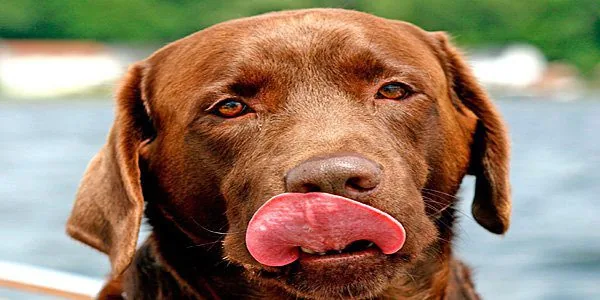
Looking at their behavior, the Labrador loves to play and be surrounded by people at all times. It gets along great with children and is very affectionate with people.
In fact, it tends to suffer from separation anxiety, so it needs to feel well accompanied.
Like the Labrador, the Golden is also very attached to family. It loves acting as a nanny. In fact, it's known as "the eternal puppy," since it's always up for play and fun.
It's a super active dog, exactly like the Curly-Coated, which would spend the whole day in the pool or lake.
Dogs like the Curly-Coated or the Nova Scotia Duck Tolling need a lot of exercise to avoid obesity issues. In fact, it's recommended that both preferably live in a rural setting. Otherwise, they could become depressed, unable to release all their energy.
Something similar happens with the rest of the Retrievers. If they get bored, a Flat-Coated or a Chesapeake, for example, can end up chewing on the sofa or any household objects.
That's why it's important for them to stay busy, not feel lonely, and get proper socialization from a young age.
Main Differences Between the Labrador and the Golden
After seeing the many things all dogs of this breed have in common, it's natural to wonder: what are the main differences?
The truth is, although Labradors and Goldens look very similar both physically and in temperament, we can point out a number of distinguishing traits:
- Coat. This is one of the easiest ways to tell them apart at a glance. The Labrador's is straight and coarse, while the Golden's is softer and a different length.
- Height. The Golden tends to be a bit taller and leaner than the Labrador, though visually it might look the opposite.
- Temperament. Once they reach adulthood, the Golden tends to be a bit calmer than the Labrador. The former is more recommended for a home with children, though the latter also gets along very well with kids.
- Health. The Golden tends to have fewer hereditary diseases, though interestingly its life expectancy is somewhat shorter than the Labrador's.
As you can see, these are minor differences that can help guide you when choosing between one or the other. That said, whichever dog you choose, you won't go wrong — both are wonderful dogs.
You can find more detailed information here: Differences Between the Labrador and the Golden.

Health Issues Typical of the Breed
Retrievers are very resilient, healthy dogs compared to other breeds. That said, you should keep in mind that due to their genetics, they're more likely to develop certain conditions. Among the most common are:
- Hip dysplasia. This is an issue affecting all Retriever variants. This condition, affecting the hip and joints, is fairly common.
That's why it's important to catch it early, preventing symptoms from worsening and the dog from developing arthritis.
This condition can cause pain and limit mobility over time. Joint supplements for dogs can be a form of prevention, but always under a professional's supervision.
- Subvalvular aortic stenosis. This heart condition is hereditary and common in Golden Retrievers.
Dogs with this condition have a narrowing that restricts normal blood flow from the heart to the aorta. It's often hard to notice the problem, since there aren't always clinical signs that are easy to spot.
- Allergies. Retrievers are prone to skin allergies, due to their thick coat. Because of this, good flea control and thorough hygiene are important.
- Eye problems, like cataracts, progressive retinal atrophy, or eyelid malformations. These conditions can appear at any time, so regular eye checkups are key.
- Canine obesity. Some dogs of this breed tend to gain weight quickly if they don't get enough physical activity.
Fortunately, this is something we can prevent with enough exercise and a proper diet. This will make it harder for other complications to develop, like heart disease, diabetes, or joint problems.
Beyond these conditions, retrievers are also exposed to many other common diseases, like hypothyroidism, epilepsy, ear infections, or cancer, which is the leading cause of death in Retrievers.
In all these cases, although the dog's nature plays a role, environmental factors also matter a lot.
Puppies and Their Care
Retriever puppies, especially Goldens and Labradors, are like little geniuses. With their intelligence and eagerness to learn, they understand you right away.
So now you know: if you teach them well from the start, they'll usually keep the same behavior patterns their whole life.
It's true that at first it seems tricky, since as puppies they never sit still — they love playing and having fun. They're in their mischievous stage, but that's true of all puppies. That's why you'll need to arm yourself with patience and not leave valuables or things you want to keep intact too close by.
What matters is that, if you ever find your little Retriever has chewed up your slippers, you know how to handle the situation. After a few weeks, the dog should know how far it can go and what not to do.
Show your leadership, but without yelling or getting worked up. How you guide them will shape your future relationship with them and the temperament they show as adults.
As puppies they look like stuffed animals, but don't forget they're not. That's why, if there are children at home, it's important to talk to them so they don't pull the dog's ears or fur. Dogs should be brought into the family from day one through games and activities, but carefully, so no one gets hurt.
These dogs are especially sensitive, which is why they make excellent guide dogs for people with disabilities, as well as for rescue work alongside emergency teams.
For this, they need thorough training and go through several tests to determine whether they have the skills needed for this kind of work.
Retrievers like Salty, Roselle, or Bretagne, famous for the heroism they showed during the September 11 attacks in New York, are an example of just how special dogs of this breed are.
For all these qualities, they're the favorites of many dog lovers. Honestly, it's no surprise at all. So, have you decided to adopt one? Which of the six Retriever types is your favorite?
IMPORTANT: This article is for informational purposes only and does not constitute veterinary, nutritional or behavioural advice. Every dog is different, and only your trusted vet can advise you on its specific needs.