 Care
Care
Until What Age Do Dogs Grow?
When we decide to share our life with a dog, questions easily come up about its final size, in case its growth phase hasn't ended yet, especially if we're dealing with a puppy.
Whether it's a mixed-breed or purebred dog, knowing until what age it'll keep growing is essential, among many things, to give it a diet suited to its needs. Let's look at the tricks to figuring this out.
How to Determine a Dog's Age
First, to know whether a dog whose background we don't know will keep growing, we can look at its teeth, since they give us valuable information in younger animals.
Puppies are usually born without teeth, and these start coming in around 2-3 weeks old. These baby, or deciduous, teeth, sharper and smaller, just like in humans, fall out between 3-7 months old, replaced by permanent ones.
So, the presence of baby teeth, their absence, or the switch to adult teeth will tell us a dog's age fairly precisely, which in turn gives us information about the growth phase it's in.
Tooth Wear
A dog's incisors have edges, called cusps, that wear down with age. The progression of this wear helps us estimate a dog's age with relative reliability up to around 6 years old.
Beyond that age, factors like diet or genetics start influencing wear, meaning we can find young animals with teeth in very poor condition, while others over 10 years old still have their cusps. So, this criterion isn't reliable past that point.
Growth Patterns
If, by looking at the teeth, we conclude we're dealing with a young animal, to know how much more it'll grow, we'll need to consider its growth pattern, determined by its size.
So, there'll be differences between small, medium, and large or giant dogs, since a Chihuahua doesn't follow the same pattern as a Saint Bernard. At birth, smaller breeds can weigh around 150 grams, while larger ones reach 600, which is a very small weight difference compared to what'll happen once these dogs are adults.
Think again of a Chihuahua that won't reach a kilo, versus a Saint Bernard that can reach 90 kg. Also keep in mind males tend to be slightly larger than females.
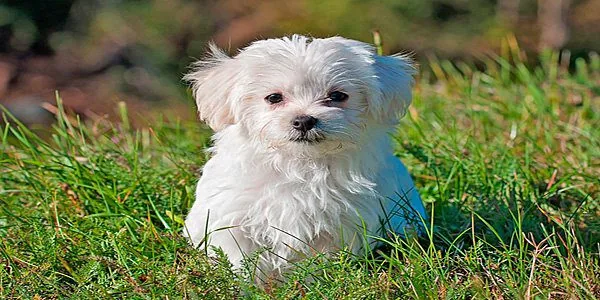
Small Dogs
Smaller breeds or mixes grow quickly until around 3 months old, when they reach about half their adult weight.
From there, they'll keep growing more slowly until around 6 months, which usually coincides with sexual maturity. From there, they might still gain weight, but we'd already consider them at their final size.
So, if we adopt a puppy that barely grows around 3 months old, we can assume it'll be small-sized.
Medium Dogs
We could include in this group dogs that'll weigh between 8-10 kilos and up to about 25 as adults. Just like with smaller dogs, growth is very fast early on — in this case, roughly until 6-8 months old, when they may also start going into heat.
Once they reach sexual maturity, they'll be practically at their adult size, though they can still gain weight and grow until 12 or even 18 months old.
This can lead people to think dogs sterilized before their first heat gain weight because of the surgery, when the increase is actually because they hadn't finished growing yet.
Large Dogs
Like every dog, they'll grow quickly early on, but unlike smaller dogs, their growth can continue until 12-18 months old, and even up to 24 or more in giant breeds like Mastiffs.
Around 6 months old, they'll reach roughly half their adult weight. We'll also notice they take longer to reach sexual maturity.
It's very important for these animals to get proper nutrition for this faster growth phase, so deficiencies don't affect their development or even cause health issues.
Proper Growth
Purebred dogs have established standards for the measurements they should reach at maturity.
For mixed-breed dogs, we can use average growth charts that calculate the approximate weight puppies should gain at each growth stage, faster during the first few months, when food intake should also be higher, always with food specifically formulated for puppies.
Our vet can monitor whether growth is proceeding normally by weighing and examining our puppy every time we visit for its first vaccines.
Still have questions? Feel free to leave a comment, and we'll help you figure it out.
IMPORTANT: This article is for informational purposes only and does not constitute veterinary, nutritional or behavioural advice. Every dog is different, and only your trusted vet can advise you on its specific needs.