 Care
Care
What Happens If a Dog Eats Snow?
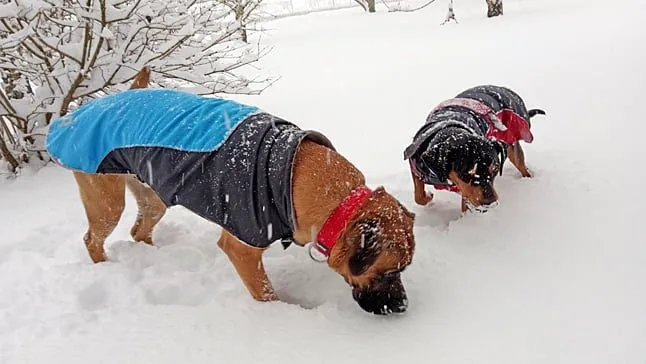
Almost all dogs enjoy playing in the snow as puppies, rolling around in it, chasing snowballs, and even eating snow nonstop — something they seem to love.
However, eating snow carries a number of fairly common dangers that few owners are aware of, which can make their pups get sick easily, sometimes showing symptoms that very same day.
Why Do Dogs Eat Snow?
We should start by remembering that dogs don't sweat — they cool down by panting and releasing excess heat through their tongue. So a dog that's been running around and playing in the snow for a while will be quite warm, and will feel a lot of relief eating snow.
Chasing snowballs is great, but eating them is even better. For them it's also a game — being able to chew snow and swallow it without it posing a serious risk to their health is a real pleasure.
So the reasons a dog eats snow are clear: play, thirst, and cooling off when they're hot. There are no other real reasons that justify this behavior.
Snow and a Cold Stomach: Consequences
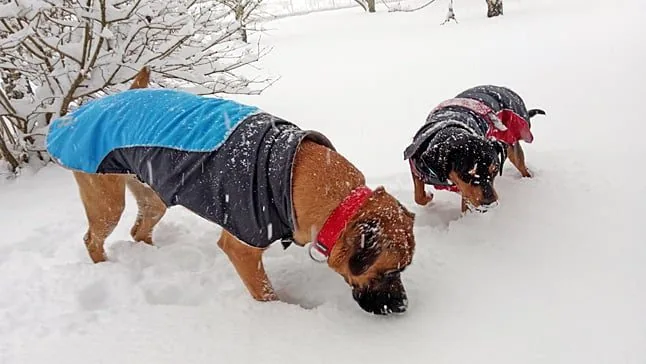
Eating a little snow probably isn't a problem, but eating a lot of snow chills our dog's digestive system, which brings on some significant consequences.
First of all, if our dog overdoes it eating snow, keep in mind that its need to pee will increase drastically within an hour or two, so even if we go back home to rest... we'll have to go back out once that time has passed so it can relieve itself.
Another consequence of eating snow is an upset digestive tract — in other words, diarrhea. Yes, eating snow causes diarrhea in many dogs because it chills their little tummy.
And last but not least, our dog can catch a cold or even show pneumonia symptoms if it already had a bit of a cold. In these cases, when a dog is sick, it's best not to overdo walks in the snow.
Should I Bundle Up My Dog to Go to the Snow?
It all depends — large, well-fed dogs don't need to bundle up, since their coat and layer of body fat insulate them from the cold without much trouble.
However, small dogs, sick dogs, or those that are very sensitive to temperature changes (such as chihuahuas), should bundle up to avoid catching a cold or freezing.
Waterproof coats are a different matter — we can use them if it's snowing or raining to keep our dog from getting soaked. They're quite useful, since they shelter a large part of its body.
Warning Signs in the Snow
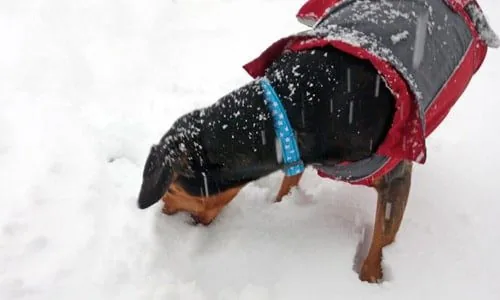
If we notice any sign that something isn't right with our dog, we should stop our snow walk and head back home, where it can be warm and calm.
Some of the warning signs are:
- Excessive shivering — our dog shivers nonstop from being too cold.
- Stiffness and apathy — it avoids walking, playing, and moving around in the snow because it doesn't feel well.
- It doesn't obey and heads home — dogs are very smart, and if they're not comfortable, they'll try to make their own way back home, where they feel safe.
- Pain when walking, since sometimes their paws (which are very sensitive) get frostbitten, and they walk limping or very slowly.
If you notice any of these signs, don't hesitate to head home and make your pup comfortable and warm.
IMPORTANT: This article is for informational purposes only and does not constitute veterinary, nutritional or behavioural advice. Every dog is different, and only your trusted vet can advise you on its specific needs.