 Care
Care
What to Do If My Dog Breaks a Nail
Although dogs' nails don't usually need any special care, at most trimming them from time to time, in some circumstances they can get damaged and end up breaking.
Dewclaws, or the fifth toe's nail, are the most prone to accidents. Below, we'll explain what we should do in these cases and the proper care for our dog's nails.
Characteristics of Dogs' Nails
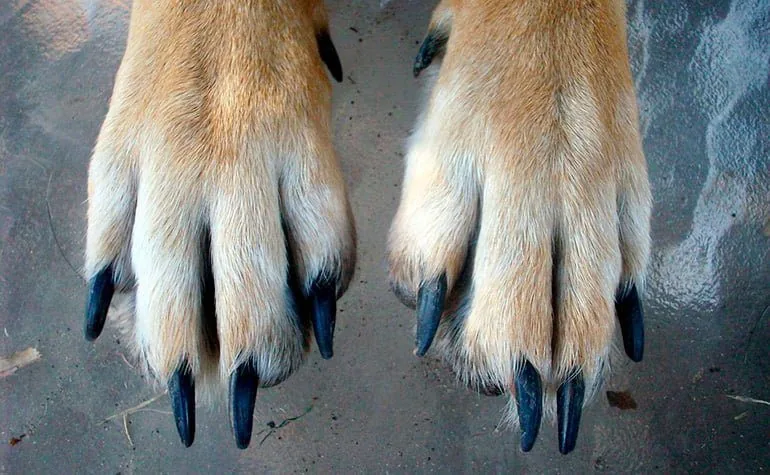
Dogs' front feet have four toes, plus a fifth located above the paw pad, already on the leg. Their hind legs, on the other hand, only have four toes. All of them have their corresponding nail. In addition, some dogs also have dewclaws, single or double.
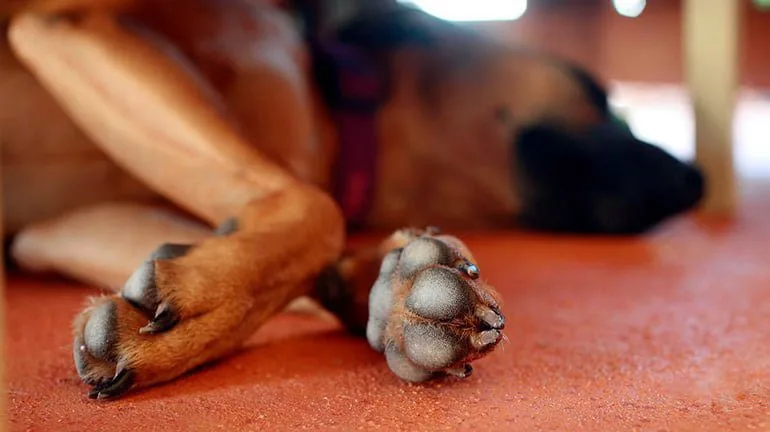
Dewclaws are remnants of a fifth toe located on the inner side of each leg. Dogs' nails grow continuously, which is why it's not alarming if they break. Generally, they wear down through the dog's regular activity, but especially the dewclaw nails, which don't touch the ground, may need trimming.
Dogs' nails can be black, white, or clear. Except in the first case, at the base we'll see a pinkish area corresponding to the blood-supplied zone. This is where the nerves and blood vessels are located. That's why if the nail is cut or broken here, bleeding will occur.
Dewclaws
We pay special attention to dewclaws, since, not touching the ground, their nails don't wear down. Since they grow continuously, they tend to curl inward, coiling on themselves and digging into the flesh. In addition, since they stick out from the leg, they can easily get caught and injured.
Dogs have dewclaws on their front legs, hind legs, or both. They can be single, if there's one nail, or double, when there are two. To prevent overgrowth or breakage problems, it's important to check them regularly and, if needed, trim the nail.
My Dog's Nail Is Broken and Not Bleeding
The nails most likely to break, besides the dewclaws, are the fifth toe nails on the front legs, but any nail can suffer an accident. It's not very common, but impacts, getting caught, or fights can explain nail breaks.
If the injury happens outside the blood-supplied area, the nail will be more or less broken but won't bleed. In these cases, we don't need to intervene, since the nail will grow back over time.
But when the nail is left hanging or with an uneven edge that could scratch, we have the option of trimming it with special dog nail clippers and great care, especially if it's black, since we won't be able to see the blood supply. If we don't feel confident doing it, we should see the vet.

My Dog's Nail Is Broken and Bleeding
If the dog breaks its nail in the blood-supplied area, bleeding will occur. Within a short time, it should stop thanks to clotting, but sometimes this doesn't happen. It's not serious — the dog won't bleed out, though it may be in discomfort.
To stop the bleeding, we can use a cloth, gauze, or similar to apply direct pressure to the nail. If, after a few minutes, blood is still coming out, we need to use a hemostatic product to stop the bleeding. If we don't have one at home, we'll see the vet.
If, besides bleeding, the nail is left in bad shape, with a hanging fragment or a sharp edge, it's possible to trim it so it's blunt and even. It's recommended to leave this task to the vet.
How to Prevent Broken Nails in Dogs?
As mentioned, we should keep an eye on nails that don't wear down enough, or those belonging to toes or dewclaws with a higher risk of breaking. In these cases, it's recommended to trim them as soon as we see they're too long.
For trimming, we should keep the following points in mind:
- Use nail clippers suited for dogs and for our dog's size.
- Take advantage of a moment when the dog is calm.
- With a very nervous animal or one especially averse to nail trimming, we'll need someone else to hold it for us. If the dog bites, we won't force it — we'll put on a muzzle.
- One trick is to do the trimming with the dog up on a table. It's easier for the dog to stay still at a certain height.
- It's better to get it used to this from puppyhood, but if that's not possible, we can teach it with treats, petting, and patience even as an adult. It's more positive to trim just one nail per session than to force the dog.
- To trim, we should hold the dog's toe with our index finger and thumb, position the clippers parallel to the paw pad, and cut, always staying clear of the blood-supplied area.
- For black nails, it's important to trim only the tip. It's better to cut too little and have to repeat the process than to reach the blood supply. If in doubt, nail trimming can be done by the vet or a dog groomer.
- Keep gauze or a hemostatic product on hand in case we cut too much, which can happen if the dog moves.
IMPORTANT: This article is for informational purposes only and does not constitute veterinary, nutritional or behavioural advice. Every dog is different, and only your trusted vet can advise you on its specific needs.