 Care
Care
Why Does My Dog Eat Dirt? Main Reasons
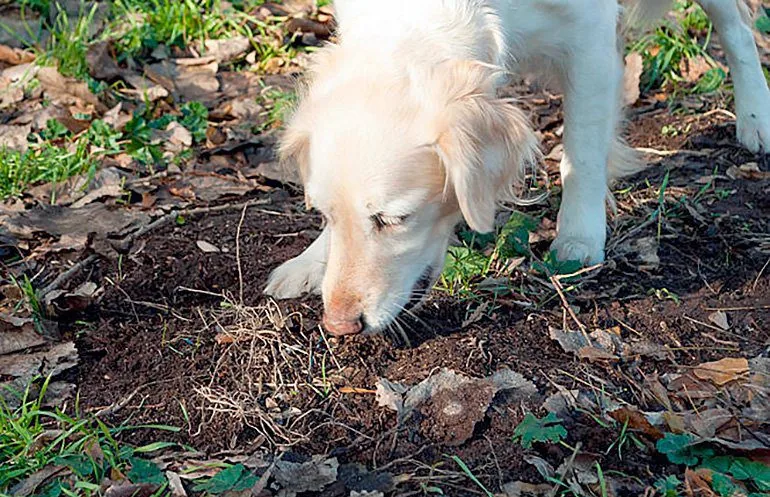
Seeing a dog lick or eat dirt occasionally, as a one-off, isn't a cause for concern. It could be down to some substance or smell, unnoticed by us, that's in that soil and makes it appealing.
But when a dog eats dirt regularly, we're looking at a problem that could have a physical or psychological origin. To fix the problem, we need to dig until we find its root cause. Let's take a detailed look at the main reasons dogs eat dirt.
Pica
Eating dirt can fall under the disorder known as pica. This is characterized by eating non-food substances. This includes all sorts of things: paint, rocks, ash, chalk, paper, glue, plaster, and also dirt.
Practically anything that can be swallowed and has no nutritional value falls under this disorder. It's not clear why a dog engages in this behavior. Different hypotheses have been put forward to explain it.
Nutrient Deficiency
At first, eating dirt was linked to a nutrient deficiency, leading the dog to eat any material within reach in an attempt to complete its diet. But the truth is that, nowadays, commercial dog diets are so widespread that even lower-quality ones tend to provide acceptable nutrition.
Because of this, we can rule out a lack of nutrients, unless the dog has a condition such as malabsorption, Cushing's syndrome, diabetes, or hyperthyroidism. This type of inappropriate eating is also mentioned in severe cases of intestinal parasite infestation. These dogs wouldn't absorb the nutrients they need.
That's why, if a dog is eating dirt, it's first recommended to run a stool analysis (coprological exam) and follow regular internal and external deworming. Parasites like fleas can transmit intestinal worms to dogs.
Malabsorption Syndrome
This type of inappropriate eating has also been linked to what's known as malabsorption syndrome. It's usually caused by some problem affecting the function of the pancreas or the small intestine. As the name suggests, this affects nutrient absorption.
Because of this, the dog can eat normally, even voraciously and in large amounts, but will always seem hungry, since it can't make use of the nutrients in its food. These dogs will also lose weight despite eating well, and pass abundant, diarrheic, fatty stools.
In addition, the fur around the anal area can take on a greasy look. Any of these signs should make us suspect malabsorption. It's a reason to see the vet, since only a professional can examine the dog and run the necessary tests to find the root of the problem and provide treatment.
Hunger
Although, luckily, dogs don't usually go hungry, cases have been documented of abandoned dogs that, in extreme situations, ate dirt to survive because it was all they had. Dirt can be spotted in the stomach if, for some reason, the animal has an X-ray taken.
Psychological Problems
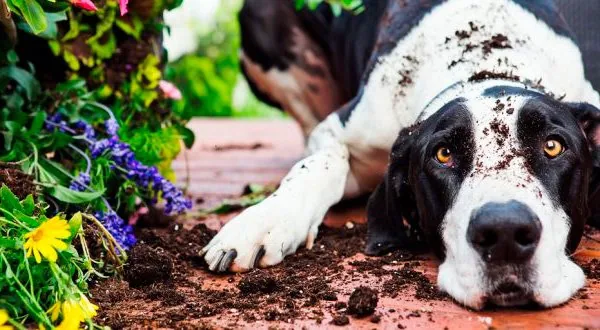
Among the hypotheses put forward to explain why a dog eats dirt, we can't leave out the psychological angle. It's thought that a dog going through a period of high stress can develop behaviors such as inappropriate eating, as an expression of frustration, anxiety, or boredom.
In these cases, eating any substance, such as dirt, is part of a broader picture that can include other behaviors like separation anxiety or other destructive activities.
Separation Anxiety
Dogs with separation anxiety whine, bark, or howl as soon as they find themselves alone. They destroy any object within reach, relieve themselves indoors, and eat different materials. A dog in this situation should see the vet to rule out physical problems. If it's healthy, the solution involves reviewing the dog's lifestyle.
We need to identify the aspects that can clearly be improved. The goal is to provide living conditions that respect its biological needs as much as possible. This requires implementing several basic measures, beyond proper nutrition or housing suited to its size.
The dog needs daily attention. It's a pack animal that can't live in isolation. It needs to be able to socialize and get regular, sufficient physical and mental activity suited to its characteristics. It can't live confined. To improve these aspects, we can turn to specialized vets, dog trainers, or ethologists for help.
What Dangers Does Eating Dirt Carry?
Besides being a potential sign of physical or psychological disorders, eating dirt itself can put the dog's health at risk. Dirt can contain different types of parasites, such as intestinal worms, which will end up in the dog's digestive system, causing infestation. Some of these parasites can also affect humans.
Dirt, even without parasites, can trigger digestive discomfort of varying severity, such as loose stools, diarrhea, or vomiting. The situation will be more serious if, on top of that, the dirt contains a potentially toxic substance such as insecticides, antifreeze, fertilizers, etc.
Bibliography Carlson and Giffin. 2002. Manual práctico de veterinaria canina. Madrid. Editorial el Drac. Morris, Desmond. 1994. Observe a su perro. Barcelona. Plaza & Janés.
IMPORTANT: This article is for informational purposes only and does not constitute veterinary, nutritional or behavioural advice. Every dog is different, and only your trusted vet can advise you on its specific needs.