 Breeds
Yorkshire Terrier
The Yorkshire Terrier, affectionately nicknamed the Yorkie, packs the courage and temperament of a working terrier into a miniature body. Its silky coat, confident gait, and unwavering devotion to family have made it one of the most sought-after companion dogs in Spain. But behind that plush-toy look lies a tenacious personality and specific care needs every future owner should know about.
What the Yorkshire Terrier Looks Like on the Outside
The official American Kennel Club (AKC) standard describes a compact, upright dog that projects an image of elegance and poise. Height at the withers falls between 18 and 23 cm, with no notable difference between sexes, and weight ranges from 1.8 to 3.2 kg in both males and females. Any dog over 3.2 kg falls outside the breed ideal.
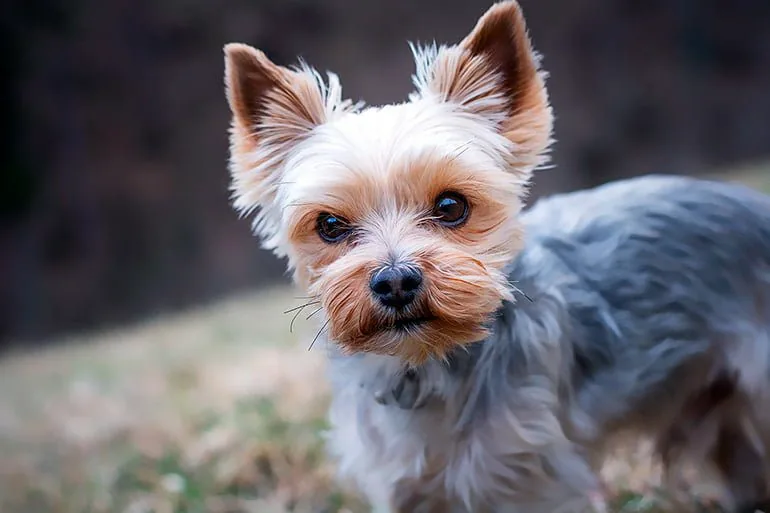
Its most recognizable trademark is its coat: long, straight, fine, and silky hair, never woolly or wavy, that falls straight down both sides of the body with a center part running from the nose to the tail. Color follows a precise pattern: dark steel blue on the body and tail, and rich golden tan on the head, chest, and legs. Puppies are born with a black-and-tan coat that gradually lightens into the final adult coloring by around two or three years of age.
A well-cared-for Yorkie's life expectancy runs between 13 and 16 years, a notable lifespan that makes it a long-term companion. Its head is small and flat, with a not-too-long muzzle, dark, bright eyes with an intelligent expression, and erect V-shaped ears that give it a permanently alert look.
From Rat Hunter to Lap Dog
The Yorkshire Terrier's origin dates back to the 19th century in the industrial counties of Yorkshire and Lancashire, in northern England. During the Industrial Revolution, Scottish weavers and miners who migrated to the area brought along various small terriers — such as the Clydesdale, the Paisley, and the Skye Terrier — which were crossed with local English terriers, producing a dog exceptionally skilled at hunting rats in textile mills and coal mines.
Far from staying in the workshops, this tiny hunter soon caught the eye of the Victorian bourgeoisie, who appreciated its distinguished bearing and its coat, which lent itself to almost cosmetic grooming. By the late 19th century, the breed had already moved out of the factories and into drawing rooms as a symbol of status and refinement. The first dog registered under the name Yorkshire Terrier was Huddersfield Ben, born in 1865, considered the founding father of the modern breed.
A Terrier With the Heart of a Lion
Don't let its size fool you: the Yorkie has kept intact the bold, determined instinct of its terrier ancestors. It's an alert, curious, always-watchful dog that won't hesitate to bark at any noise or presence it finds suspicious. This spontaneous watchdog tendency, combined with its sharp intelligence, makes it an excellent household alarm.
With its own people it shows a completely different side: it's extremely affectionate and dependent on human contact. It needs to be part of family life and doesn't handle prolonged loneliness well, which can lead to separation anxiety if not addressed from puppyhood. Its personality also has a stubborn streak; it learns quickly, but only obeys when it sees a clear payoff, so training should rely on positive reinforcement, short sessions, and plenty of patience.
Despite how attached it is, it's not a passive dog: it enjoys play, exploratory walks, and mental challenges. A bored Yorkie can become destructive or a compulsive barker, so it's worth providing daily stimulation matched to its energy level. Around young children it needs supervision, not because of aggression, but because of how physically fragile it is during rough play.
Details Only a Yorkie Has
The Yorkshire Terrier's coat has a quirk that sets it apart from almost every other breed: its hair structure is more similar to human hair than to typical dog fur. It grows continuously, sheds very little, and lacks an undercoat, which reduces allergen release and makes it a breed many people with allergies can tolerate. That said, it demands constant grooming upkeep.
Another quirk is its ability to change color with age. The puppy's black-and-tan coat gradually transforms into steel blue and gold, a process that can take up to three years and depends on genetic and hormonal factors. No two Yorkies lighten in exactly the same way or at the same pace.
It also holds the record for smallest dog in documented history: a Yorkie named Sylvia, born in 1945 in England, who as an adult measured 6.3 cm at the withers and weighed 113 grams. Although extreme miniature dogs aren't desirable from a health standpoint, the breed continues to fascinate people with its ability to pack so much personality into so little size.
Essential Care and Health Weak Points
The Yorkie's mouth is its Achilles' heel. Dental crowding in such a small jaw encourages tartar buildup and periodontal disease, the leading cause of premature tooth loss. Daily brushing with dog-specific toothpaste and regular veterinary cleanings are non-negotiable. High-quality dry food also helps reduce plaque.
Patellar luxation is another common condition: the kneecap slips out of its groove, causing intermittent limping and that characteristic little "skip" while walking. Keeping an optimal weight and avoiding jumps from heights protects the joint; severe cases require surgery. In puppies, hypoglycemia poses a real risk. Signs include lethargy, trembling, and weakness. It's prevented by offering small, frequent meals without long fasting periods.
Tracheal collapse, typical of miniature breeds, shows up as a dry cough that sounds like honking, which worsens with excitement or pressure from a collar. The simplest, most effective solution is to always use a harness instead of a collar. On the eye front, it's worth watching for cataracts, glaucoma, and dry eye through regular check-ups. Finally, portosystemic shunt is a congenital liver defect that causes neurological symptoms after meals; early diagnosis makes it manageable with diet and medication. A health schedule with a twice-yearly vet visit, annual bloodwork, and up-to-date vaccinations rounds out the preventive foundation for this long-lived, fascinating breed.
IMPORTANT: This article is for informational purposes only and does not constitute veterinary, nutritional or behavioural advice. Every dog is different, and only your trusted vet can advise you on its specific needs.