 Nutrition
Can Dogs Eat Parsley? Uses and Benefits
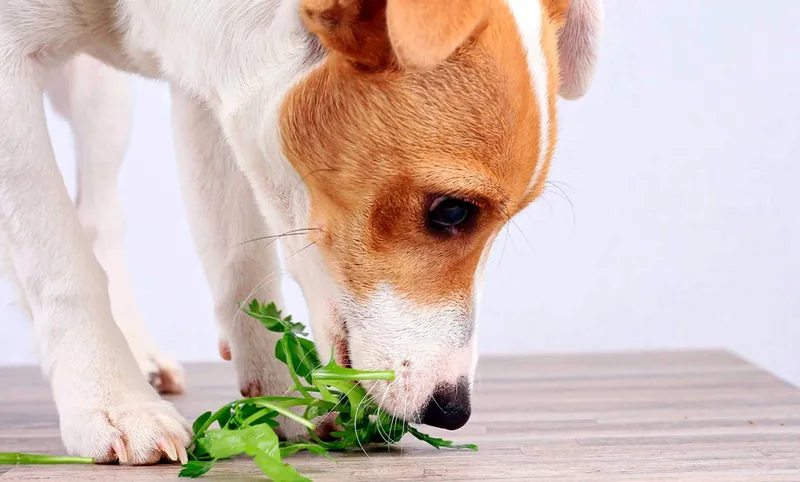
This herbaceous plant, scientific name Petroselinum crispum, is very common in human cooking, and parsley not only adds a touch of colour to our dishes but also brings them a great deal of flavour and considerable nutritional properties.
If you are wondering whether you can give your dog parsley, the answer is yes, but with some exceptions. Let's look at the main benefits of parsley in a dog's diet, what the right dose is and when we should not give it at all.
The Nutritional Properties of Parsley
Fresh parsley is a plant packed with vitamins and other nutrients that are hugely beneficial to our dogs' health. It contains protein, fibre, iron, calcium, potassium, B, C and K group vitamins and a high vitamin A content, among many others. Parsley also contains natural antioxidants that stave off cellular ageing in our dogs.
Another of parsley's nutritional properties is the folic acid it contains, along with natural anti-inflammatories and plenty of fibre, which will help improve our dog's bowel movements. Not forgetting that it has barely any fat, which makes it a hugely healthy food, always in appropriate amounts.
Parsley Prevents Cardiovascular Disease in Dogs
The folic acid in parsley will help our dog's circulatory system and their cardiovascular system, making them less likely to develop heart-related conditions.
By improving circulation, we also prevent strokes. This is because folic acid reduces excess homocysteine, which translates into better arterial vasodilation. Numerous studies also indicate that a diet rich in folic acid can prevent cognitive dysfunction in dogs (what we know as Alzheimer's).
Parsley to Prevent Cancer
Another of parsley's great properties is that it can help our dog cut their chances of developing cancer of the colon or lung, thanks to its antioxidant content. Parsley contains a wide range of vitamins, among which B1, B2 and B9 stand out.
And although those types of cancer are the ones we can avoid in the greatest proportion by working a little parsley into our dog's diet, the fact is that parsley contains a type of flavonoid known as myricetin, which appears to have anti-cancer activity.
Eliminating Intestinal Parasites With Parsley
Among the benefits dogs can gain from eating parsley regularly is internal deworming, since parsley keeps internal parasites at bay. Every dog suffers some kind of intestinal parasite at some point in their life, colloquially known as worms.
Parsley's beneficial properties make it harder for a great many intestinal parasites to spread, keeping our dog from becoming infested. The same thing happens with garlic in very small amounts.
It Improves Our Dog's Breath
One of the most common uses of parsley in dogs is precisely to improve their breath. We all know that dogs spend the day eating things off the ground, some of them past their best. Then they lick themselves constantly, which means a great many bacteria end up in their digestive system.
Parsley is not only good at helping our dog's digestion, it also improves their breath considerably, making it fresher and healthier.
Better Coat and Skin for Our Dog
The natural antioxidants parsley contains work to prevent their cells from ageing, which will give our dog healthier skin and a healthier coat. This is down to a carotenoid present in parsley and to the vitamin C it contains. It thereby prevents sagging skin and ageing.
Parsley Looks After Our Dog's Bones
The vitamin K parsley contains, in combination with calcium, encourages bone formation by the so-called osteoblasts. Vitamin K also stimulates the fixing of calcium in our dog's teeth and bones, increasing bone density as well. That makes parsley very beneficial for preventing conditions such as osteoarthritis.
How Much Parsley Should I Give My Dog?
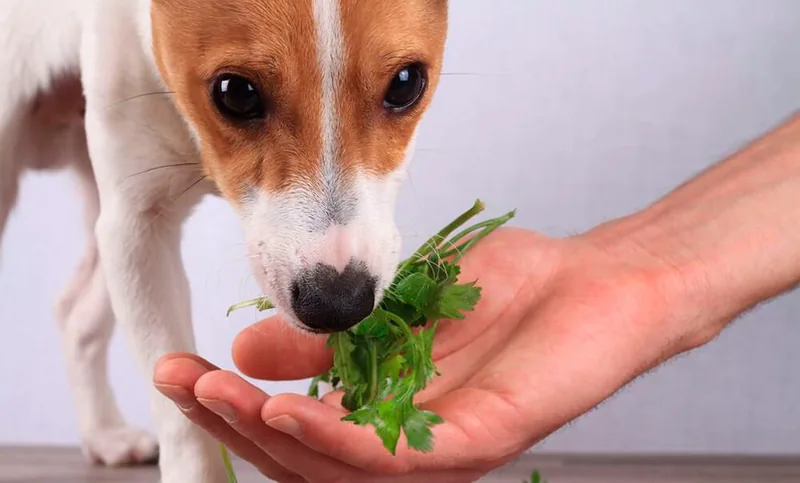
The dose varies according to size, but by way of example, for a dog of around twenty-five kilos it will be enough to chop a few leaves of fresh parsley and mix them into their food (about half a small teaspoon of fresh parsley). We can give them parsley two to three times a week alongside their meal.
Another way to give our dog parsley is through home-made recipes: if we use BARF feeding, for instance, it will be enough to add a little parsley to the meat we are preparing.
Which Dogs Should Not Eat Parsley?
Parsley appears to have a harmful effect on dogs with kidney problems, so if our dog has kidney failure or any kidney-related condition, we should keep them from eating parsley.
Pregnant bitches should not eat parsley either, since it appears to have properties that are harmful during pregnancy. So if you suspect your dog may be pregnant, do not give her parsley under any circumstances.
Parsley Omelette for False Pregnancy
There is an urban legend claiming that bitches with a false pregnancy are cured if they are fed an omelette with parsley — something that is completely untrue. If our dog has a false pregnancy, we should take her to the vet so she can be given the medication she needs. Parsley does not work for this and is no miracle cure for illnesses or conditions.
IMPORTANT: This article is for informational purposes only and does not constitute veterinary, nutritional or behavioural advice. Every dog is different, and only your trusted vet can advise you on its specific needs.