 Breeds
Dog Breeds That Handle Heat Best
The dog is one of the most adaptable species in the animal kingdom. From Alaska to the Sahara, from New York to Tibet — wherever you go, dogs are there. That said, evolution means each breed is better suited to the environment it's settled into over generations.
With that in mind, the dog breeds that handle heat best have developed a short coat that lies close to the body, along with a muzzle that lets them breathe without overheating. Let's look at the breeds that adapt so well to hot climates.
Beagle
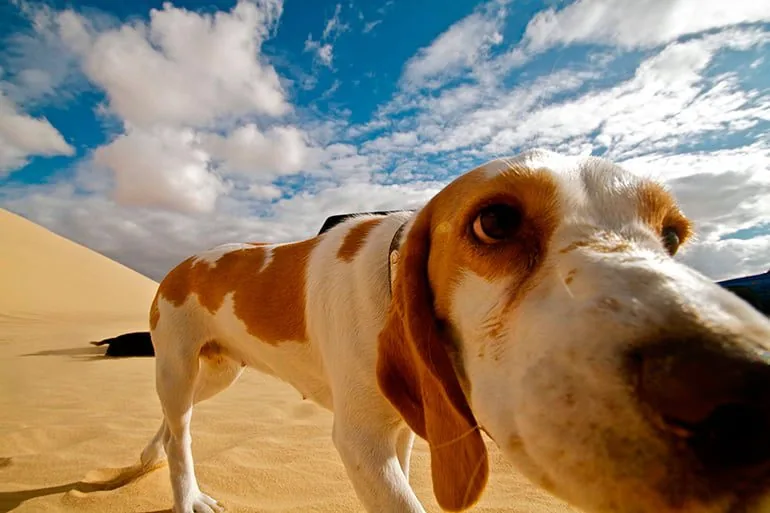
Originally bred for hunting foxes, hares, and rabbits, Beagles are a hound breed with a short, coarse coat, which helps them avoid building up body heat during summer. They have a very sensitive nose and a small-to-medium size, so they adapt perfectly to smaller homes.
Beagles are excellent family dogs, forming good relationships with people and other dogs, since they've been bred to work in packs.
Australian Shepherd
Used to Australia's scorching climate, this shepherd variety will adapt without any trouble to milder hot climates, like Seville or the Canary Islands (in Spain) or Chihuahua (in Mexico) during summer. That said, keep in mind they're not suited to life in small spaces or urban environments.
The Australian Shepherd should live in a house with a large yard or close to the countryside. It's one of the smartest breeds in the world, which makes training easier. On the other hand, they tend to be reserved, so it's essential that they're well socialized from a young age.
Pinscher
Although it comes from the cold German forests, the Pinscher will actually be much happier in a mild climate. It has a thin coat, a lean build, and a pointed nose that lets it work comfortably in high temperatures.
And "work" is the key word with this breed, since they love staying busy. They're also very versatile, able to serve as police dogs, military dogs, guide dogs, guard dogs, or household companions.
Podenco
In Spain and Mexico there are different Podenco varieties, depending on where they developed: Ibizan, Andalusian, Canarian, and Valencian. They all share a sleek build and a fine muzzle, plus origins in warm regions.
That's why they adapt well to heat. Natural-born hunters, you need to be careful during walks, since they tend to chase small animals and can run off or get lost if you're not paying close enough attention.
Dogo Argentino
Bred for hunting wild boar on South America's sweltering plains, these big dogs descend from the Great Dane. They have a single, very fine coat and a reserved temperament. With their family, though, they tend to be just as affectionate as a Bichon or a Galgo.
Although the Dogo Argentino adapts well to high temperatures, direct sun exposure can affect them, since they have a very fine coat and sensitive skin. If it's very hot out, avoid leaving them in the sun for long hours.
Azawakh
Could there be a breed better adapted to heat than these dogs native to the Egyptian desert? Companions to nomadic tribes for centuries, they were used for both hunting and protection.
They form very close bonds with their inner circle, though they tend to be quite standoffish with strangers. They're fairly independent, so you'll need to put real work into obedience training and socialize them from puppyhood.
Pharaoh Hound
Another child of the Egyptian dunes, considered by many experts to be an ancestor of breeds like the Galgo or the Podenco, is the Pharaoh Hound. As its name suggests, it was a favorite of Egyptian pharaohs and a great ally for catching gazelles in the desert.
They have great resilience to dry climates, like the desert or certain Mediterranean regions. One of their most impressive traits is that they seem able to smile... as long as it's not too cold out!
Galgo
Both the Spanish and English varieties handle high temperatures well. That said, the Iberian one will do better in hot climates, like those found in certain parts of the peninsula during July and August.
Galgos also adapt quickly to any type of home: in a large house with a yard, they'll make the most of all the available space, while in a city apartment they'll find their own cozy corner to curl up in. They have a sweet nature and make friends easily.
Presa Canario
Its origin says it all — in the Canary Islands, it's always an hour earlier and several degrees warmer. That's why this breed will have no trouble living somewhere with a similar climate. This variety actually came close to disappearing, but thanks to local culture advocates, it's now a symbol of Gran Canaria.
They're sturdy dogs with a thick, single-layer coat. They were developed mainly for defense work, which is why they have a reserved temperament. Early socialization is essential for them to grow into well-balanced adults.
IMPORTANT: This article is for informational purposes only and does not constitute veterinary, nutritional or behavioural advice. Every dog is different, and only your trusted vet can advise you on its specific needs.