 Care
Care
Dog Hair Brushes — Which Is the Best Option?
If there's one thing that stands out about most dogs, it's the amount of love and affection they bring into our lives — but also the incredible amount of hair they can end up shedding around our home.
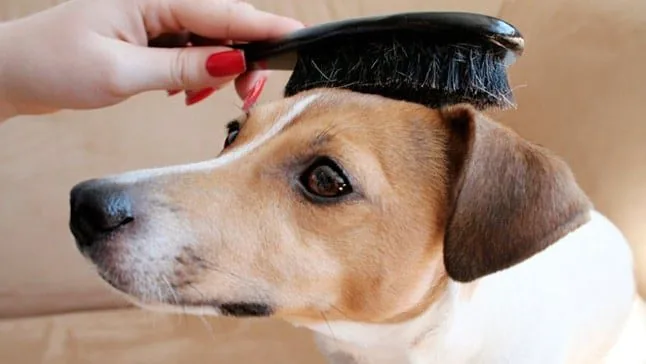
That's why it's very important to brush our dog at least two or three times a week, using whichever brushes we need depending on how much coat it has and its size.
Although it may sound odd, short-coat brushes don't work for long-haired dogs, since their design is completely different. Let's look at the different types of brush and their traits.
Brushes for Long Hair
Many breeds stand out for their impressive coat, having an enormous amount of hair that's also quite long. Some of these distinctive breeds are, for example, the Lhasa Apso, the Komondor, the Maltese, or water dogs, among many others.
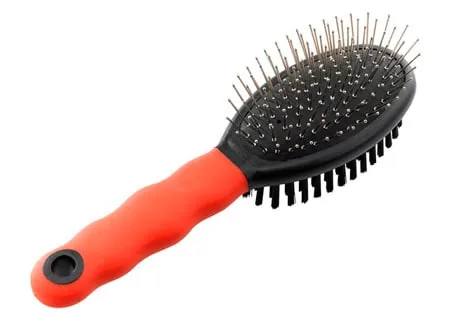
Preventing tangles from forming in their lush coat and keeping it clean isn't a simple task. Brushes for long-haired dogs are typically very similar to the ones humans use, made up of several rows of flexible bristles with a rounded tip. With these we can go over our dog's coat several times without damaging its skin, removing excess dead hair and leaving its coat clean and tangle-free.
Brushes for Medium-Length Hair
Without a doubt, the most common breeds are the ones with a medium coat length, meaning neither long nor overly short. Some of the most common medium-coat breeds are the Boxer or the German Shepherd, among many others.
Dogs with a medium-length coat aren't prone to getting tangles, but they are quite prone to holding onto dead hair and gradually shedding it around the house, leaving a nice carpet of hair you're surely quite familiar with.
Mainly during shedding season, dogs can shed millions of hairs in just a few days, leaving us with a huge cleaning job. That's why it's super important to brush them almost daily.
The best brush for medium-coat dogs is without a doubt the one known as a shedding rake — it's a brush with fairly close-set metal teeth that let live hair (still attached to the dog by the follicle) pass through while pulling out all the excess dead hair.
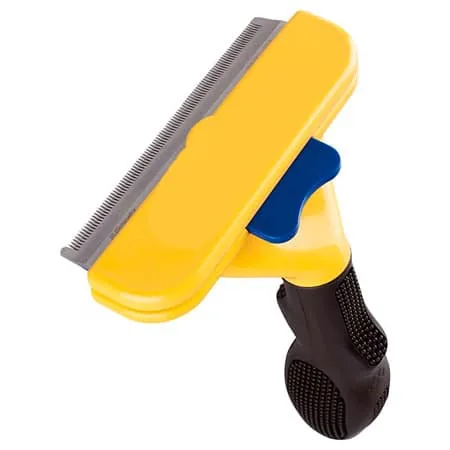
Although this is undoubtedly the best brush we can use, we need to be a bit careful and use it gently, since being metal and without rounded tips, we could damage the dog's skin if we apply too much force.
Brushes for Short Hair
Short-haired dogs seem to never shed hair, but if we check their bed or the floor against the light, we'll see how they're capable of shedding thousands and thousands of tiny hairs in a single day.
To properly brush a short-haired dog, such as the Pinscher, the Boston Terrier, the Bulldog, or the Chihuahua among many others, we have two possible options to choose from.
Either we go with a rake-type brush like the one used for medium-coat dogs, or we go with the well-known grooming mitts. The latter are what we recommend, since they're gentler on the dog.
Grooming mitts are made up of small bumps with spaces between them capable of catching short-haired dogs' loose, dead hair. Although they may look ineffective at first glance, the truth is they're the most recommended option for their efficiency.
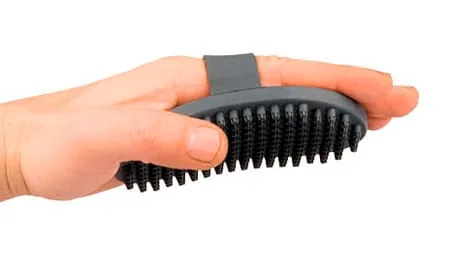
They're also very gentle on the dog's skin, since being usually made of plastic and rounded in shape, they won't cause any damage or scraping. In fact, your pup will think you're giving it a massage.
How Many Times Should I Brush My Dog?
Not all dogs need to be brushed — some dog breeds don't shed hair due to mere genetics. Although the vast majority do shed hair, and depending on the season, quite a lot.
Season changes are when dogs shed the most hair and need to be brushed more often. We're talking about spring and fall, when it's advisable to brush the dog between three and four times a week.
The rest of the year, brushing the dog a couple of times a week is usually enough. With the obvious exception of long-haired dogs, which will need three, four, or even five brushings a week throughout their whole life.
Remember that brushing should be gentle and calm — don't force your dog, or it will become afraid of it. When you finish, reward it with a treat or give it lots of praise for behaving so well — it's very important to link brushing with something positive.
The only purpose of brushing a dog is to prevent tangles from forming (in long-haired dogs), remove excess dead hair so it doesn't shed it around the house, and keep its coat clean, free of plant debris and possible parasites.
IMPORTANT: This article is for informational purposes only and does not constitute veterinary, nutritional or behavioural advice. Every dog is different, and only your trusted vet can advise you on its specific needs.