 Care
Care
Yellow Vomiting in Dogs
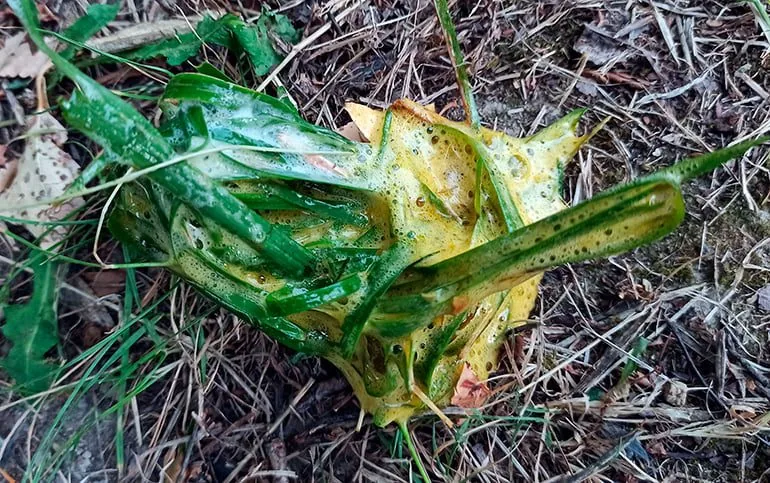
If we notice our dog vomiting a yellowish or greenish liquid or foam, it's most likely bile. There's some cause behind the vomiting, and since the gallbladder empties into the duodenum, that bile is prone to coming back up.
There are several reasons a dog vomits yellow bile, so let's go over all of them so you can identify your dog's problem and help solve it.
Causes of yellow vomiting in dogs
Yellow vomit is due to a mix of saliva and bile. Bile is released through the gallbladder, which empties into the first part of the duodenum (the first section of the small intestine) to digest fat. This is a normal, natural process.
So if there's something triggering vomiting, this bile will come out through the mouth. The causes behind our pet vomiting yellow are therefore the same ones that trigger vomiting in general, but with an empty stomach.
- Stomach or duodenal ulcer
- IBD or Inflammatory Bowel Disease
- Pancreatitis
- Gastroenteritis and poor diet
- Foreign objects
- Other conditions
There are many other causes, but these are perhaps the most common, so let's look at each one separately, explaining a bit about what they involve and how to address them.
Stomach or duodenal ulcer
Whether the ulcer is in the stomach or the duodenum, it will cause pain, heartburn, and acidity (low stomach pH), and with it excess bile, which will end up being vomited by our dog, showing that familiar yellow color.
We can fight this with a stomach protectant for dogs (omeprazole, famotidine, etc.); if it's an ulcer, treatment with sucralfate will be indicated.
IBD, or Inflammatory Bowel Disease
It's characterized by persistent signs of digestive disease linked to inflammation of the small or large intestine. It's usually accompanied by bilious vomiting.
What happens is that the disruption of the intestinal lining causes a failure in nutrient absorption — nutrients stay in the intestinal lumen instead of being absorbed (water is retained, causing diarrhea and vomiting).
Pancreatitis
The pancreas is responsible for producing enzymes that digest food. When the pancreas malfunctions, food isn't digested properly. This is pancreatitis. Pancreatitis is the most common exocrine pancreatic disease in dogs.
Acute pancreatitis is a condition characterized above all by necrosis and varying degrees of pancreatic inflammation. In fact, the predominance of necrosis over inflammation supports using the term "acute necrotizing pancreatitis" rather than just "acute pancreatitis." The cause is usually a diet low in protein and high in fat.
Gastroenteritis and poor diet
We all know how dogs are — they eat everything. And "everything" includes bits of plastic from a toy, wood splinters, dead animals, or even scraps of clothing like a sock. A sudden change in kibble without transitioning gradually also predisposes a dog to gastroenteritis, with a chance of bilious vomiting.
Any of the causes mentioned above (among others) happening can predispose a dog to gastroenteritis. Until the underlying cause or the inflammation in this upper part of the digestive tract is resolved, it won't clear up, with the resulting likelihood of yellowish or bilious vomiting.
A poor diet can also cause occasional vomiting, or when switching to low-quality kibble like supermarket brands, causing intolerance to it. So, low-quality dog kibble made mostly of grain-based ingredients can trigger the condition we've been describing.
Foreign objects
A foreign object causes gastroenteritis, as well as the physical issue of contents not being able to move forward, causing vomiting. If there's no content (food), what comes up will be yellow, bilious content.
The blockage may or may not fully block the intestinal lumen, so in either case, seeing a vet is mandatory.
Other conditions
There are other conditions besides those mentioned above, such as pyometra (uterine infection) in females, kidney failure, liver failure, and so on.
What to do if my dog vomits bile
It's best to always check with a vet, though it's also true that many dogs vomit occasionally, every so often, without this being a real visible problem, but normally a dog shouldn't vomit at all, even occasionally.
As we've seen, there are many causes behind our dog vomiting yellow or bilious, some more serious than others, so when in doubt, it's best to see a vet and check what's causing these symptoms.
Although, as mentioned, we always recommend a vet visit, some of these symptoms should alarm you, as they point to a more serious condition.
Here they are:
- They vomit several times — it's not a one-off.
- They seem listless and apathetic.
- They have other symptoms such as fever or diarrhea.
- They seem to want to bring something up but can't, trying several times.
- They vomit blood.
- Pale or yellowish mucous membranes.
One or more of these symptoms could point to a health problem requiring mandatory veterinary attention. Don't hesitate to check with your vet about any symptom.
What can we give a dog that's vomiting yellow?
If they show no other symptom suggesting a serious health problem, it's possible this is some reflux, acidity from eating something hard to digest, or even the opposite — having gone a while without eating, causing the stomach to produce excess bile. We can do the following:
- Keep the dog without food for 12 hours to let their stomach settle. Some people extend the fast to 24 hours.
- Leave clean, fresh water available; if they drink a lot, we can ration it sensibly.
- After this time, if they're showing improvement, we can give them a bit of a homemade bland diet so they start eating gently again. Gastrointestinal pâté cans sold at vet clinics are also very useful.
Vomiting treatments by condition
Treatment will depend on the underlying cause. Either way, it should be set by the vet. The most commonly recommended anti-nausea drug is maropitant. If it's an ulcer: sucralfate and intestinal lining protectants such as omeprazole or famotidine, among others.
In cases of IBD, antibiotics (metronidazole) for a month and a half if a hypoallergenic diet alone doesn't work. The next step, if there's no response to antibiotics, is to turn to immunosuppressive drugs. In dogs, prednisone or cyclophosphamide are used.
If it's pancreatitis, treatment will be symptomatic, based on pain relief (buprenorphine, for example), protectants like those mentioned above, anti-nausea medication, antibiotics with metronidazole...
For gastroenteritis, it depends on the cause, though giving probiotics tends to be beneficial regardless. A foreign object, if it's blocking the lumen, will need to be removed via laparotomy (surgery) or, if possible, flexible endoscopy.
IMPORTANT: This article is for informational purposes only and does not constitute veterinary, nutritional or behavioural advice. Every dog is different, and only your trusted vet can advise you on its specific needs.