 Care
Care
Heterochromia in Dogs (One Eye of Each Color)
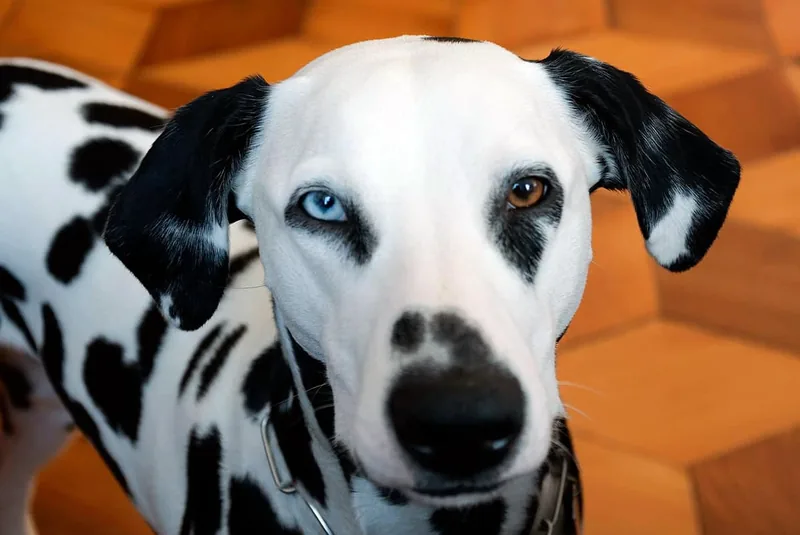
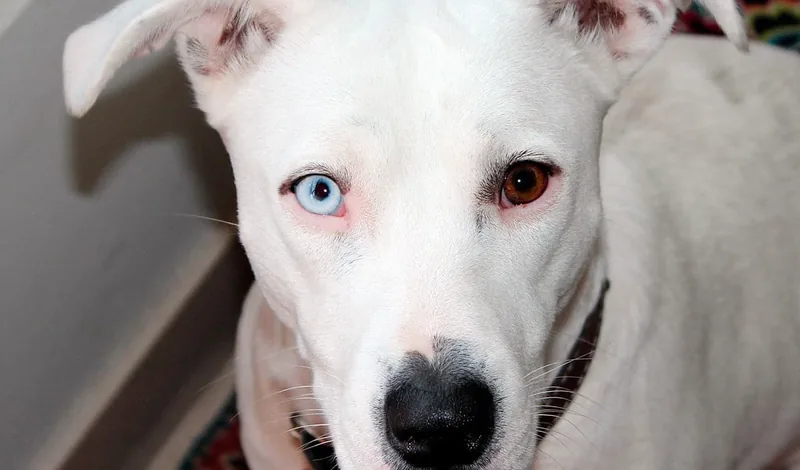
Is there anything more curious than your dog having one eye of each color? Many consider it a genetic defect, but the truth is heterochromia doesn't compromise its vision at all.
Some breeds have a higher predisposition to developing it, and there are several legends surrounding it. If you want to dig deeper into the causes and particulars of this eye condition, at Soyunperro we explain it all.
What Is Canine Heterochromia?
Iris heterochromia is a physical condition more common in cats than in dogs, although cases have also been recorded in horses and even in humans.
Having one blue eye and one brown eye is closely linked to melanin production, the substance responsible for pigmenting the skin, fur, and eyes. So, depending on the coloring and amount of the cells protecting this melanin (melanocytes) in the iris, this curious eye trait will occur or not.
Genetic inheritance is decisive in its development, since what's known as the merle gene is responsible for the lack of pigmentation typical of blue eyes, as well as the butterfly-shaped pigment on dogs' noses.
This gene also expresses partial heterochromia, showing one brown eye, one blue eye, and within that blue, brown pigmentation — in other words, the gene dilutes melanin, which is responsible for pigmentation in the eyes, skin, and coat.
There are certain breeds that more often express the merle gene (multicolored eyes), with several shades within the same iris. Likewise, this gene is responsible for white spots around the eyes, albinism, and for partial heterochromia thriving in the Siberian Husky breed, despite it being a non-merle-coated breed.
Types and Causes of Heterochromia in Dogs
Iris heterochromia is classified as total or partial. Total is more common in breeds such as the Australian Shepherd, Husky, and Catahoula Leopard Dog. It's distinguished from partial in that the entire iris is a different color from the other iris (one blue and the other brown). In Australian Shepherds, we should add amber to the blue and brown shades.
Partial, on the other hand, involves one iris showing fragments of the other eye's coloring, being more common in the Pembroke Welsh Corgi or the Border Collie, Siberian Husky, and Asturian Shepherd, among others.
The Australian Shepherd, meanwhile, can show entirely brown, blue, or amber eyes, as well as a variation or combination of these.
As for the triggering factors, it's worth noting this eye condition can be due to congenital causes, and as a result hereditary, or to acquired causes, including certain diseases (glaucoma, uveitis, or neurofibromatosis), injuries caused by foreign bodies, exposure to certain medications, or hemorrhages.
In turn, among the hereditary causes, we should add Waardenburg syndrome. This involves several conditions occurring together that cause deafness, as well as light-colored fur, skin, and eyes. It's usually more common in white-coated dogs, such as the Harlequin Great Dane and the Dalmatian.
You should know that congenital causes aren't serious and don't require special care on your part. However, pigmentation changes occurring over the course of your pet's life do call for a vet visit to determine and address the lesion or condition causing them.
Does It Affect the Dog's Vision?
When we talk about genetic (birth) heterochromia, you can rest assured this physical trait won't interfere with your pet's optimal vision. The condition of the retina and optic nerve are the only ones responsible for good or poor vision — the iris's color doesn't hold this ability.
There are some pigmentation-related conditions, such as pigmentary glaucoma, that can only be detected through a complete eye exam.
You should monitor or restrict exposure to ultraviolet radiation if your dog also has depigmented eyelids, since these can be more sensitive to light.
A Condition Surrounded by Legends
For many years, this condition has fueled countless legends that give it a certain mysticism. For some, the brown eye watches over the Earth while the blue one does the same for the sky. For the Inuit, dogs with heterochromia are faster.
In short, if your dog has one eye of each color, you shouldn't worry, since it requires no specific care and doesn't mean your pet sees poorly. You can simply take pride in having the unconditional company of a friend unique in the world.
IMPORTANT: This article is for informational purposes only and does not constitute veterinary, nutritional or behavioural advice. Every dog is different, and only your trusted vet can advise you on its specific needs.