 Nutrition
How to Stop a Dog Eating Anxiously
Plenty of dogs turn into vacuum cleaners at mealtimes, wolfing down their whole portion in a matter of seconds, sometimes even choking on it. If our dog eats anxiously, we need to work out whether it's doing so because of illness or a behavioural problem.
We're going to run through the illnesses that can give our dog a ferocious appetite. We'll also look at some good advice for reducing this anxiety, in case the cause turns out to be a behavioural disorder.
You may also be interested in: How to make a cake for dogs
Reasons Why a Dog Eats Fast
The reasons that lead a dog to eat anxiously can be many, although it's generally down to one of those we mention below:
Dogs That Are Greedy by Nature
There are dogs that, by their very nature, may eat more eagerly than others, especially if it's a food they really like.
Bear in mind that they aren't aware that eating more than they should is bad for them, and sometimes their wild instinct kicks in too, telling them that the more reserves the better.
This tends to happen more in some breeds, such as the Cocker Spaniel, the Kuvasz and the Great Dane. As you can see, it doesn't come down to size, and the good news is that it can be sorted out with good training.
Hypothyroidism
Anxious eating can also arise from a thyroid problem, which will mean the dog never feels full enough and gulps down food endlessly.
To be able to put this problem right, the diagnosis will first have to be confirmed with clinical testing. If hypothyroidism is confirmed, the vet will medicate the dog to treat this health problem and its consequences.
Exocrine Pancreatic Insufficiency
When the pancreas doesn't work properly and exocrine pancreatic insufficiency develops, the dog will have poor digestion. That means it won't absorb the protein in its food well and its body will demand more food.
This tends to happen to the German Shepherd, for genetic reasons, though it can also occur in other breeds because of infections or viruses. Giving dietary supplements containing pancreatic enzymes can be a good way of managing this dysfunction in the dog.
Anxiety
Finally, psychological anxiety problems can also make a dog overeat. Just as happens to us humans, boredom, sadness or fear often lead us to eat too much in an attempt to soothe that feeling.
The same happens to our furry friends. That's why it's important that we give them all the attention they need, that we play with them and keep them entertained to stop them thinking about food.
Whatever the reason a dog shows anxiety around food, it's important that you see a professional who can help you find the best solution. Equally, if you see that the dog isn't improving or if it doesn't fit any of these reasons, let your trusted vet know.
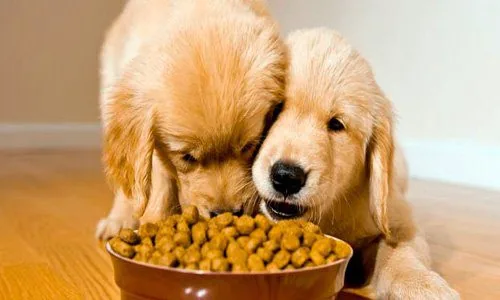
What to Do if Your Dog Shows a Lot of Anxiety Around Food
Although we've already given you some answers on this, the essential thing will be to find out whether there's a health problem behind the behaviour. To do that, the first step is to watch carefully how it behaves and make sure the dog has enough food day to day.
Sometimes the problem is that we haven't got it used to a mealtime routine, feeding it between meals. That isn't an anxiety problem but a lack of canine discipline. After thinking through all the factors carefully, lean on a professional to see how to steer the situation around and stop the dog carrying on as a "vacuum cleaner".
Tips for Reducing Anxiety Around Food
Besides whatever the vet tells you, there are a number of tips that can be very useful in tackling this problem of eating too fast.
- It's important that our dog is physically active and doesn't get bored. Exercise and games will therefore be your main ally in putting an end to this behaviour.
- Split the food into several meals and keep track of the ideal daily amount to keep it at its proper weight. By separating the rations into small doses you'll prevent gastric torsion, one of the risks associated with anxious eating, which can kill the dog.
- Feed your dog natural products such as the BARF diet or high-quality dog food. Low-quality foods (generally sold in department stores and supermarkets, though sometimes in shops and online too) don't cover your dog's nutritional needs, and that's what makes it hungry all the time.
As well as following these recommendations, remember to avoid other bad practices that will only make the problem worse. So don't feed it outside mealtimes and, above all, never give it food to calm it down when it's anxious. Doing so would only reinforce its anxious behaviour.
IMPORTANT: This article is for informational purposes only and does not constitute veterinary, nutritional or behavioural advice. Every dog is different, and only your trusted vet can advise you on its specific needs.