 Care
Care
How to Tell If It's Too Hot to Walk Your Dog
Dogs don't sweat like we do. They only have sweat glands on their paw pads. So they're forced to cool down through panting, which is their way of exchanging hot air for cooler air.
But this mechanism isn't as effective as our sweating, which is why if it's hot for us, it's much more so for our dog. How can we tell if it's too hot to walk a dog? We show you the symptoms that should put us on alert.
Signs Your Dog Is Hot
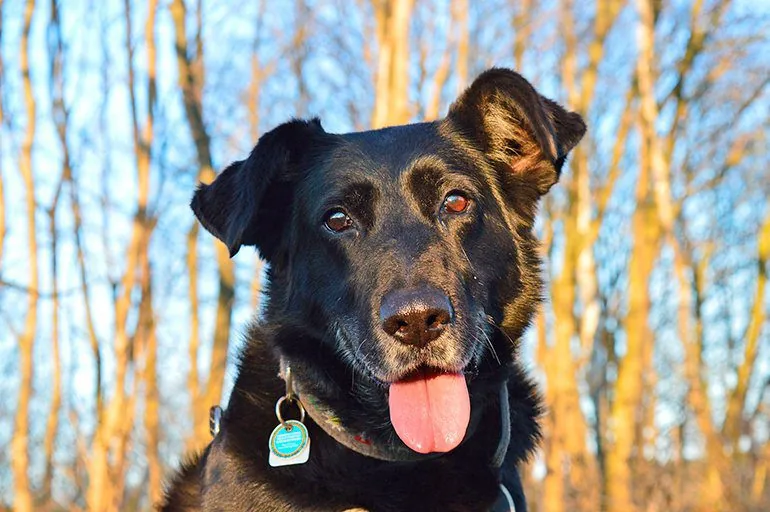
Sometimes the dog shows it's hot simply by staying still and avoiding any activity. We can also see its paw prints on the ground, which come from the sweat produced by its sweat glands. But without a doubt, the most obvious sign of heat is panting. Dogs pant by opening their mouth and sticking their tongue all the way out.
This is how they regulate their body temperature. They can also drink water and lick their lips to keep their mouth moist. This way, through evaporation, they manage to exchange the hot air in their body for the cooler air outside. So a dog that's panting, drinking, drooling, and licking its lips is hot or has just done intense physical activity.
Within a few minutes it should go back to breathing normally. If it doesn't, move it to a cooler spot and, if necessary, wet it down. But if its breathing still doesn't return to normal, take its temperature. If there's hyperthermia, that is, a temperature higher than normal, see the vet. It could be suffering heatstroke.
Why Won't My Dog Stop Panting?
The higher the ambient temperature, the more trouble the dog will have keeping its body temperature within its normal range. In this situation it runs the risk of suffering hyperthermia.
This term refers to a rise in body temperature above 40°C (104°F). Remember that the temperature considered physiological for adult dogs ranges between 37.8 and 39.2°C (100–102.5°F).
The Danger of Heatstroke
When a dog is exposed to high temperatures its body can't bring down, it's at risk of suffering what's known as heatstroke. This is a condition caused by hyperthermia, that is, a rise in body temperature above normal levels. In this case the dog pants very intensely.
Its gums turn red, its saliva becomes thick, and other symptoms appear, such as vomiting, bloody diarrhea, breathing difficulties, etc. If it doesn't receive care, the mucous membranes turn grayish and the dog ends up going into shock and dying. A typical case that, unfortunately, happens every year is heatstroke caused by leaving a dog in a car.
But there are more risk factors, such as the dog's age, its health, or the shape of its muzzle. Since it's an emergency, it requires immediate vet attention. Transport to the clinic can be done by wrapping the dog in towels soaked in cold water, in a vehicle with air conditioning.
How Heat Affects Different Dog Breeds
Dogs belonging to thick-coated breeds will have more trouble regulating their temperature when it's hot. That is, they'll tolerate high temperatures less. An example is Nordic dogs such as the Siberian Husky or the Alaskan Malamute.
But we also need to be careful with dogs with little or no coat, since they could suffer burns. The vet can recommend specific sunscreens for dogs. The creams or sprays we use ourselves won't do.
Going Out When It's Too Hot
No matter how hot it is, dogs still need to go outside. Not just to relieve themselves, but because they need exercise and all the stimuli a walk offers them, such as contact with other dogs, with people, different sounds, smells, etc.
But, logically, when solar radiation is very intense, especially between noon and 4 pm, it's better to avoid walks and, in any case, always keep the following precautions in mind:
- Move walks to early morning and evening hours.
- Look for shaded areas.
- Bring water and offer it regularly.
- You can wipe it down with damp dog wipes, especially around the head and torso.
- Don't let it do intense exercise.
- If the dog has an outdoor space such as a yard or a patio, it's essential for it to have shade and water always available.
- To cool it down when it gets home, you can offer it a cooling mat.
Heat on the Paws
Asphalt or sand can reach very high temperatures when exposed to direct sunlight. We're protected by our footwear, but dogs will step directly on their pads. Put your hand on the ground and try to hold it there for a few seconds. If you can't, your dog shouldn't be walking there either.
Very hot ground could even cause burns on its pads. That's why you should avoid exposing it to that risk. You can use creams or sprays specially formulated to protect or repair its pads.
They have a moisturizing and healing effect for paws that are damaged or prone to irritation, dryness, or cracking. That said, serious burns will need to be checked and treated by a vet. They're painful injuries that will also make it harder for the dog to move around.
Bibliography Carlson and Giffin. 2002. Practical Manual of Canine Veterinary Medicine. Madrid. Editorial el Drac.
IMPORTANT: This article is for informational purposes only and does not constitute veterinary, nutritional or behavioural advice. Every dog is different, and only your trusted vet can advise you on its specific needs.