 Breeds
10 Long-Haired Dog Breeds With Photos and Characteristics
The coat is one of the biggest draws of dogs, especially in long-haired breeds. Although they need more care, like baths, frequent brushing, and grooming visits, these dogs can win us over at first sight thanks to their beauty.
If you love long-haired dogs you can style, brush, or even enter into beauty contests, here are the most widespread breeds. Let's take a look!
 English Setter
English Setter
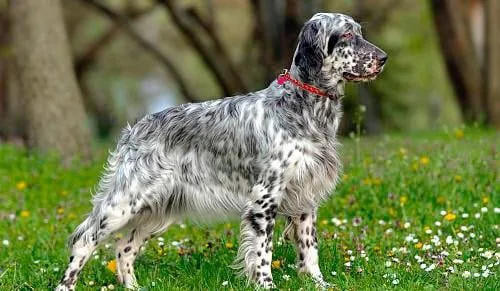
What will catch your attention most about the English Setter is its coat. It's short-to-medium length on the head, back, and the front of the legs. On the chest, the back of the legs, and the belly, it grows in waves almost down to the ground.
The breed developed in England during the 18th century. It's friendly and easy to train. The coat needs brushing 2 to 3 times a week.
 Lhasa Apso
Lhasa Apso
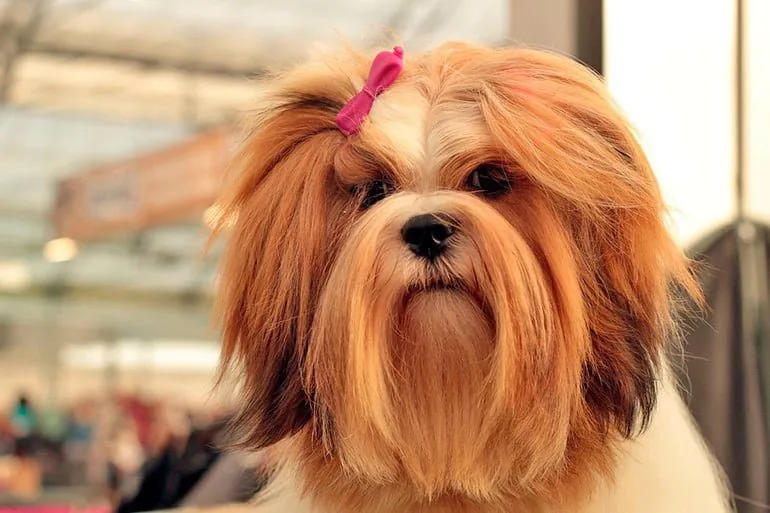
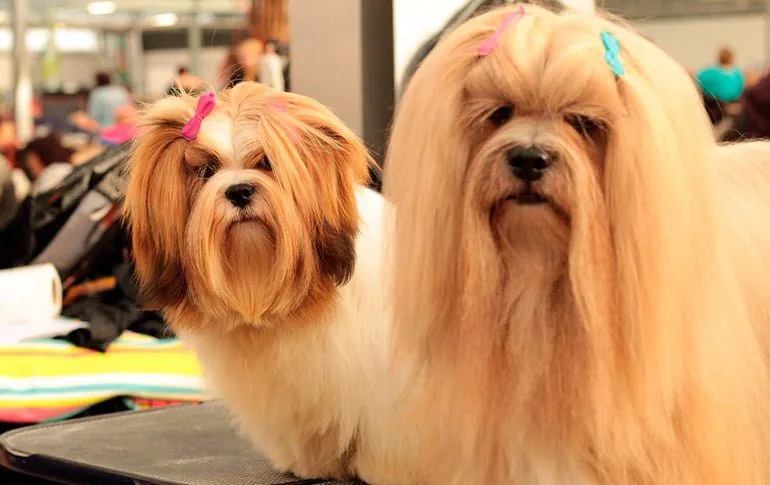
Another long-haired dog breed is the Lhasa Apso. Native to the Himalayas, it was bred for centuries as a companion dog in Buddhist temples. "Apso" means "long-haired dog."
This variety's coat is long, straight, and dense; it can reach the ground and cover the eyes. Because of this, it needs brushing three times a week and visits to a dog groomer to trim its bangs. You should also bathe it every two weeks to keep the coat's shine and hygiene.
It's an independent little dog that learns very easily. It tends to be wary of strangers.
 Skye Terrier
Skye Terrier
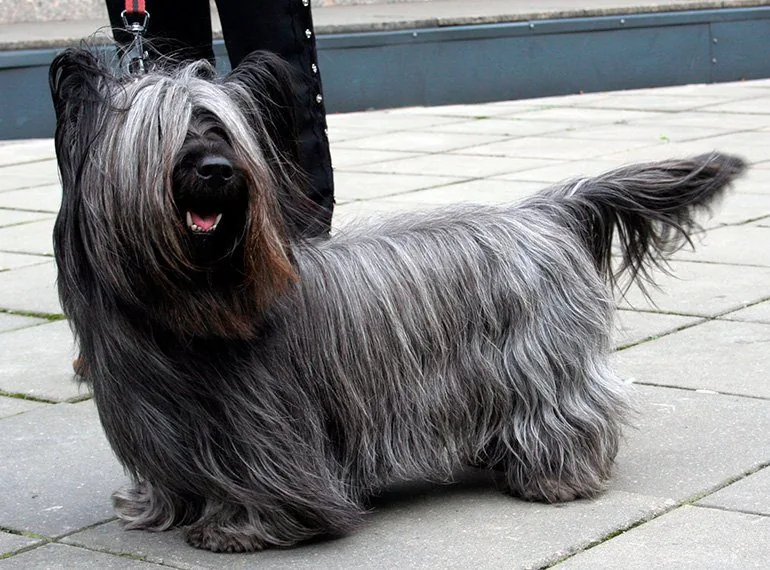
One of the small long-haired breeds is the Skye Terrier, native to Scotland. For centuries it was used to hunt foxes, keeping them away from farms. Despite its tiny size and gentle looks, it's very brave.
The Skye Terrier's coat grows charmingly, lengthening the ears. The coat can also reach the ground, given its short legs, and easily covers the eyes. We recommend brushing it daily and watching for tangles.
This breed is reserved with strangers and can show signs of stubbornness during training. On top of that, it's very impatient and reacts poorly to negative training methods.
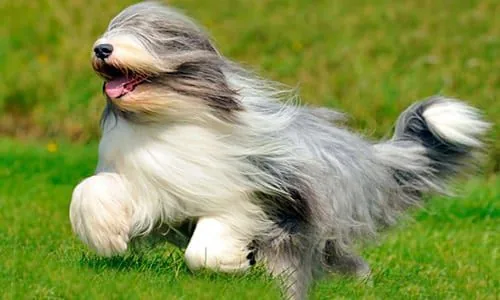 Bearded Collie
Bearded Collie
The Bearded Collie is a breed with a long, abundant coat. Its origin is uncertain, with some theories placing the breed during the Roman Empire's rule, while others trace its presence to the 16th century.
This dog's coat grows from the head down to the neck, while the length over the rest of the body can reach the ground. The coat color is a combination of white and gray.
As you'd guess from its beautiful expression, the Bearded Collie is a charismatic, friendly dog. It loves exercise and is capable of making its own decisions.
We recommend brushing it every day, for periods of thirty minutes to an hour. Once a week, brushing should be dedicated to finding and removing tangles.
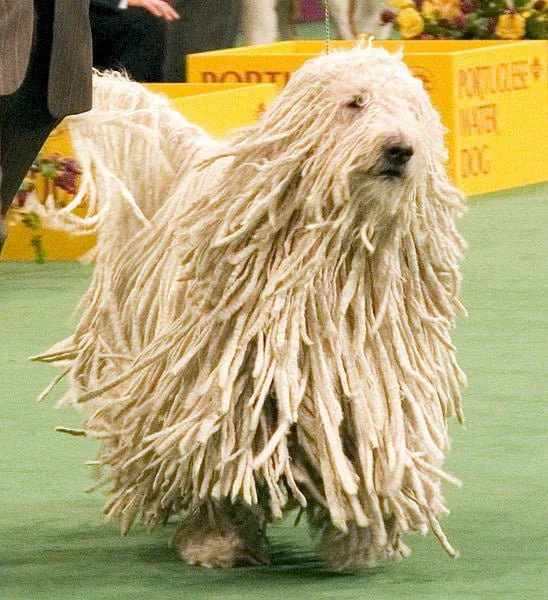 Komondor
Komondor
Among long-haired dog breeds, the Komondor has the most curious look. Its coat is made up of thick, dense cords of hair that protect it from low temperatures. The color is pure white or cream.
The Komondor comes from Hungary, where it's used as a herding and guard dog. It has a brave, loyal, independent personality, though it's wary of strangers, whether dogs or people.
At-home coat maintenance isn't recommended — it's best to see a professional for this. Training should include early socialization and daily exercise.
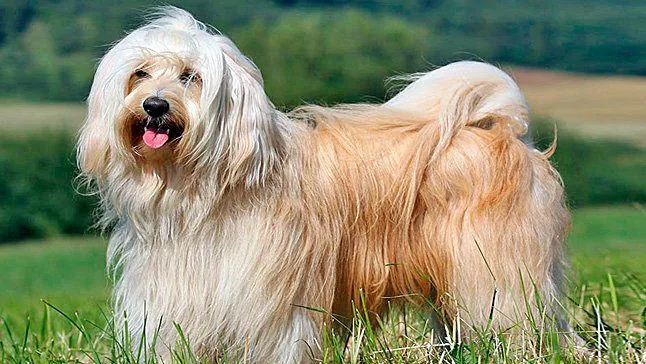 Tibetan Terrier
Tibetan Terrier
This is a dog bred in Tibet as a companion animal and guard dog. It's a long-haired, medium-sized breed, known for a coat that covers the eyes and reaches the ground. The coat is smooth and comes in a white-and-black or white-and-dark-brown combination.
The Tibetan Terrier is affectionate and loyal. Thanks to its guard-dog breeding, it's reserved with strangers. It enjoys physical activities like Agility and tracking games.
If one of these is your companion, you'll need to brush it 3 times a week, an activity it enjoys a lot too.
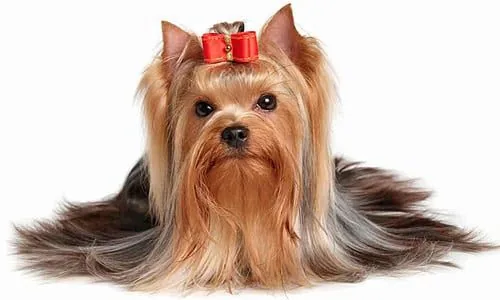 Yorkshire Terrier
Yorkshire Terrier
The Yorkshire Terrier is one of the best-known small dogs. Native to England, it gained popularity during the 19th century as a companion and show dog. It has an energetic, playful, friendly personality, though it can be stubborn at times.
Naturally, the Yorkshire's coat grows down to the ground in every area: legs, back and belly, ears, and beard. If you keep it long, you should brush it every day and take it to the groomer's frequently.
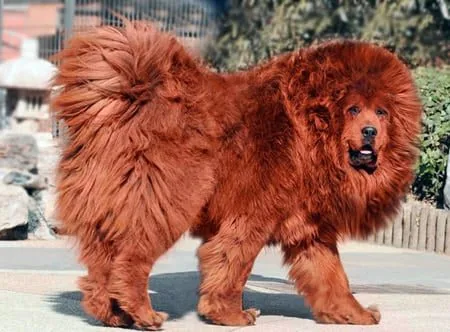 Tibetan Mastiff
Tibetan Mastiff
There are also large long-haired dog breeds, and the Tibetan Mastiff is one of them. It's an ancient canine variety, though the exact time of its emergence is unknown. It's an excellent guard dog.
You'll recognize the Tibetan Mastiff by its huge, dense, smooth, abundant mane around the neck. It has strong legs and an imposing appearance. It's always alert and capable of making decisions on its own.
You should brush the coat 2 to 3 times a week. Beyond that, the coat needs little maintenance.
Maltese
Maltese
Want to adopt a white long-haired breed? Then the Maltese is for you. Native to Malta, this dog's origins date back to the 4th and 5th centuries BC.
It's a miniature, well-proportioned, lovely breed. The coat flows from the head down to the feet. The coat is smooth, abundant, and silky. Solid white predominates, though some dogs can have lemon or brown patches on the ears.
The Maltese needs daily brushing to prevent tangles. Frequent bathing and grooming are also recommended, especially to control hair growth over the eyes.
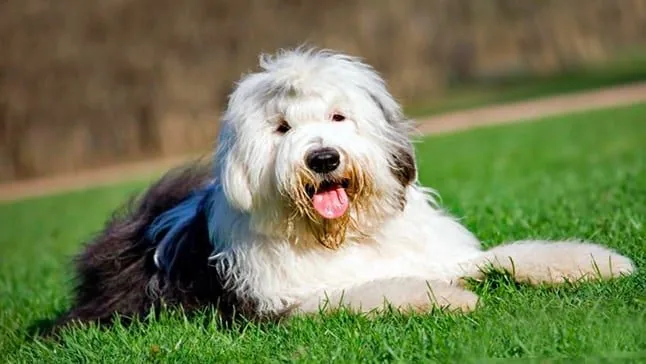 Old English Sheepdog
Old English Sheepdog
The last on this list of long-haired dog breeds is the Old English Sheepdog (Bobtail), a good-natured, friendly-looking dog. It appeared in 1700, when it was used to guide livestock along roads. The body is well-proportioned and balanced, with a dense, wavy, coarse coat.
The Old English Sheepdog is very intelligent, gentle, and quick to learn. It needs early socialization and training based on positive reinforcement, since it tends to be stubborn.
Brush the coat 2 to 3 times a week to keep it looking good and tangle-free. It also needs periodic baths and grooming visits.
IMPORTANT: This article is for informational purposes only and does not constitute veterinary, nutritional or behavioural advice. Every dog is different, and only your trusted vet can advise you on its specific needs.