 Breeds
Russian Toy
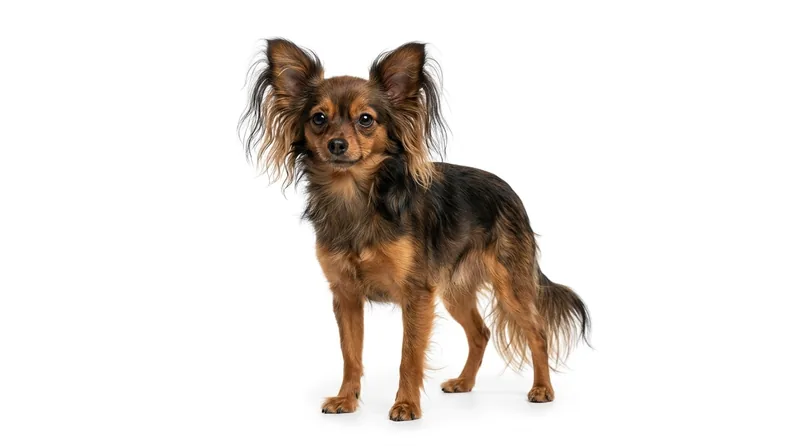
The Russian Toy, also called the Russkiy Toy, is one of the lightest toy breeds in the world, weighing between 1 and 3 kilograms. Rescued from near-oblivion by Soviet breeders after decades of isolation, it combines a lively, affectionate temperament with affordable upkeep. There are two coat varieties, each with its own grooming needs.
History and Origin of the Russian Toy
The Russian Toy descends from the small companion dogs that accompanied the Tsarist nobility in the 19th century. After the Russian Revolution, the breed nearly disappeared: keeping luxury dogs clashed with the new Soviet ideology, and surviving specimens became extremely scarce.
In the 1950s, Soviet breeders undertook a systematic recovery of the breed, starting from the few remaining dogs and crossing them with other small toy breeds. The work was long and methodical, aimed at fixing a stable type in size, temperament, and structure.
For decades, the Russian Toy remained unknown outside the Soviet Union. The opening up that followed the Cold War allowed the breed to reach Western Europe, where it gradually won over fans. Official recognition by the Fédération Cynologique Internationale (FCI) cemented its status and opened the door to regulated breeding worldwide.
Physical Characteristics of the Russian Toy
The Russian Toy weighs between 1 and 3 kilograms and stands between 20 and 28 centimeters at the withers. Its life expectancy is around 12-14 years. These dimensions make it one of the smallest toy dogs in the world and call for special care when picking it up or handling it.
The standard describes a square-proportioned body: the length of the torso is roughly equal to its height. The legs are fine and straight, with light but not fragile bone, and movement should be elastic and free.
The head is wedge-shaped, with a slightly rounded skull and a well-defined stop. The eyes are large, round, and slightly prominent, always dark. The ears, erect and triangular, are set high and give the dog a permanently alert expression.
The muzzle is dry and pointed. The nose is small and black, or matches the coat color in brown and blue dogs. The tail can be naturally short or long and saber-shaped; in Spain the long tail is permitted, which rises above the topline when the dog is in motion.
Coat Varieties: Smooth-Coat and Long-Coat Russian Toy
The Russian Toy comes in two coat varieties recognized by the breed standard. Both share the same measurements and proportions, but coat type creates clear differences in look and daily grooming.
The smooth-coat variety has a short coat, close to the body and glossy, without undercoat. Its texture is fine and silky to the touch, and a weekly brushing with a rubber grooming glove or a damp cloth is enough to keep its natural shine.
In the long-coat variety, the coat forms characteristic feathering on the ears, the back of the thighs, and the tail. That feathering is the trait that visually sets it apart from the smooth variety. The coat can be slightly wavy, but never curly.
The long coat needs brushing two or three times a week with a wide-toothed comb to prevent tangles, especially behind the ears and in the armpits. Without regular upkeep, tangles become uncomfortable for the dog and fairly difficult to remove without pulling on its hair.
Russian Toy Temperament and Character
The Russian Toy is alert, lively, and curious. Despite its miniature size, it shows a confidence that contrasts with its physical fragility: it's neither shy nor timid, and responds with confidence to new situations once well socialized.
Within the family it's loyal and deeply attached to its owners, constantly seeking their company. It can develop separation anxiety if left alone for long hours, so it fits best in households with frequent company.
Its small size makes it vulnerable to rough play or accidental falls. With older children who know how to respect a small dog, it can be a wonderful companion, but it's not the best fit for homes with very young children. It gets along well with other animals if introduced gradually.
Training with positive reinforcement and clear boundaries is essential from puppyhood. Its size is no excuse to skip training: a Russian Toy without rules can become insecure or overly demanding.
Essential Care for the Russian Toy
20-30 minutes of activity split across two or three short walks a day is enough. Playing at home with a small ball or interactive toys covers most of its physical needs. Avoid jumps from heights and rough exercise that could damage its joints.
Choose a high-quality kibble formulated for toy breeds, with small pieces that are easy to chew. Split the daily ration into three or four meals to prevent blood-sugar drops. Check its weight weekly: excess weight puts strain on its light skeleton.
Daily tooth brushing with a dog-specific toothpaste is one of the pillars of its care. If daily isn't possible, aim for at least three times a week. Chew toys designed to clean teeth are a good complement, but they don't replace brushing.
Its low body fat makes it very sensitive to extreme temperatures. In winter it needs a coat or sweater on walks. In summer, avoid the hottest hours of the day and always make sure fresh water is within reach. Never leave it in direct sun or in rooms without ventilation.
Russian Toy Health: Common Conditions and Prevention
Dental problems are very common in this breed. Its small mouth causes crowding of the teeth, which encourages tartar buildup and periodontal disease. Regular veterinary cleanings, combined with daily home hygiene, help prevent premature tooth loss.
Patellar luxation is one of the most common orthopedic conditions in miniature dogs: the kneecap slips out of place, causing intermittent limping. Maintaining a healthy weight and avoiding jumps off furniture or stairs significantly lowers the risk.
Hypoglycemia is a real risk, especially in puppies and very small dogs. Regular feeding times and split rations are the best prevention. A lethargic, trembling, or disoriented dog needs urgent veterinary attention.
A predisposition to heart murmur and Legg-Calvé-Perthes disease, a hip condition that affects blood flow to the head of the femur, has also been documented. Annual veterinary check-ups make it possible to catch these conditions early and treat them with better results.
Price and Adoption of the Russian Toy in Spain
The Russian Toy is still a fairly uncommon breed in Spain. The cost of a pedigreed puppy usually ranges between 500 and 1,500 euros, depending on the breeder, the bloodline, and the coat variety. Serious breeders run health tests on their breeding dogs and hand over the puppy with complete documentation.
The necessary paperwork includes the breeder's birth certificate, the RSCE or FCI registry book, and a European pet passport with up-to-date vaccinations. Always require these documents before finalizing the purchase: their absence is a clear red flag.
Monthly upkeep costs run around 30-40 euros, covering quality food, parasite prevention, and basic check-ups. Being a miniature breed, food consumption is low, but veterinary prevention shouldn't be skimped on.
To find a specialized breeder, contact the Club Español del Perro Miniatura. If you'd rather adopt, there are associations that rescue Russian Toys. A responsible process includes an interview, a home visit, and an adoption contract with a commitment to spaying/neutering and veterinary care.
Fun Facts About the Russian Toy
In the 19th century, the Russian Toy's ancestor literally traveled in the pockets of ladies of the Tsarist aristocracy, earning it the nickname "parlor dog." Its presence in palaces and noble residences turned it into a status symbol before the Revolution wiped that world away.
The breed came close to extinction after decades of Soviet-era isolation. That it survived and went on to gain international recognition is one of the most remarkable genetic rescues in 20th-century European dog breeding.
The Russian Toy is extremely sensitive to its owners' mood swings. If it senses tension around it, it can show signs of stress such as trembling or repetitive licking. That emotional attunement makes it a companion deeply connected to the rhythm of the household, something Russian breeders particularly value.
Another little-known quirk: unlike many toy breeds, the Russian Toy keeps up a notable level of physical activity for its size and enjoys scent-tracking and puzzle games. Stimulating it mentally with food-puzzle toys or small obstacle courses at home reduces anxiety and strengthens its bond with its owner.
IMPORTANT: This article is for informational purposes only and does not constitute veterinary, nutritional or behavioural advice. Every dog is different, and only your trusted vet can advise you on its specific needs.