 Care
Care
Scientific Name of the Dog
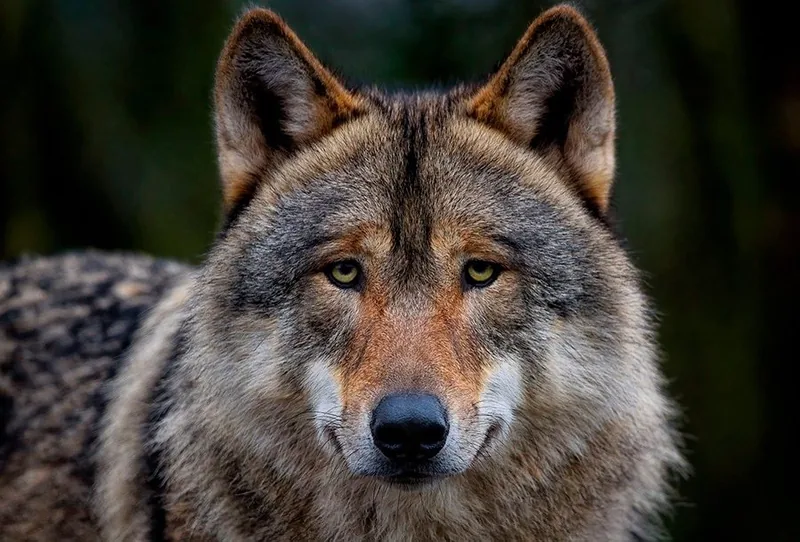
To understand the dog's scientific name and its origins, we need to know that the dog is a direct descendant of the wolf — you might even call it a somewhat "humanized" wolf, since both species' DNA is practically identical (with less than a 0.3% difference).
According to legend, history books, and pretty much the theory of animal evolution... humans began domesticating wolves, scientifically named "Canis lupus," thousands of years ago. Depending on the source, somewhere between ten and fifteen thousand years back.
Scientific Name of the Common Dog
The dog's scientific name is Canis lupus familiaris, which, like nearly all scientific names, comes from Latin.
- Canis: Refers to a genus of carnivorous mammal that includes the wolf, coyote, jackal, and others.
- Lupus: Refers to the specific species — in this case, the wolf.
- Familiaris: Indicates it belongs to the stated family — in this case, that it belongs to, or descends from, the wolf family.
And If Our Dog Is Purebred, What Scientific Name Does It Have?
Exactly the same one — the scientific name doesn't distinguish between breeds, so a Great Dane is a Canis lupus familiaris, and a Chihuahua is also a Canis lupus familiaris. The same goes for German Shepherds, Pit Bulls, Dobermans, and so on.
It's curious, but simple — there are more than eight hundred different dog breeds on the planet, far more than any other animal species, and all of them share the same scientific name.
Fun Facts About Canis Lupus Familiaris
Although it's believed their companionship with humans (domestication) dates back ten or fifteen thousand years... the truth is fossils of our current dogs' ancestors have been found alongside human fossils dating back a hundred thousand years. Incredible, right? Well, get ready to be even more surprised, since it's believed the first domesticated dogs were Chinese.
That doesn't necessarily mean every domesticated dog descends from those first Chinese domesticated dogs — just that the fossils found belong to that region.
Another fun fact about Canis lupus familiaris is that genetically speaking, they're carnivores.
With all due respect to people who voluntarily choose not to eat meat, it's cruel to force their dogs to do the same, since dogs don't have the ability to make that choice themselves.
Origins of the Dog
Depending on the source, since none of this is written in any holy book or shown in cave paintings... it seems the wolf, "Canis lupus," used to attack the domestic animals humans relied on, their herds. Unable to keep their herds safe while they slept, humans decided to capture and domesticate some of their enemies, the wolves, with the sole purpose of using them to their advantage, to protect their herds.
This is a fairly odd theory in some ways, so in our view, this second theory seems to make more sense.
According to some sources, it was Canis lupus (the gray wolf) who, desperate from hunger during a long, cold winter, approached a human settlement, drawn by the smell of food being prepared. Seeing that only hunger had drawn it to them, not any intent to attack, they gave it something to eat, and that's when human interest in domesticating the wolf began.
Whatever the true beginnings of gray wolf domestication were, the truth is that over the years, it's been refined to astonishing levels. So much so that many humans have dedicated their lives not just to domesticating this animal, but to breeding and selecting individuals.
That's why there are so many dog breeds today, thanks to the purity of much of the breeding and selection work done in the past, and, in a way, also thanks to the genetic manipulation humans have access to today.
Bibliography
Simpson, G. G. 1961. Principles of Animal Taxonomy. Columbia University Press. https://es.wikipedia.org/wiki/Canis_familiaris https://www.gob.mx/cms/uploads/attachment/file/222438/Canis_familiaris.pdf
IMPORTANT: This article is for informational purposes only and does not constitute veterinary, nutritional or behavioural advice. Every dog is different, and only your trusted vet can advise you on its specific needs.