 Care
Care
When to Separate a Puppy From Its Mother
There are different professional opinions on the ideal time to separate a puppy from its mother without causing harm to either one. Obviously, the puppy can be more vulnerable, but the mother can also suffer psychological harm if it's not done correctly.
A key factor in knowing whether a puppy can be separated from its nursing mother is after weaning. Although it was once believed this was the best time to separate them, various studies based on real-world practice reveal this is a mistake.
What Is Weaning and When Does It Happen?
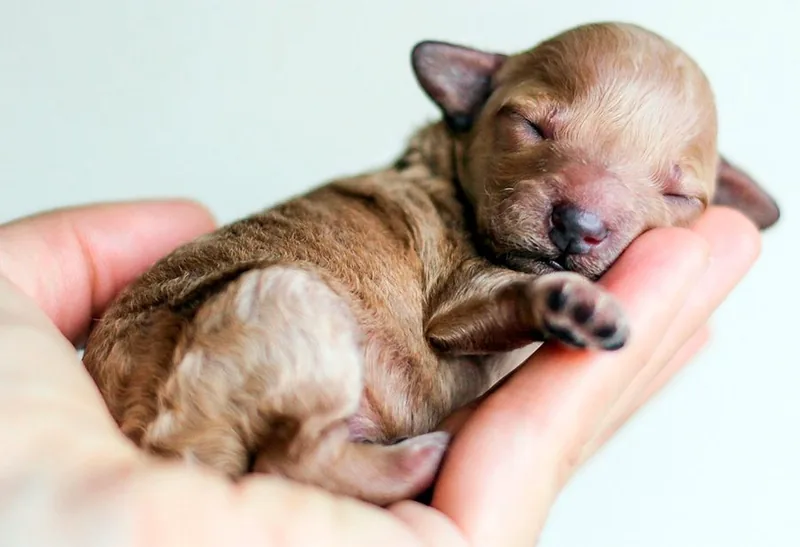
When our female dog gives birth, meaning when she delivers her puppies, they're born without teeth, so they can't eat anything solid. They'll feed for six to eight weeks on their mother's milk, nursing.
Weaning is the name given to the moment or process of ending the nursing feeding period. It's when puppies start eating solid food, gradually stopping nursing.
When weaning happens, the puppy should be given food specifically formulated for puppies, which we can mix with a bit of warm water to make the kibble softer for them.
Some dogs start weaning at six weeks and others at seven, though most do so between the sixth and eighth week. Weaning is gradual — they should keep nursing for a few days while also trying their new food (kibble).
When Should Puppies Be Separated From Their Mother?
If it's an emergency for whatever reason, it's best to wait at least until the puppy is three months old. Some people separate puppies from their mother right after weaning, but this isn't recommended at all.
The truth is, it's best to wait until the puppy becomes a teenager, and do a gradual separation. In other words, when the puppy is around six months old is when it should slowly start being separated from its mother.
To carry out a gradual separation, it's enough to take the puppy out without its mother for a few hours at a time, so it gets used to being away from her. Gradually increase that time until it becomes routine — at that point, the puppy, no longer quite a puppy, will be ready.
Puppies need their mothers not just to feed while they have no teeth or haven't been weaned yet, but also to learn how to act and behave in the society around them. Socializing a puppy is the most important part of its entire upbringing. And no one is better suited than its own mother to teach it to discover life, its surroundings, and how to behave.
Unfortunately, the reality is puppies are rarely kept with their mother until six months old — it's more common to separate the puppy from its mother at three months old.
At three months old, a puppy is thought to be able to handle separation from its mother and survive, though its upbringing and emotional state will become entirely our responsibility from then on. So, ideally, they'd be kept together for quite a while — commonly they're separated at three months old, and it's not recommended to do so before the puppy turns three months old.
Consequences of Separating a Puppy From Its Mother
When separation happens for puppies under three months old, these puppies can develop fears and trauma caused by the early separation. On top of that, they need to be fed special formula milk we have to buy at vet clinics, and given constant care.
Puppies can't drink cow's milk, since it's harmful to them, and they also can't chew until their teeth come in. That's why we should avoid, by all means, separating a puppy from its mother before it turns three months old.
If we've waited until the puppy is three months old, the consequences of separation will be the stress of the situation itself and the change of home. That's why we should pay special attention to puppies, especially during their first weeks at home.
To start training a puppy, we should wait until it's at least a year old, but in the meantime, we can start teaching it tricks, socializing it, and laying the groundwork for proper training later on.
It's not just puppies who can suffer greatly if separated prematurely — the mother can also suffer psychological stress or experience a prolonged phantom pregnancy. She's a mother losing her puppies before their time, so it's normal for her to suffer too. That's why we stress keeping puppies with their mother for as long as possible, since it's the natural, recommended approach.
IMPORTANT: This article is for informational purposes only and does not constitute veterinary, nutritional or behavioural advice. Every dog is different, and only your trusted vet can advise you on its specific needs.