 Care
Care
Why Do Dogs Stretch? Meaning
Dogs stretch just like we do, for the simple reason and pleasure of loosening up the body after spending time in the same position. But in dogs, there are also several interesting reasons behind this stretching mechanism.
One of them, which is also quite eye-catching, is stretching as part of the play-invitation posture. But sometimes, certain sustained postures warn us that the dog feels some pain or is looking for a position to breathe better.
Dogs Stretch When Waking Up
We'll normally see the dog stretch after getting up from a long nap, or, for example, before heading out for a walk. The reason is the same one behind our own stretching, meaning it simply responds to the need to stretch the body after time at rest or in the same posture.
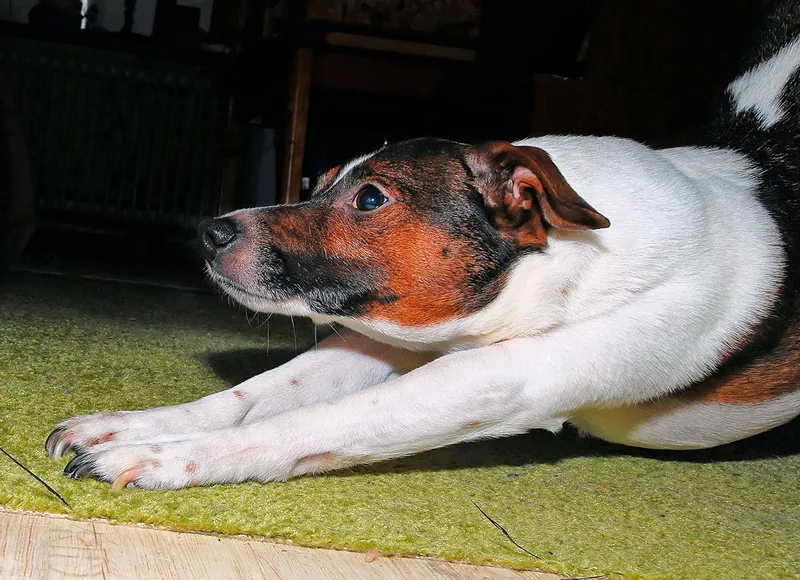
The dog does this by placing its front paws on the ground, fully stretched, and raising its hind end. Another option we might see is stretching the back legs.
Usually, the dog is standing and stretches one leg, resting the outer part of the toes on the ground, then the other. After this stretch, it's common for the dog to finish waking up by shaking itself off. Now it's ready to move.
The Play Position as an Invitation to Play
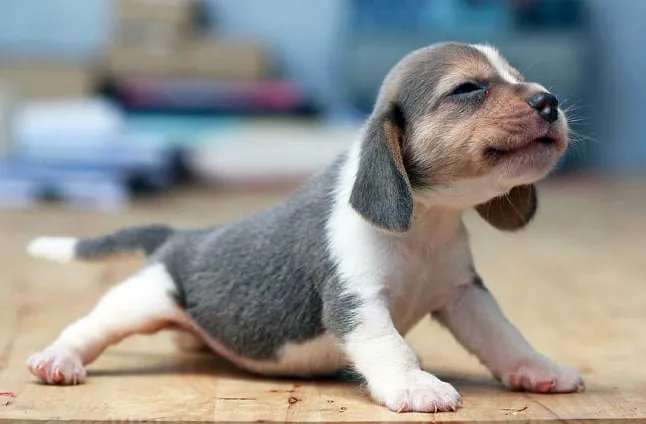
Sometimes the dog takes on the stretching posture, with front legs resting flat and hindquarters up in the air, but not to wake up. In this case, it won't take this posture after getting up, but rather when it wants to interact with us or with another dog.
It's normal for it to also keep its mouth open with its tongue out, bark repeatedly in a very high-pitched tone, wag its tail from side to side, and jump or even paw at us with its front legs. This is its way of inviting us to play. If this happens with a dog it trusts, it'll usually respond by taking the same position.
We'll see them lunge at each other, starting a game of chasing, mock attacks, and running around until one or both tire out. So, this stretch is normal and, in fact, desirable. It indicates a happy, well-socialized dog.
When Does Stretching in a Dog Mean Illness?
Sometimes, if the dog holds an abnormal position and we also notice other symptoms, we could be looking at a digestive, cardiac, or respiratory condition requiring veterinary attention. It could indicate a serious illness.
Two abnormal positions can be told apart. The first is called the prayer position and looks the same as the one described for play invitation. It's usually a sign of pain. The second is the orthopneic position, which the animal takes when it needs to get more air.
To do this, it stands with its front legs spread apart, or sits with its neck stretched, trying to get more oxygen. In both cases, we're facing a problem that needs veterinary treatment.
My Dog Stretches Due to Digestive Problems
An abnormal stretched posture in a dog, accompanied by vomiting, bleeding, diarrhea, abdominal swelling, or pain, warrants an urgent vet visit. The most common causes are the following:
- Gastric torsion-dilation: a serious condition where the stomach swells and even twists on its axis. It causes pain, abdominal swelling, restlessness, excessive drooling, and so on. Gastric torsion requires surgery.
- Pancreatitis: inflammation of the pancreas that's very painful and causes intense vomiting, dehydration, diarrhea, and even shock. It can be fatal.
- Inflammatory bowel disease: a chronic condition that can cause occasional acute pain episodes. It shows through vomiting, weight loss, or diarrhea.
- Gastroduodenal ulcers: an injury in the digestive system presenting with bleeding, seen in stool or vomit, along with weight loss and pain. The blood can be fresh or digested.
- Acute abdomen: not an illness itself, but a symptom that can appear in several serious conditions, like peritonitis or a ruptured bladder. It causes severe pain, and if the dog doesn't receive quick treatment, it'll go into shock. Surgery is needed.
Dogs Stretch If They Can't Breathe
Other times, the problem isn't digestive — the dog holds an abnormal posture with its neck stretched because something is making it hard to breathe. Among the most common causes affecting both the airways and heart, we highlight:
- Congestive heart failure: in these cases, the heart isn't working properly, causing oxygen deprivation. The dog will show exercise intolerance, loss of appetite, weight loss, coughing, swelling, cyanosis, or marked fatigue. Of course, this requires veterinary treatment.
- Pneumonia: in the most serious cases of pneumonia, the dog will experience considerable breathing difficulty. There'll be fever, coughing, lethargy, and so on. A vet needs to see this too — it's considered an emergency.
- Pleural effusion: a sign caused by some condition causing blood or fluid buildup in the chest, preventing the lungs from functioning normally. This is a very delicate situation requiring an urgent vet visit.
Bibliography Baciero, Gemma. "Gastritis and Other Stomach Conditions." Axón Veterinaria No. 26. pp. 20-25. Carlson and Giffin. (2002). Dog Owner's Home Veterinary Handbook. Madrid: Editorial el Drac. Crespo, Cámara, Buendía, and Ayala. (2015). "Chronic Canine Inflammatory Bowel Disease. Endoscopic, Biochemical, and Pathological Findings in the Upper Gastrointestinal Tract." Archivos de Medicina Veterinaria. Vol. 47 No. 3. García-Sancho, Rodríguez-Franco, and Sainz. (2009). "Chronic Small Intestinal Inflammatory Disease in Dogs. Comparison of Activity Indices." Revista Complutense de Ciencias Veterinarias. 3-1. pp. 48-61. Jiménez and Gil. (2018). "Gastric Dilation-Torsion Syndrome." Portal Veterinaria.
IMPORTANT: This article is for informational purposes only and does not constitute veterinary, nutritional or behavioural advice. Every dog is different, and only your trusted vet can advise you on its specific needs.