 Training
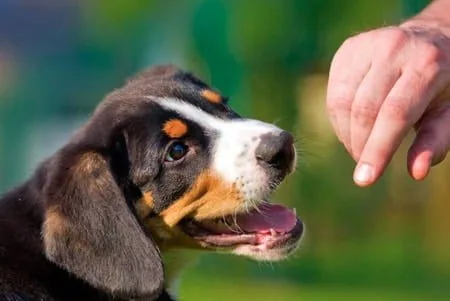
Why Won't My Dog Let Me Touch Them?
Those of us lucky enough to live alongside a dog know how important it is to keep constant contact with them, care for them, feed them and, of course, cuddle them. Physical contact with a dog builds a special bond of trust, which strengthens over time as long as we keep up contact regularly.
Even so, what would happen if a dog wouldn't let themselves be touched? If your dog won't let themselves be touched or stroked, you need to find the reason and fix it, since it's not a healthy behaviour. There should be a close bond between human and dog, mainly based on trust. If your dog avoids you stroking them or tries to bite you when you do, that bond of trust gradually widens until it stops existing.
There are several reasons a dog won't let themselves be stroked or touched, even if it's only in certain parts of their body. Let's explain what these reasons are and how to fix them so you can both build that special bond.
- Don't miss: How to teach a puppy basic training
Dogs Who Won't Let Themselves Be Touched From Lack of Socialisation
Every dog needs to be trained from practically puppyhood — they need to start learning humans' rules and gradually take them on board. The same happens with their surroundings — a puppy needs to interact with other dogs and also with other humans, so daily contact with them becomes normal. This is called the socialisation stage, and it's essential for our dog to let themselves be stroked once they're older.
Going out once a week for a walk isn't enough — once a puppy is over three months old and already vaccinated, it's essential to go out with them daily for a short walk so they start discovering the world around them, other animals, common noises and so on.
It's hugely important to let other people, whether friends or not, interact with our puppy, giving them cuddles, stroking them and so on… this way the puppy will gradually learn it's entirely normal to let themselves be touched.
If our dog is already an adult, we simply need to follow an approach therapy, slowly and very calmly — this therapy can last weeks or months, but it's necessary for our dog to learn as an adult what they didn't learn as a puppy. The therapy can start with massages, as explained below.

A Psychological Trauma in the Dog Can Make Them Fear Cuddles
Dogs are actually very similar to humans — when someone mistreats them, they very quickly learn to distrust humans. Their intelligence sometimes doesn't let them tell apart good humans from bad ones who may have hurt them… This doesn't mean they're not intelligent — they are, greatly so — it's simply that sometimes they don't reason it through.
If our dog has ever suffered mistreatment, they'll distrust us and possibly any human. Dogs have a very good memory — if you hit your dog even just once, they'll remember it forever. Never hit your dog, under any circumstances.
On another note, if we've adopted a dog, they may have previously been through a traumatic experience, which is why they don't let themselves be touched. Often, the time they spend in kennels or shelters waiting for someone to adopt them is enough to traumatise them.
Poor training on our part, or a bad example to follow (an aggressive and/or unsociable human), can also be the source of a psychological trauma making the dog not let anyone stroke them.

Dogs Who Won't Let Themselves Be Touched From Pain
We all know dogs are far more resilient than humans when it comes to pain — they can be in severe pain and yet go out for a walk as if nothing were wrong. What's more, the problem of them not being able to express when something hurts means they sometimes go long stretches suffering some pain before we notice.
Knowing canine language can help us know our dog's mood, and also helps us understand whether they're in pain. Strange as it may sound, a dog not letting themselves be touched can also mean that dog is suffering pain.
Some dogs won't let themselves be touched in certain parts of their body, because it hurts them right there. Others simply won't let themselves be touched out of fear that we'll reach the spot that hurts them. Pain makes dogs become a bit more standoffish and unfriendly, causing them not to let themselves be touched or stroked.
If our dog used to be very affectionate and we suddenly notice they no longer let us touch them, they may be unwell or suffering pain from some problem. A vet check-up would be entirely necessary in that situation. Plenty of illnesses can make dogs change their character, since suffering makes them express themselves this way.
How to Train a Dog to Let Themselves Be Touched
The first thing we need to do is see whether our dog tries to bite us when we touch them — if so, we need to work on this behaviour first. You can find detailed information at:
- How to train a puppy who bites
- Tips for preventing your dog being aggressive
If our dog doesn't try to bite us, that's an excellent sign, since we simply need to gradually earn their trust and work on this behaviour with the massage technique. Remember you should never hit or scold your dog without cause, don't be aggressive with them, or this technique to get a dog to let themselves be stroked won't work at all.
It's essential we do this technique after a walk, once our dog is already calm, relaxed and has burned off their energy. We'll look for a calm spot at home or at the park where nobody will bother us, with no noise, somewhere very peaceful.
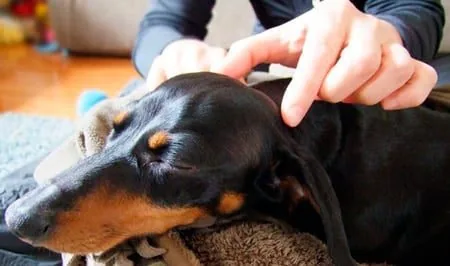
We'll lay our dog on the ground and start giving them a massage, barely pressing at all, very gently, and focusing only on one part of their body. We can test the ground a little and see which part they mind less being touched, and give them a small five-minute massage there.
The next day we'll repeat the same approach, but expanding the area we massage. As the days go by we'll also expand the time, so that within two or three weeks we're giving them a full-body massage for fifteen minutes daily.
This is the best technique for a dog who doesn't bite to let themselves be touched and stroked — with time and patience, our dog will gradually widen their trust in us and let themselves be touched more often.
My Dog Won't Let Themselves Be Touched by Strangers
When we socialise a puppy, they learn to let themselves be touched and stroked by us and also by strangers, but when an adult dog hasn't been properly socialised in puppyhood, they may have certain reservations about being stroked by strangers.
We should never force our dog to let themselves be touched by someone they don't know, since they could be a distrustful dog and feel scared — if someone tries to touch them, it could end in a bite, something nobody wants.
The best therapy for this kind of problem is having people we know, and the dog also knows, touch them more often. Let the dog gradually learn to let themselves be touched by people they know who aren't us. This therapy will be lengthy, so we need to be patient, but they'll gradually lose their fear.
We need to know the proper way to greet a dog, since plenty of people do it wrong. It's not advisable to rush at them, put our face at their height, or stroke their head as is usually done. You can find detailed information at: How to properly greet a dog.
On another note, every dog is different, just as happens with humans. They have their own character and personality — there are plenty of dogs who simply don't want strangers touching them. This isn't something that should worry us excessively, really.
The same goes for breeds — some breeds are genetically more affectionate than others, as happens, for example, with the Golden Retriever. There's even a considerable difference between sexes, with females generally being far more affectionate than males.
IMPORTANT: This article is for informational purposes only and does not constitute veterinary, nutritional or behavioural advice. Every dog is different, and only your trusted vet can advise you on its specific needs.