 Breeds
Characteristics of Dogs
Regardless of size or breed, all domestic dogs share a series of very specific characteristics that will help us better understand their behavior and way of life.
The common dog is actually a direct descendant of the wolf, socialized, of course, over centuries. In the same canid group we can find the coyote, dingo, or fox — did you know they all share the same origins?
Let's look at the main characteristics of the domestic dog in this concise but complete guide.
A Dog's Main Senses
Dogs share the same senses as humans: touch, sight, smell, hearing, and taste. That said, their senses aren't quite comparable to ours, since their vision, for example, is a bit different from a human's.
A dog's vision doesn't let them see every color — to give an example, it's a bit like having color blindness. In other words, some colors, like red and green, look the same to them.
That said, other senses, like smell or hearing, are super developed compared to ours. A dog can smell a person or animal from over ten meters away (over a hundred with the wind in their favor), follow their trail, and even locate missing people.
Their hearing isn't far behind either — what would be an unnoticeable sound to a human, a dog can hear without any trouble. A clear example is when we get home from work: they can hear our car and distinguish its engine's sound from other cars, even well before we reach the garage.
Their taste buds are also highly developed, while their sense of touch, though developed, doesn't have as many nerve endings as a human's. That might be why they're much more resistant to pain.
Socialization
Since it descends from the wolf, it's understood that the dog has always been a wild animal, though over centuries it's been socialized working alongside humans in hunting and guard duties.
Over the centuries, this gave rise to the companion dog and the dog trained to help locate missing people or assist people with disabilities.
That said, dogs aren't socialized by default — they're not born socialized. We need to work on their socialization from puppyhood so they get used to their surroundings and learn to respect and coexist with them.
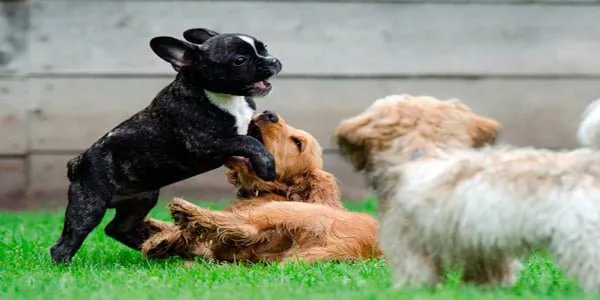
While it's true some breeds are more receptive to socialization than others, it's also true that, with effort and dedication, any breed can become respectful, debunking the myth of "potentially dangerous dogs."
The essential steps for proper socialization are:
- Sniffing, walking, and playing with other dogs (puppies and adults).
- Interacting with other people, letting them pet the dog.
- Sniffing and respecting other animal species.
- Getting to know their surroundings and interacting with them.
These are actually very simple steps, but ones we need to practice daily so our puppy grows up at peace with its surroundings and learns to respect them. A well-socialized dog is one that will rarely show aggression issues.
Forms of Canine Communication
We all know dogs don't use words, but they're still able to communicate with other dogs instinctively. On top of that, we humans can also learn their way of communicating, simply by paying attention to their expressions and behavior.
Something as simple as their tail movement, ear position, or the way they act tells us far more than words ever could. Correctly reading their body language is absolutely essential for maintaining a healthy relationship.
Even barking is a clear form of expression that, depending on context, can be a warning sign or simply a way to get our attention. You can learn more here:
A Dog's Diet
Originally, wild dogs fed on the prey they hunted, being fully carnivorous animals. Over time, though, with domestication, more foods have been introduced into their diet.
This doesn't mean today's dogs are omnivores as many like to believe — their teeth and digestive system still make it clear they're carnivores.
That said, they are able to process, always in small amounts, other starch-rich foods like certain grains and/or tubers. Take rice or potato as examples, always cooked.
Still, a balanced diet should always contain a high percentage of quality meat. Using natural products is by far the most recommended approach — think of natural BARF feeding.
It's worth noting that a dog's health and longevity largely depend on the type of diet it's had throughout its life.
Care and Health of Dogs
Among the regular care any domestic dog needs, we should always keep fresh, clean water available, along with providing one to four daily food portions, depending on age and nutritional needs.
Having a food bowl and water bowl, preferably aluminum since they're the most hygienic, is essential. It's also necessary to provide a comfortable, cushioned bed.

Those who let their dogs sleep in the yard should provide a doghouse that protects them from cold, heat, and other elements. Wooden doghouses are the most recommended for their strong insulating properties (plastic or metal ones aren't recommended).
So, a food bowl, water bowl, bed, and doghouse (if they sleep outside) are essential items. Along with a collar and leash to go for walks with them, remembering that any dog needs between three and five walks a day.
As for health, we need to make sure they get all mandatory and recommended vaccines, to prevent them from catching potentially fatal diseases, along with the corresponding internal deworming.
And just as important, taking them for several routine vet checkups to confirm they're in good health, and seeing the vet whenever we notice something isn't right. A dog is, after all, another member of the family — a big responsibility.
Life Expectancy by Breed and Size
Small dog breeds have the longest life expectancy, able to reach up to twenty years with good quality of life. That said, the average sits around fifteen years.
Medium and large dogs have a shorter life expectancy, ranging from ten to thirteen years on average — though it can be longer depending on their health and care.
We shouldn't feel sad when an old dog passes away, but rather be happy remembering the good times we had with them, and proud knowing we cared for them the best we could. After all, we all have a finite life cycle, and what matters isn't how long we live, but how.
Reproduction
Females generally have their first heat around one year of age, depending on the breed, sometimes a few months earlier. It's from that first heat that they're considered fertile or sexually mature enough to reproduce.
Males, on the other hand, reach that maturity from around fourteen to sixteen months of age, so in general, dogs can reproduce from very young ages.
Once they've mated, the gestation of future puppies takes an average of nine weeks, after which the mother dog will give birth, producing between one and ten puppies (depending on the breed), sometimes even more.
Puppies and Weaning
From birth until about two months old, puppies should stay with their mother at all times, since they'll feed on the milk she nurses them with.
It's around two months old (approx.) when they begin teething — showing their first baby teeth — at which point solid food formulated for puppies can gradually be introduced.
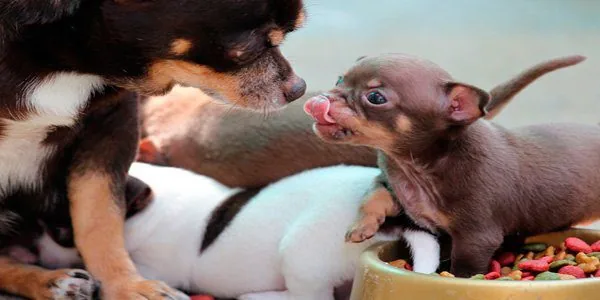
Weaning happens at this point, between two and three months old, when the puppy starts properly digesting solid food and stops nursing. This happens gradually.
Later on, another teething period will occur, when baby teeth are replaced by permanent teeth, much stronger and more resistant, totaling forty-two teeth.
Did you know... puppies are born completely blind? It's as the days go by that they start to see. So at first, they rely on their hearing and sense of smell.Types of Breeds
Today there are more than eight hundred dog breeds, making it the mammal with the most variety on the planet.
Many of them are identified by the Fédération Cynologique Internationale and by national bodies like the Real Sociedad Canina de España (RSCE).
These organizations classify breeds into ten different groups:
Group 1: Herding dogs and some cattle dog breeds Group 2: Pinscher and Schnauzer, other cattle dogs and mountain dogs Group 3: Terrier-type dogs Group 4: Dachshunds Group 5: Spitz and primitive types Group 6: Scent hounds and related breeds Group 7: Pointing dogs Group 8: Retrievers, flushing dogs, and water dogs Group 9: Companion dogs Group 10: SighthoundsIMPORTANT: This article is for informational purposes only and does not constitute veterinary, nutritional or behavioural advice. Every dog is different, and only your trusted vet can advise you on its specific needs.