 Care
Care
How Many Hours a Day Does a Dog Sleep?
Many people wonder whether their dog sleeps too much or, on the contrary, should sleep more. Although in reality it all depends on a few factors we're going to explain.
If you want to know how many hours a dog sleeps a day within what we could consider normal, we need to look at its age, breed, and traits. Let's go over it in detail so you can find out if your dog is sleeping enough.
Hours of Sleep by Age
Just like humans, dogs go through many stages throughout their life, some more active than others. So their sleeping hours won't always be the same — they'll vary depending on their age.
Puppies Up to Twelve Months Old
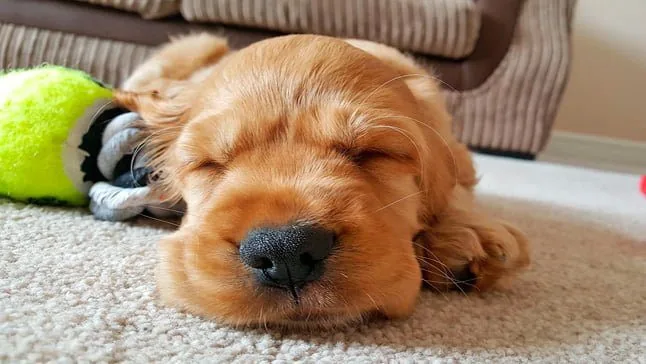
Puppies are by far the sleepiest of all, largely due to their high energy when awake and their physiological needs, since they're in full development.
From birth until they turn three months old, they usually sleep a total of about twenty hours a day. Split into small naps throughout the day and night (they don't sleep all those hours in a row, not even close...).
From three months old until twelve months old, sleeping hours drop a bit, reaching an average of between fourteen and eighteen hours of sleep a day.
Young and Adult Dogs
Both young adolescent dogs and adult dogs up to six or seven years old reduce their daily sleeping hours quite a bit. So it's normal for them to sleep a total of between twelve and fifteen hours a day.
Obviously these sleeping hours are split between day and night, taking little naps where they rest, recover energy, and dream. Yes, dogs dream too.
Elderly and/or Recovering Dogs
Older dogs, from around seven or eight years old in large breeds and from nine or ten in small breeds, start sleeping more again, just like puppies.
It's normal for them to sleep between fourteen and twenty hours a day, napping during the day and night, recovering energy and enjoying the peace of a good nap.
Sick or recovering dogs also tend to sleep more hours, since they need to regain their strength.

Hours of Sleep by Breed
Not all dogs sleep a similar average of hours, regardless of whether they're puppies, young, or adults. There are some breeds that, simply due to genetics, are much sleepier — or, on the contrary, much more active.
- Breeds such as herding dogs: German Shepherd, Swiss Shepherd, Australian Shepherd, Gos d'atura, Belgian Malinois, or the famous Euskal Artzain Txakurra are especially active dogs that generally sleep fewer hours.
- Hunting dog breeds: Andalusian Rat Hunting Dog, Fox Terrier, Whippet, Podenco, Beagle, or Braco are generally very active, so they too will sleep fewer hours on average than other dog breeds.
- Big, sleepy giants: Saint Bernard, Westie, Spanish Water Dog, Golden Retriever, Mastiff, or Newfoundland are breeds prone to taking good naps. So on average, they'll sleep a bit more than other breeds.
It's all in the genetics — some breeds are more active than others simply because that's how they are. This directly affects how many hours they sleep each day.
Hours of Sleep by Environment and Season
We all know how cozy it is to be indoors when it's cold, rainy, or snowy outside. That's why in winter dogs also sleep more than in spring or summer, because the season's own weather doesn't encourage being active.
It's in spring and summer when dog breeds in general are more active than the rest of the year, and therefore sleep fewer hours a day.
The home environment also matters a lot, since it's not the same to rest peacefully in a quiet, undisturbed house as it is to try to sleep in a noisy house or one with small children who constantly want to play.
That's why a dog's home situation directly affects both how many hours it sleeps a day and the quality of that sleep.
IMPORTANT: This article is for informational purposes only and does not constitute veterinary, nutritional or behavioural advice. Every dog is different, and only your trusted vet can advise you on its specific needs.