 Care
Care
How Many Years Does a Dog Live?
Needless to say, when a dog comes into our life, we take it in with a lot of affection, but over the years, all that affection turns into love — the same love we feel for any other family member, since it too is part of our family.
If you're wondering how long a dog lives, you should know it all depends on its size and the kind of life it leads. I'll explain it in more detail so you can make the most of every day of its life.
How Many Years Do Large or Giant Breed Dogs Live?
I have to confess large-breed dogs are usually the ones that steal my heart, but unfortunately they're also the ones that, due to pure genetics, live fewer years.
A large or giant breed dog has a life expectancy of between ten and thirteen years, though with good care, nutrition, and healthy habits, they can live a few more years.
We're talking about breeds like the Great Dane, the Mastiff, the Saint Bernard, the Bernese Mountain Dog, the German Shepherd, the Doberman, the Dalmatian, the Alaskan Malamute, and so on. You can see every large and giant breed here:
- Large-Sized Dog Breeds
- Giant-Sized Dog Breeds
 Doberman
How Many Years Do Medium-Sized Dogs Live?
Interestingly, the smaller a dog, the greater its life expectancy — in this case, medium-sized dogs have a life expectancy of between twelve and fifteen years.
That said, just like in the previous case, if we give it a healthy life, with good nutrition and proper care, it's likely to live a few more years.
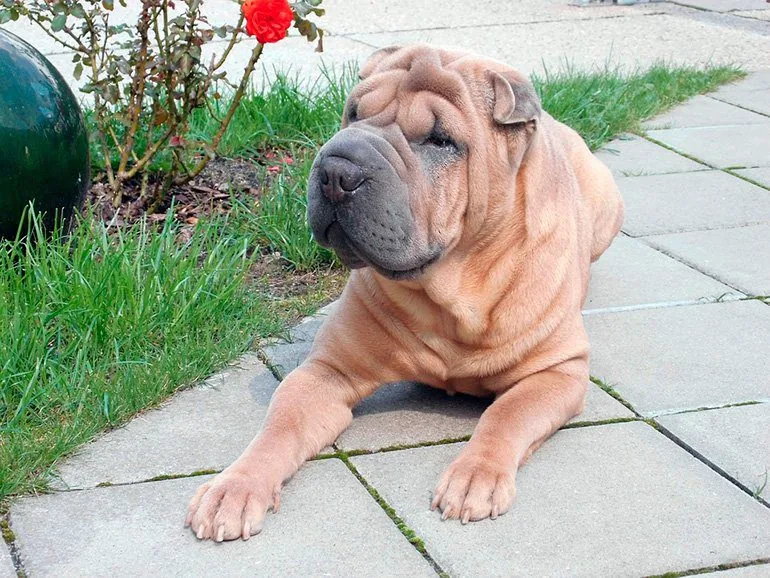
When we talk about medium-sized breeds, we mean, for example, the Bull Terrier, the Pit Bull, the Collie, the Setter, the Shiba Inu, the Podenco, the Spanish Water Dog, the Shar Pei, the English Bulldog, or the Basque Shepherd, among many others. You can see every medium-sized breed here:
- Medium-Sized Dog Breeds
 Shar Pei
How Many Years Do Small-Sized Dogs Live?
Interestingly, the smallest dogs are the ones with the longest life expectancy. Small, mini, and/or toy breed dogs have a life expectancy of between fifteen and twenty years.
Surprise, surprise — the smallest ones live the longest, as long as they lead a healthy life with a healthy diet. Surprising, right?
When we talk about small breeds, we mean the Miniature Pinscher, the Shih Tzu, the Andalusian Rat Hunting Dog, the Chihuahua, the Coton de Tulear, the Corgi, the Jack Russell, the Maltese, or the Pomeranian, among many others. You can see every small-sized breed here:
- Small-Sized Dog Breeds
 Chihuahua
How to Help a Dog Live More Years?
Although genetics is practically everything, the truth is there are known cases of dogs living even five years longer than their life expectancy would initially suggest.
There are many factors that directly influence a dog's longevity, helping it live many more years than it's technically supposed to live.
Let's look at what these factors are, so we can all put them into practice and help our dog have a long life.
Diet, Essential for a Long Life
Do you give your dog the best kibble on the market? Good for you, since diet is a fundamental pillar of a dog's health and longevity. That said, to be completely accurate, the best food you can give it isn't bought as kibble, but fresh.
Natural nutrition based on fresh products, also known as the BARF diet, is the healthiest option for dogs, and consequently, the one that'll best help it live more years.
The Vet, Essential for Its Longevity
Every dog gets sick at some point in its life, and if not treated properly, its life expectancy will drop drastically. But it's not all about illness — regular checkups, vaccines, and deworming will give your dog a longer life expectancy.
Exercise, Play, and Walks
Depending on the breed and size, a dog will need a greater or lesser amount of daily exercise. As it gets older, its physical activity should gradually decrease, though play and walks are recommended at every age.
A dog that goes out running daily, plays with other dogs, doesn't suffer from stress, and walks freely out in nature will have a much longer life than a dog that doesn't exercise and/or only walks in the city, surrounded by fumes.
IMPORTANT: This article is for informational purposes only and does not constitute veterinary, nutritional or behavioural advice. Every dog is different, and only your trusted vet can advise you on its specific needs.