 Care
Care
How to Get a PPP License — Complete Guide
Current legislation in Spain regarding ownership of potentially dangerous dog breeds ("PPP") consists of three sections. The first determines which breeds are considered potentially dangerous.
Next, the procedures and conditions citizens must meet if they want to adopt one of these dogs are established. A third section details the mandatory safety measures you must follow every time you take it for a walk. Let's look in detail at everything you need to know to get your PPP license.
How to Get a PPP License in Spain
Article 3 of the law regulating PPP ownership in Spain establishes the following requirements prior to issuing a license:
- Being a legal adult.
- Not having been convicted of homicide, injury, torture, crimes against freedom or moral integrity, sexual freedom, public health, association with an armed group or drug trafficking, and not having been stripped by court order of the right to own potentially dangerous animals.
- Not having been sanctioned for serious or very serious violations with any of the accessory penalties set out in section 3 of article 13 of Law 50/1999, of December 23, on the legal regime for potentially dangerous animals. That said, having been sanctioned with a temporary suspension of the license won't prevent obtaining or renewing it, as long as, at the time of application, the previously imposed suspension penalty has been fully served.
- Having the physical capacity and psychological fitness to own potentially dangerous animals.
- Proof of having taken out third-party liability insurance with coverage of at least one hundred twenty thousand euros (€120,000).
This license, which is personal and non-transferable, is valid for 5 years. It can be renewed for another similar period, as long as the person continues meeting the requirements mentioned above. Also, any change to a license's details must be reported by the holder within 15 days.
Health Certificates
To get the license, you also need to prove you have suitable physical and mental conditions. To do this, you'll need to submit the following certificates:
- Physical fitness certificate: several exams are conducted to check your vision, hearing, musculoskeletal system, and neurological system. Also, they'll assess whether you have perceptual-motor difficulties affecting decision-making, or whether you suffer from any condition preventing you from controlling a PPP.
- Psychological fitness certificate: detects whether you show behavioral problems, personality disorders, or other conditions that could limit the full use of your mental faculties.
The assessment centers for these procedures are the same ones that evaluate fitness to drive a vehicle. The law also specifies that regional authorities may choose to accept certificates issued by licensed medical doctors or psychologists.
How to Start the Process?
You can start the process at your City Council, where you can also get information on everything related to obtaining a license for potentially dangerous dogs. The documents to submit are the following:
- National ID, foreign resident ID, passport, or other form of identification
- Filling out the corresponding form
- Proof that the dog has an identification microchip installed (usually provided by the breeder)
- Physical and psychological fitness certificate
- Criminal record certificate. This can be done online at some city councils
- Proof of PPP insurance
Once everything is confirmed to be in order, you can welcome the new family member. That said, your obligations don't end here, since you'll need to comply with various rules and safety regulations.
Safety Rules for a Potentially Dangerous Dog
The key measures to prevent incidents with a PPP need to be taken, above all, when the dog is in public spaces:
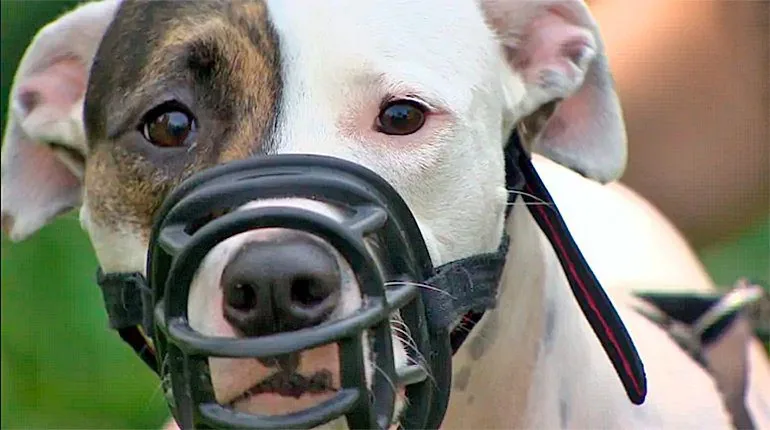
- They must always wear a muzzle outside, and it should never be removed. This means not feeding them in public.
- Only the license holder can walk a PPP. You must carry the license with you on every walk with your dog, along with proof of City Council registration.
- Retractable leashes, or ones longer than 2 m, aren't allowed for a PPP.
- Never walk two potentially dangerous dogs at the same time if you're alone.
- A dog like this can never be walked by a minor, under any circumstances.
- These dogs aren't allowed off-leash or outside private areas, even if properly fenced.
- If the dog is lost or stolen, you must report it to the police or City Council within no more than 48 hours.
Not following these regulations can mean losing the license, meaning you can no longer keep living with your dog. It can also mean fines ranging from €2,400 to €15,000 or legal consequences if the dog causes injuries or damage.
What Is a Potentially Dangerous Dog?
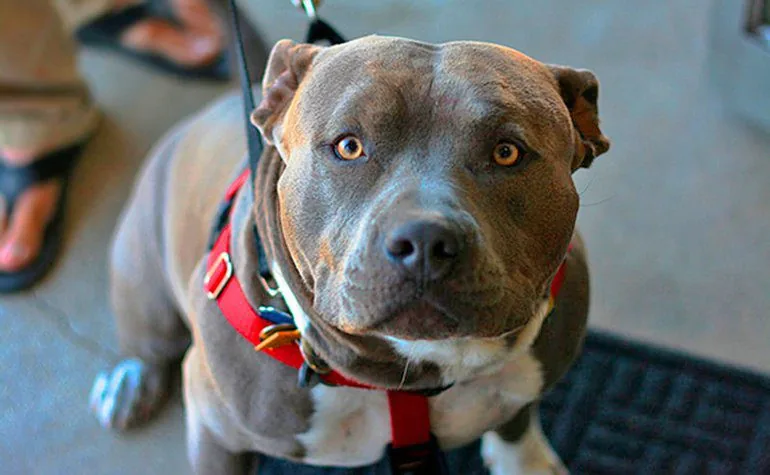
A potentially dangerous dog is one belonging to breeds that, due to their own physical and behavioral characteristics, can cause injuries to people, other animals, or damage to third-party property.
The traits considered when classifying a breed as dangerous are the following:
- Anatomy: these are muscular, sturdy, athletic dogs, with a square head, a wide, strong neck, a short back, and a solid, deep chest. They have powerful jaws and a large mouth. Also, their weight exceeds 20 kilos, and their height at the withers (from the ground to the base of the neck) is between 50 and 70 cm. Chest circumference can reach 80 cm.
- Coat: these are short-haired dogs
- Character: they have a distinct temperament and great courage. They tend to show dominant behavior.
Which Breeds Are Considered PPP in Spain?
PPP regulations in Spain consider eight breeds to fall under the category of potentially dangerous dogs. These are:
- Pit Bull Terrier
- Staffordshire Bull Terrier
- American Staffordshire Terrier
- Rottweiler
- Dogo Argentino
- Fila Brasileiro
- Tosa Inu
- Akita Inu
That said, this list varies between different autonomous regions. Barcelona's city council, for example, adds six more breeds to these eight:
- American Bully
- Bullmastiff
- Doberman
- Dogue de Bordeaux
- Neapolitan Mastiff
- Presa Canario
In the Valencian Community, the Ca de Bou (Mallorcan Mastiff) is also considered dangerous. So, if you're thinking about adopting a dog with these characteristics, the best approach is checking with your City Council to clear up any doubts. They'll also tell you the requirements for getting a license.
IMPORTANT: This article is for informational purposes only and does not constitute veterinary, nutritional or behavioural advice. Every dog is different, and only your trusted vet can advise you on its specific needs.