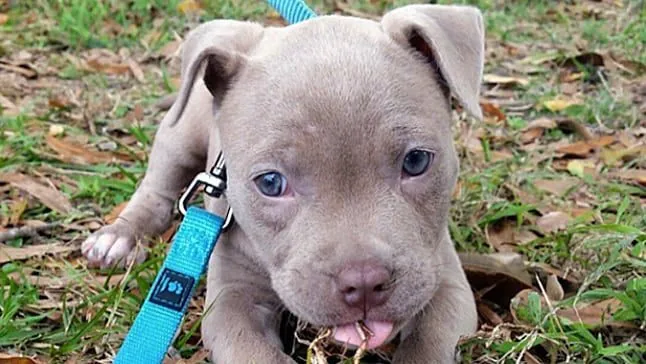
 Training
How to Train a Pitbull Puppy
There are plenty of types of Pitbull dogs, although all of them broadly keep the same patterns when it comes to character, strength and obedience. That's why it matters a great deal to know how to properly train a Pitbull, since poor training can lead to a highly dangerous dog.
Pitbulls are dogs mainly characterised by their strength and bite; being gripping dogs, they can cause severe bites without letting go of their target, whatever it is. We could say they're dogs like any other breed, and that it all depends on their training, but the truth is it's not quite like that.
They're very strong dogs with plenty of character, needing far more intense, consistent training than any other dog. With proper training they can become good dogs, but being entirely honest… few people know how to properly train a Pitbull.
Sadly, the different types of Pitbull have become the trendy breed among plenty of teenagers, who, far from knowing how to train their dog, often use them to show off or intimidate — a huge mistake.
We're going to explain how a Pitbull should be trained from puppyhood, or if you've adopted one already as an adult, we'll also give some effective advice for their training and socialisation.
- Don't miss: This is what a dog's tail movement means
Prepare Your Home for Your Pitbull Puppy
We need to set up a spot at home where our Pitbull puppy can rest — a comfortable, soft bed is the most suitable spot for this. You can make one yourself with the help of some cushions and blankets, or buy one at a pet shop — its price really isn't very high.
You should place the bed wherever you spend most time with your Pitbull — if you spend your time in the living room, put their bed there so they can sleep peacefully whenever they want. Remember puppies sleep many times a day, taking short but frequent naps.
If you're planning for them to sleep in the living room or kitchen at night, don't go cuddle them even if they cry or whine, since this will cause them to learn to cry to grab your attention and never learn to sleep alone in their bed.
Generally, within two or three nights they learn to sleep alone and stop crying. Plenty of people choose the kitchen as the spot for their Pitbull to sleep at night, since, given they haven't yet learned to relieve themselves outside the house, it's simpler this way (avoiding them leaving urine and faeces around the whole house during the night).
If your Pitbull puppy is going to sleep outdoors, you should wait until they're at least three months old, and it's advisable to wait even until six months old (as long as it's not excessively cold or hot outside and they have a kennel).
Train Your Pitbull Puppy to Learn to Eat
Plenty of people think the best way to feed a puppy is leaving plenty of food available to them all day long. To put it one way, giving them an all-you-can-eat buffet at their whim. This is possibly the biggest mistake we can make.
We need to buy suitable kibble for our dog, that is, high-quality kibble designed for medium-breed puppies. Or otherwise, use natural food based on raw products, such as the BARF diet.
The right way to feed our Pitbull is splitting their daily portion into as many meals as we think necessary, with four meals advisable for puppies and two or three for adults. So a puppy should have breakfast, lunch, an afternoon snack and dinner.
We'll place our Pitbull's food in their bowl without leaving it on the ground, and tell our dog to sit (if they don't yet know how, we can skip this step and put it into practice once they learn). Once our Pitbull puppy sits, we'll place the bowl in front of them, on the ground, but won't let them eat.
We'll stop them eating their food until they look us in the eyes; once they do, we'll give them permission to eat. It's a way of asking our permission, through their gaze, so if they don't look at us after we've placed the bowl in front of them, they don't eat.
We'll leave the bowl out for only fifteen minutes and then put it away until the next meal. If they haven't eaten, or have left leftovers, we'll put it away (we won't add it to their next meal's food). Remember they should always have clean, fresh water available, throughout the whole day and night, always.
This is the only proper way of feeding our Pitbull — it might take a few days or weeks for them to learn to do it this way, but it's essential they learn it. If your puppy is already six months old or more and you're exercising them to build muscle, we suggest using high-quality, protein-rich kibble so they develop muscle mass.
This Is How to Train a Pitbull Puppy Not to Be Territorial
Pitbulls are highly dominant dogs — this isn't something we think, but something they carry in their own genetics. Even their puppies are generally more dominant than any puppy from another breed, which is why it matters a great deal to make clear who obeys whom from day one.
Pitbull puppies are known as gladiator puppies, since they often prefer fighting playfully with each other, rather than playing chase or biting a toy like other puppies do.
Here's some advice you need to follow to help your dog understand you're in charge and they need to obey you. Remember you should never hit your dog — if they do something wrong, simply scold or ignore them (always using positive reinforcement when they do well). Here's some practical advice:
- When you go in or out of the house, you should always do it first and the dog afterwards. If you're with more people, humans should go in or out first and the dog last.
- Never let them get on top of you to take food or sit on you. It's even advisable not to let them use the sofa at home, or the bed where humans sleep.
- When you give them their food and they start eating, try taking the food away for a few seconds or placing your hand between them and the food to get them to stop. You should never let them growl at or bite you — they should simply respect your hand and wait for you to remove it before carrying on eating.
- Don't let them jump on you, or place their front paws on you as if propping themselves up. Scold them if they do.
- Never let them mount you (as when they mate), or release a bit of their urine on you.
- If their meal coincides with yours, never let them eat first. Have your breakfast or meal first, and once you're done, give them their food.
All this advice will be hugely useful for reducing your Pitbull's dominance, and for them to understand only you have the authority to give commands. In short, it will help your dog respect you as the pack leader.
Teach Your Pitbull Puppy to Walk and Socialise
Once your puppy has all their mandatory vaccines, you need to take them for daily walks, several times, always keeping to roughly the same times. So, if you take them out four times a day, try to always take them out at the same times.
It's hugely important to let them be a dog out on the street, that is, let them sniff everything they want (even faeces), let them sniff every dog they cross paths with, let them play with other dogs and, above all, let other dogs sniff them and scold them when needed.
Remember dogs greet each other and recognise each other by sniffing bottoms and genitals, so never stop them doing it. Even though it may seem unpleasant to us, for them it's the most natural thing in the world.
If you feel it's impossible to walk them because they pull a lot or are never calm, we leave you some detailed advice to put into practice: Teaching a puppy to walk.
If you have a dog park near your home, it would be great to let them play with other dogs daily. It matters a great deal that they socialise well, that they play, that bigger dogs growl at them when they do something wrong, and even that they get scared. It's all part of learning, and all of it is entirely necessary in this breed.
Training a Pitbull puppy inevitably requires properly socialising them with dogs and people, since otherwise our dog will be standoffish, fearful and, as a result, aggressive. You can find detailed info at: How to socialise a dog.
If during walks or play with other dogs, your Pitbull puppy tries to dominate them or gets aggressive with them, you need to stop them, scold them, and get them to sit for a while until they relax. It's entirely normal for them to nip each other while playing, but there's a huge difference between biting while playing and biting out of aggression.
How to Teach the Puppy to Defecate and Urinate Outside the House
Puppies always relieve themselves wherever the urge hits them, that is, inside the house. We should never get angry because our dog has urinated or defecated inside the house, and we shouldn't glare at them or scold them either. We'll simply ignore them and clean up.
It's a very common mistake to think that rubbing their muzzle in their pee will teach the dog not to do it at home… please, never do this, it's entirely useless!!
The right way to teach our Pitbull puppy to do their business outside the house is through positive reinforcement and scheduled outings. The first thing we need to do is schedule their outings, this way they'll learn what time it's their turn to go for a walk and, as a result, to hold their pee until then.
For example, we can take our puppy out at 9:00 in the morning, at 12:00 midday, at 3:00 in the afternoon, at 7:00 in the evening and at 11:00 at night. Remember it's advisable to go out at least four times a day — most outings can last fifteen or twenty minutes, just enough for them to sniff a bit and do their business, but one of them should be at least one or two hours, so they can enjoy it.
Every day we should take them out at the same times, whichever times we've decided on. If we don't stick to this, they'll never learn to pee outside the house.
The trick is very simple — when they go out for a walk with us and pee or poo on the street, we'll wait for them to finish and praise them a great deal. We'll give them encouraging words, stroke them, praise them, and even give them a reward (a biscuit, a piece of sausage and so on).
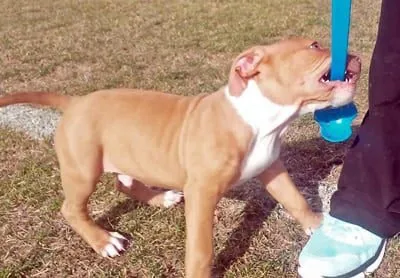
If our dog pees or poos inside the house, we'll ignore them entirely. This way, they'll very quickly learn they need to do it outside the house, since that's what gets praise and rewards. Dogs aren't stupid, believe me.
Normally within a few weeks your Pitbull puppy will have learned — remember you should never start training them before three months old, since they simply won't learn anything.
How to Teach a Pitbull Not to Bite
Every puppy bites, absolutely every one. They bite their beds, they bite furniture, they bite their toys, and they even bite us. This is entirely natural, since they use their mouth for absolutely everything, just as we use our hands.
On another note, there's the stage where their teeth come in or get replaced by permanent ones, known as the teething period. This causes them pain and the need to ease it by biting things.
Teaching our Pitbull puppy not to bite is actually very simple, as well as essential. When our dog bites us, we'll scold them to get them to stop — you should never hit them, only scold them. Right after, we'll grab a dog toy or chew toy and play with them so they bite it. It's most common to play fetch and tug-of-war, trying to see if you can take it away from them…
When they bite the toy while we play, we'll praise them. If they bite clothing, furniture or anything else, we'll do the same: scold them and give them a toy to bite instead, this way teaching them they can bite their toys but not other things.
If our Pitbull puppy bites a person, we need to firmly scold them and punish them. The punishment involves sitting them down and looking at them with an angry face for a few minutes, so they understand we've genuinely gotten angry. You can read more information on how to fix this kind of behavioural problem here: How to stop a puppy biting.
How to Train an Adult Pitbull Dog
Sadly, given this is a very strong breed with a very strong character, if you've adopted an adult Pitbull, our advice is to see a professional trainer as soon as possible.
Only a professional trainer will be able to assess the dog's temperament and apply whatever discipline they consider necessary. An adult Pitbull may have had a rough past, causing them to develop bad behaviours, or simply may not have had proper training — let's not forget plenty of bad people use this breed as fighting dogs. Seriously, see a good professional trainer. They're affordable and highly advisable.
IMPORTANT: This article is for informational purposes only and does not constitute veterinary, nutritional or behavioural advice. Every dog is different, and only your trusted vet can advise you on its specific needs.