 Care
Care
Spots on Dogs' Skin
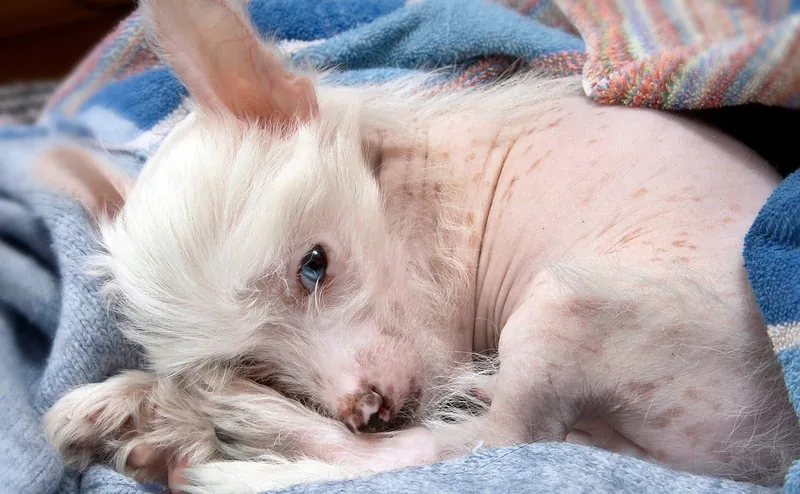
Sometimes we can find spots on our dog's skin. Since with humans we've been taught that a change in color is cause for alarm, it's normal to feel worried when noticing a spot on our dog's skin.
But the truth is a spot isn't always dangerous, and some dogs can even be born with naturally spotted skin as a breed trait, with no underlying condition at all.
Common Spots on Dogs' Skin
Some dogs have dark-colored spots, usually brown or black, most noticeable on the abdomen. These are known as hyperpigmented macules and pose no danger to the dog's health.
To tell them apart from a potentially pathological process, keep in mind these spots don't come with inflammation, lesions, or swelling. Dogs can be born with them, but they can also appear at some point in their life.
Sometimes a skin injury heals and leaves this type of spot as part of the normal healing process, so there's no need to worry if this is the case for our dog. This type of hyperpigmentation can also be seen in areas where hair loss occurs, meaning alopecia caused by different reasons.
Hyperpigmentation and Skin Disturbances
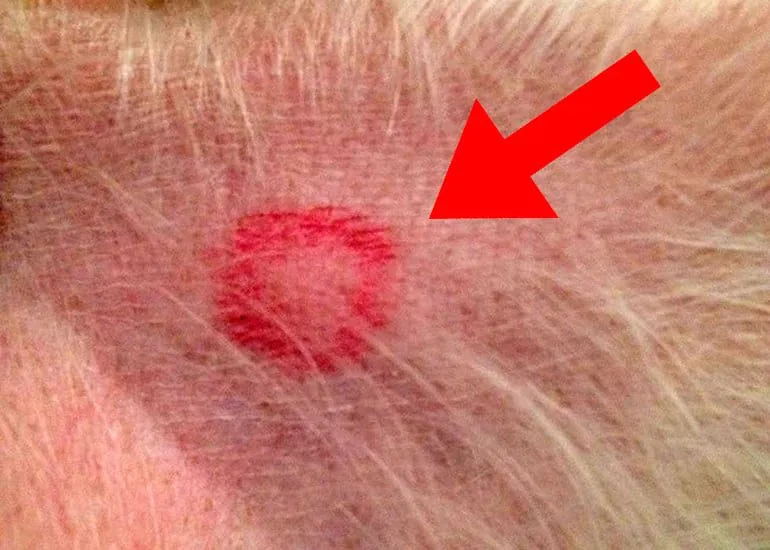
In dogs with chronic skin diseases that cause itching or inflammation, hyperpigmentation is a result of the damage the skin undergoes. It thickens and darkens over the whole area where the problem is located. In other words, we won't see small spots, but rather a considerable, darkened area of the body.
This is a result of skin diseases that don't fully heal. Hyperpigmentation can also appear in endocrine diseases. For example, dogs with hypothyroidism usually show a characteristic pattern of hair loss, hyperpigmentation, and thickened skin, along with lethargy or weight gain.
Treatment for Skin Spots
Birthmarks or spots corresponding to a healed injury don't need any intervention, and there's nothing to worry about. On the other hand, if the dog shows large darkened areas, it must be experiencing some condition that requires the vet's attention.
This professional will need to run the relevant tests to reach a diagnosis, since there are different causes that can trigger itching, inflammation, hair loss, and the resulting darkening.
Either way, the ideal is not letting the dog reach this situation. Keep in mind that hyperpigmentation can appear in chronic conditions, or ones that haven't been treated for a long time. That's why it's a good idea to see the vet at the first sign of itching or skin damage.
Melanocytomas and Melanomas in Dogs
These are tumors that usually present as a hyperpigmented nodule. Any suspicion of a neoplasm should make us see the vet as soon as possible. This professional will take a sample to see what type of cells make up the nodule.
It can also be removed and sent to the lab for study. Once all the data is in, a diagnosis, prognosis, and treatment will be reached. But besides melanocytomas or melanomas, there are other hyperpigmented skin lesions.
One example is basal cell, follicular, or sebaceous tumors, along with lentigo, which causes single or multiple macules, mainly in the abdominal area, nevi, or cutaneous hemangiomas or hemangiosarcomas. Hence the importance of a proper diagnosis.
Depigmentation Spots on Dogs' Skin
So far, we've talked about dark spots on our dog's skin, but light, whitish spots can also appear, due to a loss of pigmentation. One example is vitiligo, a disorder involving depigmentation of both skin and fur, especially visible on the face, muzzle, and lips.
The causes behind its appearance aren't entirely clear, but the presence of anti-melanocyte antibodies is discussed. In other words, the body itself would attack the melanocytes, the cells responsible for producing pigments, which is why their destruction shows up as a lack of color.
A similar process is what's known as snow nose. It occurs in breeds like the Siberian Husky or the Labrador and is characterized by a loss of color in the nasal area. Its name comes from the fact that it usually appears seasonally, during the cold months. Afterward, the color returns. Vitiligo and snow nose have no treatment.
Bibliography Harvey and McKeever. 2001. Manual ilustrado de enfermedades de la piel en perro y gato. Madrid. Grass Ediciones. Lorente, Carmen. 2015. Atlas de información al propietario. El diagnóstico en dermatología. Zaragoza. Servet editorial-Grupo Asís Biomedia S.L. Rejas, Juan. Dermatología Clínica Veterinaria. http://dermatologiaveterinaria.unileon.es
IMPORTANT: This article is for informational purposes only and does not constitute veterinary, nutritional or behavioural advice. Every dog is different, and only your trusted vet can advise you on its specific needs.